When something chews, curls, stipples, shreds, or strips your plants, the first instinct is often to spray first and ask questions later. That is usually where gardeners lose time, money, and healthy plants.
The better approach is simple: read the damage pattern before choosing the treatment.
Most garden pests leave a signature. Clean round holes tell a different story than silvery streaks. Ragged chewing with dark droppings points to one kind of problem, while sticky, curled growth points to another. Once you learn to recognize those patterns, pest control becomes calmer, smarter, and much more effective.
This is one of the most useful garden skills you can build. It sharpens your observation, prevents unnecessary spraying, and helps you protect pollinators and beneficial insects while still defending your crops.
Why pest damage patterns matter more than guessing
A healthy garden is not one with zero insects. It is one where you understand which insects are actually causing harm, which ones are mostly cosmetic, and which ones are beneficial.
If you treat every hole like an emergency, you often create bigger problems:
- you may spray the wrong pest
- you may kill helpful insects
- you may miss the real cause entirely
- you may stress the plant more than the pest did
A better question is not “What product should I use?” It is “What kind of damage is this, and what kind of creature usually makes it?”
That shift turns pest control into diagnosis instead of panic.
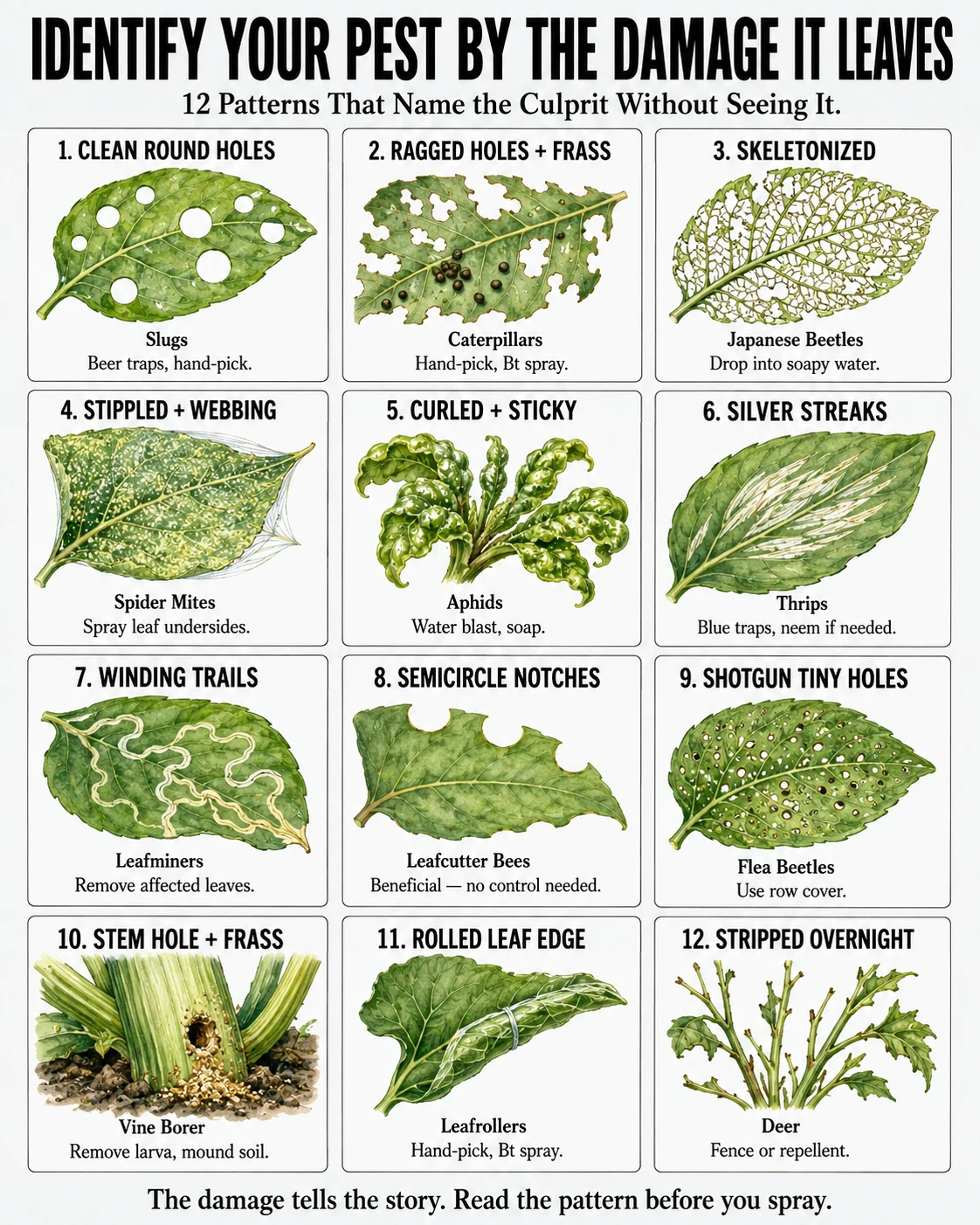
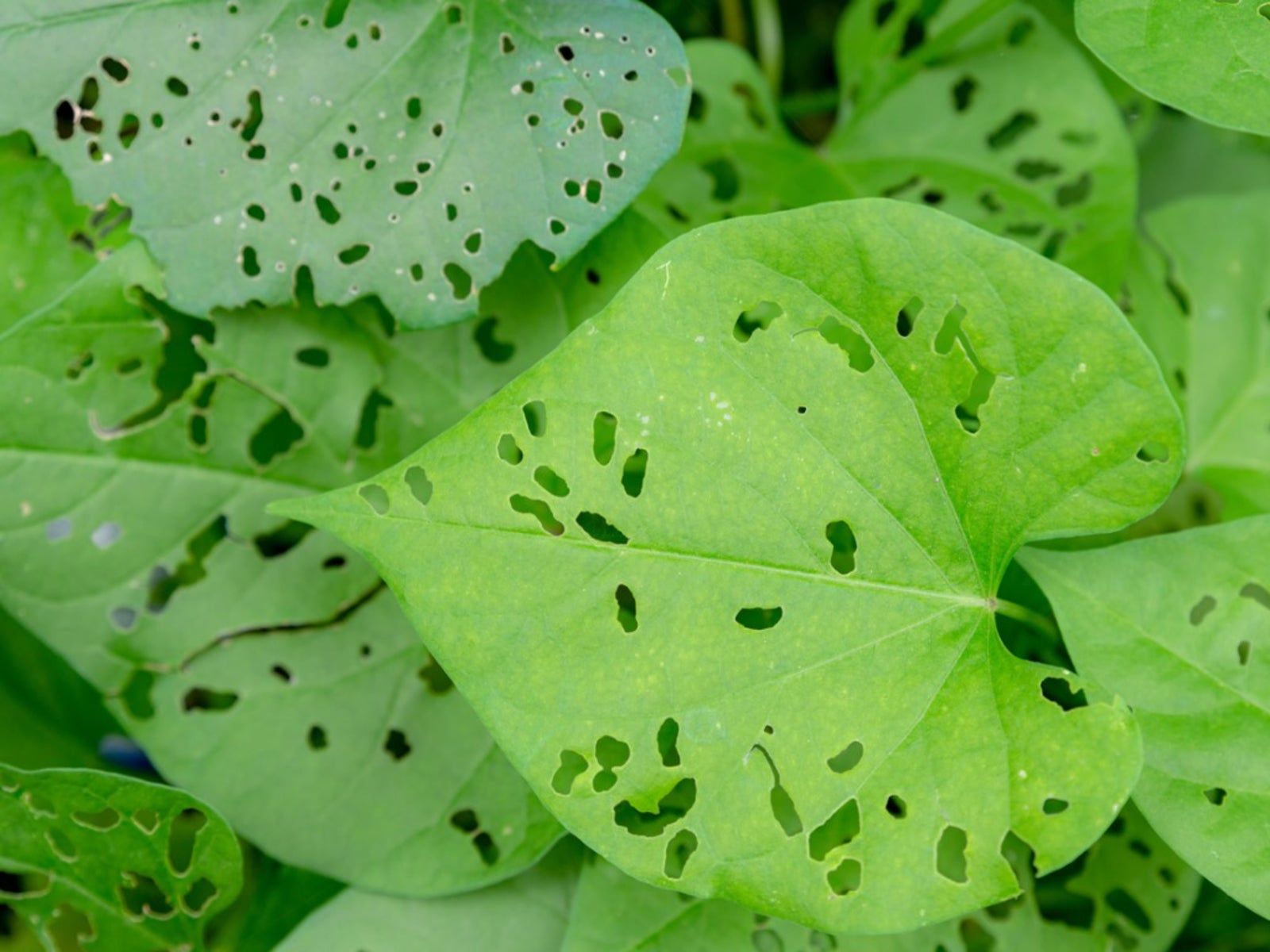
1. Clean round holes: often slugs
When you see smooth, round, fairly clean holes in leaves, especially on tender plants, slugs are often high on the list.
What the damage looks like
The holes tend to look more neatly punched out than shredded. Damage often appears on leafy vegetables, hostas, basil, and soft ornamentals.
When to suspect slugs
Slugs are especially active in damp weather, thick mulch, crowded shade, and gardens watered late in the day.
What to do
Start with simple control:
- hand-pick in the evening or early morning
- reduce hiding places like boards or dense debris
- use beer traps if you like that method
- water earlier in the day so the surface dries sooner
The key is consistency. A few nights of slug control often tells you quickly whether you identified the right culprit.
2. Ragged holes plus frass: often caterpillars
If leaves look chewed unevenly and you also see dark pellets or droppings, known as frass, caterpillars are a strong suspect.
What the damage looks like
The holes are irregular, not neat. Frass is often the clue that confirms active chewing.
Where it shows up
Brassicas, tomatoes, herbs, and many ornamentals can all attract different caterpillars.
What to do
Check leaf undersides and growing tips carefully. Hand-picking is often enough in a small garden. If pressure is heavy, Bt products are often a more targeted option than broad spraying.
Do not assume every caterpillar needs immediate elimination. On ornamentals, some light feeding may be tolerable. On food crops, early action matters more.

3. Skeletonized leaves: often Japanese beetles
When a leaf looks like the soft tissue has been eaten away while the veins remain, that is skeletonizing. Japanese beetles are a common cause.
What the damage looks like
Leaves appear lace-like, with most of the green tissue missing between the veins.
Why this matters
Skeletonizing weakens the plant’s ability to photosynthesize and quickly makes ornamentals look rough.
What to do
Hand removal into soapy water is often one of the most effective first responses, especially early in the morning when beetles are sluggish. Stay ahead of them. A few beetles can become many very quickly.

4. Stippled leaves and fine webbing: often spider mites
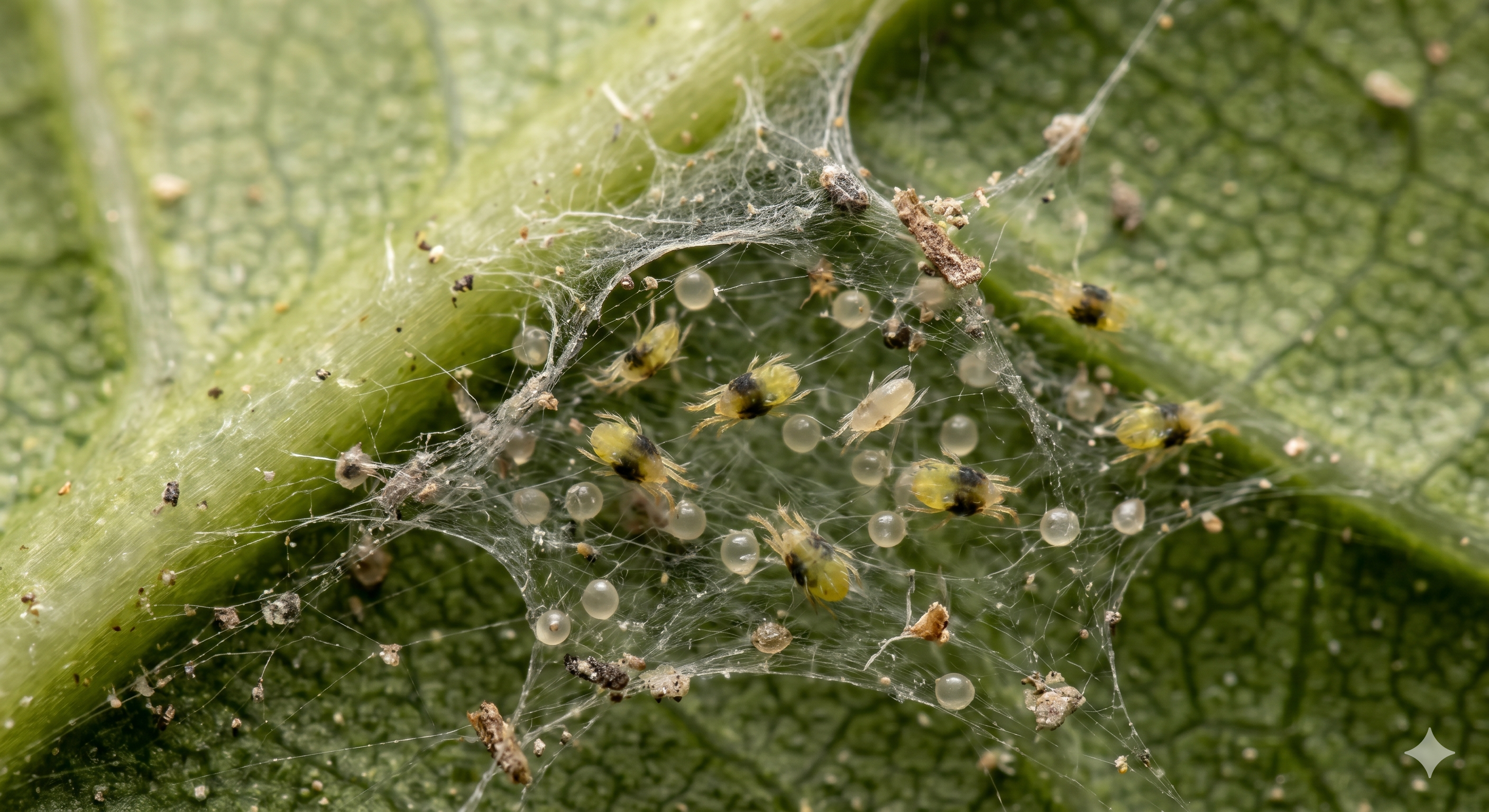
Tiny pale specks across a leaf surface, especially with delicate webbing, often point to spider mites.
What the damage looks like
The leaf develops a dusty, speckled, faded look rather than actual holes. Fine webbing may appear between leaves or stems.
When it gets worse
Spider mites thrive in hot, dry, dusty conditions. They often explode during summer stress.
What to do
Check the undersides of leaves first. A strong water spray can help knock populations down. Repeated washing is often more useful than a single dramatic treatment. Focus on plant stress too, because weakened plants invite mite problems.
5. Curled leaves and sticky residue: often aphids
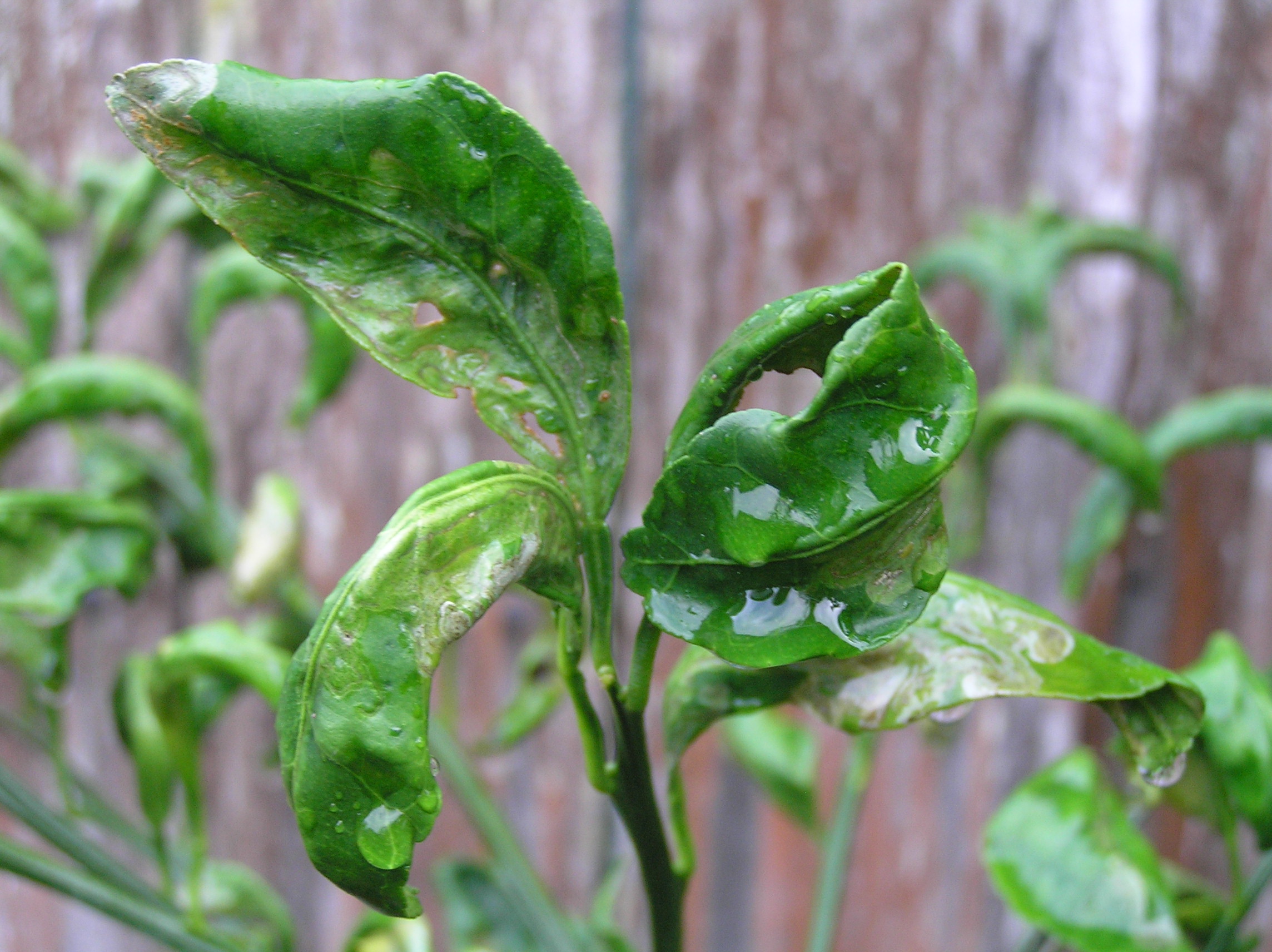
If new growth looks twisted, curled, or puckered, and the plant feels sticky, aphids are often involved.
What the damage looks like
The leaves distort as they grow. Sticky honeydew may coat stems or leaves and later attract sooty mold.
Where it often happens
Tender new growth on roses, peppers, milkweed, beans, and many flowering plants.
What to do
A strong water blast is often enough for mild infestations. In a home garden, that simple step is surprisingly effective. Insecticidal soap can help when populations are dense. Also look for ants, because they often protect aphids in exchange for honeydew.
6. Silvery streaks or scraped-looking foliage: often thrips
When foliage shows silvery scarring, pale streaks, or scraped patches, thrips are often behind it.
What the damage looks like
The plant may look rubbed, streaked, or slightly bleached in narrow lines or patches. Flowers may also be distorted.
Why thrips are tricky
They are tiny, fast, and often hard to see directly. The damage pattern is often easier to detect than the insect.
What to do
Blue sticky traps can help monitor activity. For heavier issues, targeted treatments may be needed, but first confirm the pest. Thrips can hide in buds and tight growth, so inspection must be thorough.
7. Winding trails inside leaves: leafminers
If you see pale, winding tunnels or scribbles inside the leaf tissue, you are likely dealing with leafminers.
What the damage looks like
The leaf surface stays mostly intact, but inside it you see pale serpentine trails.
What this tells you
The pest is feeding between the leaf layers, not on the surface.
What to do
Remove the most affected leaves early. This is often the cleanest way to interrupt the cycle. Minor damage is often more cosmetic than catastrophic, so avoid overreacting if the plant is otherwise vigorous.

8. Semicircle notches on leaf edges: leafcutter bees
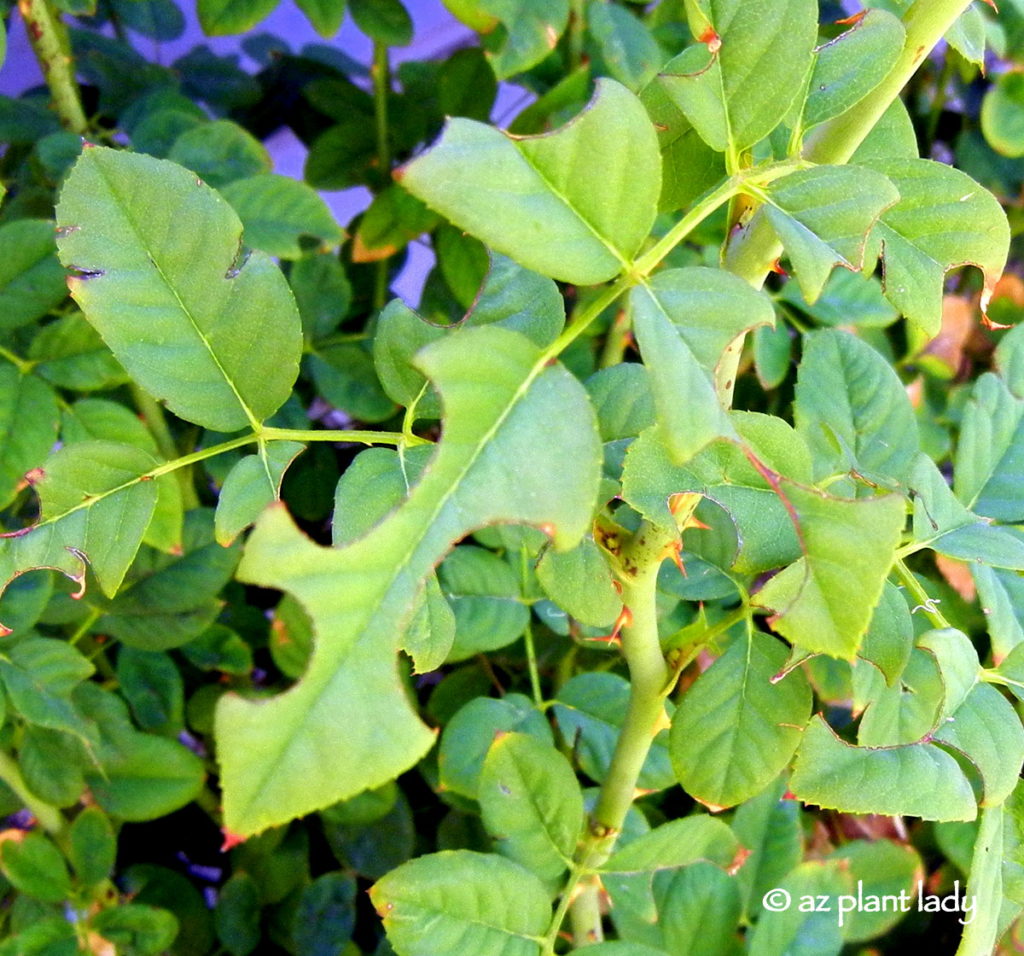
If you see neat half-moon cutouts from the leaf edge, leafcutter bees may be responsible.
What the damage looks like
The cut is surprisingly smooth and circular, often looking almost decorative.
Important note
This is one of the most useful lessons in pest identification: not all leaf damage requires control. Leafcutter bees are beneficial pollinators. They use those leaf pieces for nesting.
What to do
Usually, do nothing. This is a sign of garden life, not a problem that needs fixing.
9. Shotgun tiny holes: flea beetles
If leaves are covered in many tiny scattered holes, like they were peppered with a shotgun blast, flea beetles are a common cause.
What the damage looks like
Very small holes, often numerous and spread across the leaf surface.
Who gets hit hardest
Seedlings and young brassicas, eggplant, arugula, and related crops often suffer most.
What to do
Protect seedlings early with row cover if flea beetles are common in your garden. Mature plants can tolerate more feeding, but young ones may stall badly.

10. Stem hole with frass near the base: vine borer
A hole in the stem near the base, combined with sawdust-like frass, strongly suggests vine borer on squash-family plants.
What the damage looks like
You may see sudden wilting, especially on squash, followed by a hole near the crown or lower stem and crumbly waste nearby.
Why this one matters
This pest can kill an otherwise healthy squash plant surprisingly fast.
What to do
Inspect the stem base early and often. If you find the problem soon enough, you may be able to remove the larva and mound soil over the stem to encourage new rooting. Timing matters here more than almost anything else.

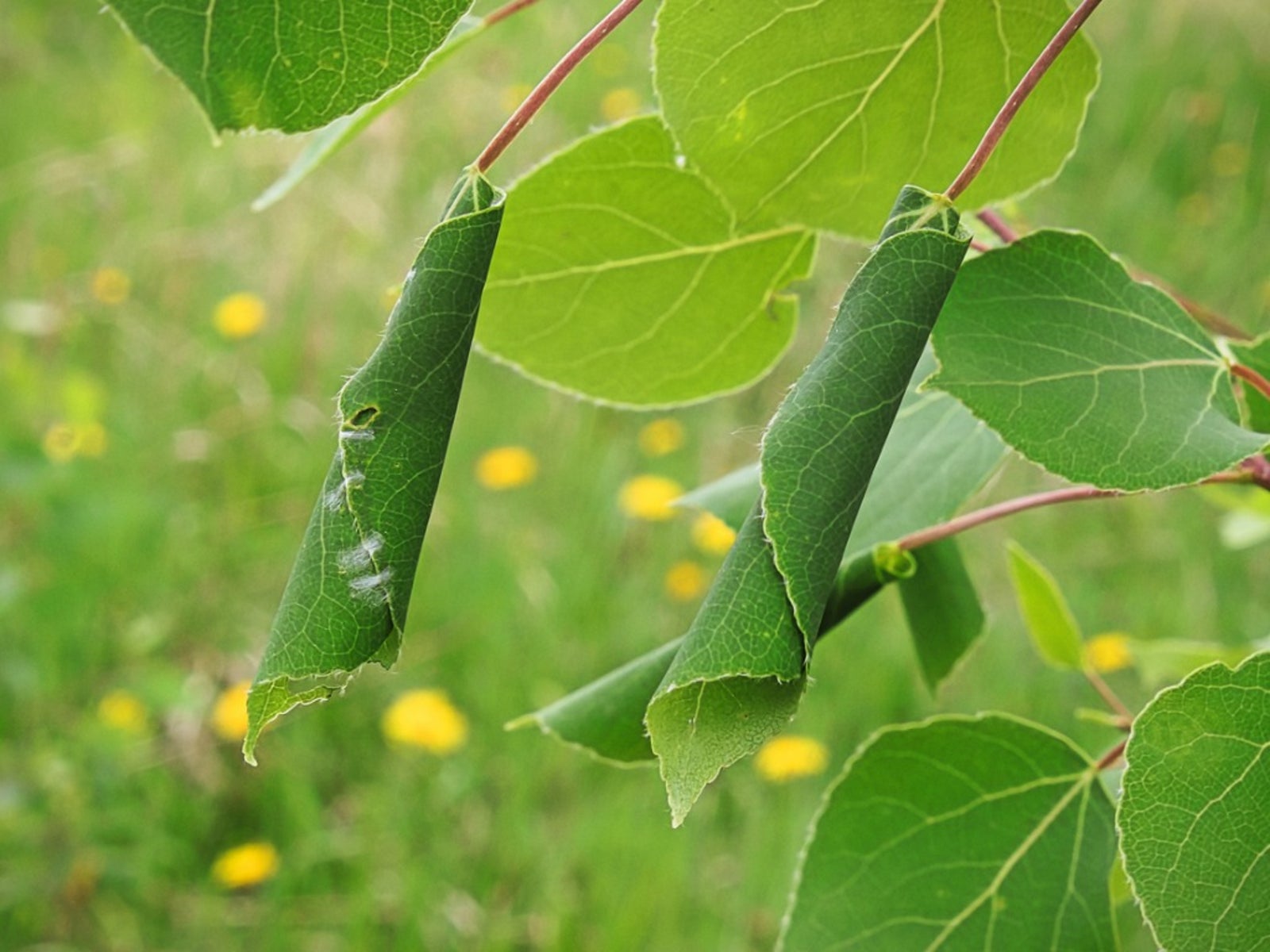
11. Rolled leaf edges: leafrollers
If a leaf is rolled or folded and held that way, often with silk or hidden chewing inside, leafrollers are a likely cause.
What the damage looks like
The leaf curls into a shelter, often protecting the insect inside.
What to do
Open a few rolled leaves before treating. Hand-picking is very effective in a home garden if you catch it early. Bt may help in active cases where caterpillars are confirmed.
12. Stripped overnight: often deer
When a plant is suddenly chewed back hard, often with large sections missing, deer are often the culprit.
What the damage looks like
This is not the delicate damage of insects. It is larger, rougher, and often dramatic. The plant may look browsed rather than nibbled.
When to suspect deer
If the damage appears suddenly, especially overnight, and affects tender shoots, buds, or whole upper portions of plants, deer are likely.
What to do
Fence is the most dependable solution. Repellents can help, but they work best when rotated and reapplied consistently. In high-pressure areas, physical exclusion usually wins.

How to diagnose before you spray
A smart garden routine includes these steps:
Check both sides of the leaf
Many pests hide underneath, not on top.
Look for droppings, webbing, or sticky residue
These are often more revealing than the holes themselves.
Check the stem base and newest growth
Some pests target tender tips. Others attack the crown.
Look at timing
Damage overnight suggests different culprits than damage that builds slowly in hot, dry weather.
Decide whether the pest is actually harmful enough to treat
A few notches from leafcutter bees are not the same as a collapsing squash vine.
The best mindset for pest control
The healthiest gardeners are not the ones who spray first. They are the ones who:
- observe first
- identify patterns
- act specifically
- disturb the garden as little as possible
That is how you protect your crops without destroying the balance that makes a garden resilient.
Final thoughts: the damage really does tell the story
Clean round holes, ragged chewing, skeletonized leaves, webbing, sticky curling, silver streaks, winding tunnels, neat notches, tiny peppered holes, stem damage, rolled leaves, and sudden overnight stripping all point in different directions.
And once you learn those patterns, the garden becomes easier to read.
That is where real pest management begins: not with fear, not with guesswork, and not with the first bottle on the shelf. It begins with noticing what the plant is already trying to tell you.