Cultivate Joy: A Gardener’s Guide to 20 Mood-Lifting Flowers
There’s a special kind of magic that unfolds in a garden, a vibrant tapestry of colors and fragrances that not only beautifies our surroundings but also nourishes our souls. For centuries, flowers have been more than just pretty faces; they’ve been symbols, messengers, and profound sources of comfort and happiness. Imagine stepping into your own garden, or even gazing upon a simple bouquet, and feeling a genuine lift in your spirits. It’s not just a poetic notion—it’s a scientifically recognized benefit of connecting with nature.
This guide will introduce you to 20 remarkable flowers, each carrying a unique sentiment or mood, and provide you with practical tips to grow them successfully. Whether you dream of a sprawling backyard oasis or a few cheerful pots on your balcony, learning to cultivate these blooms can transform your space and your state of mind. Get ready to dig in and discover how these plants can bring more joy, serenity, and optimism into your life.
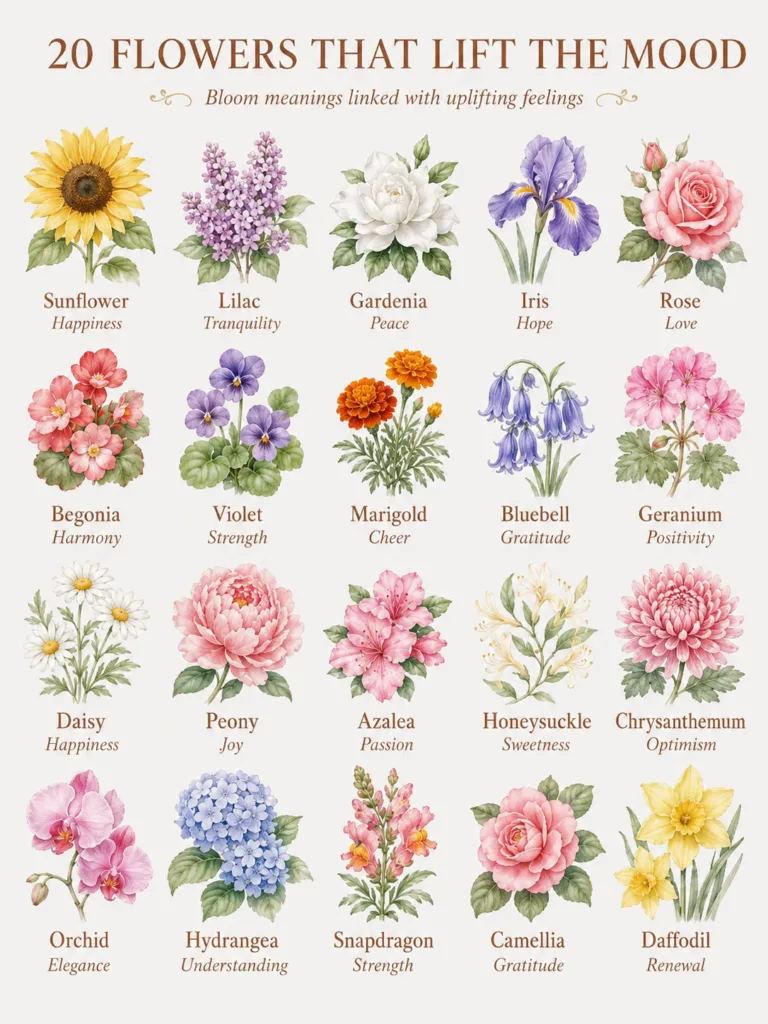 Discover how these 20 flowers can brighten your garden and your day.
The Power of Petals: Gardening for Emotional Well-being
Gardening is often hailed as a therapeutic activity, and for good reason. The act of nurturing plants, observing their growth, and enjoying their blooms offers a tangible connection to the natural world. This connection has been shown to reduce stress, improve focus, and foster a sense of accomplishment. Floriography, the language of flowers, further deepens this bond by assigning symbolic meanings to various blooms. By choosing flowers with uplifting associations, you can intentionally design a garden that not only pleases the eye but also soothes the heart.
Your Guide to Growing Mood-Lifting Flowers
Let’s explore 20 fantastic flowers, delving into their unique characteristics and how you can invite their mood-lifting qualities into your garden.
1. Sunflower (Joy, Happiness)
These majestic giants symbolize pure joy and happiness, turning their golden faces to follow the sun. Sunflowers are incredibly rewarding to grow, bringing an instant burst of cheer to any landscape.
- Hardiness: Annual
- Plant type: Annual
- Exposure: Full sun (6-8 hours daily)
- Height: 3-10+ feet, depending on cultivar
- Spread: 1-3 feet
Care Tip: Plant seeds directly into well-draining soil after the last frost. They require consistent watering, especially as they establish, but tolerate some drought once mature. Support taller varieties with stakes to prevent them from toppling in strong winds.
2. Lavender (Calm, Serenity)
Known for its soothing fragrance, lavender is a universal symbol of calm and serenity. Its beautiful purple spikes are a magnet for pollinators and perfect for sensory gardens.
- Hardiness: USDA Zones 5-9
- Plant type: Perennial shrub
- Exposure: Full sun
- Height: 1-3 feet
- Spread: 1-3 feet
Care Tip: Lavender thrives in poor to moderately fertile, well-draining soil. Avoid overwatering; allow the soil to dry out between waterings. Prune after flowering to maintain shape and encourage new blooms. In humid climates, ensure good air circulation to prevent fungal issues.
3. Daisy (Innocence, Purity)
Simple yet charming, daisies embody innocence and purity. Their bright, open faces make them a delightful addition to cottage gardens and meadows.
- Hardiness: Shasta Daisy (Leucanthemum x superbum) is Zones 4-9; common lawn daisy (Bellis perennis) is often treated as biennial or short-lived perennial.
- Plant type: Perennial
- Exposure: Full sun to partial shade
- Height: 6 inches to 3 feet, depending on type
- Spread: 6-24 inches
Care Tip: Daisies are adaptable but prefer well-draining soil. Deadhead spent blooms regularly to encourage continuous flowering and prevent unwanted self-seeding for some varieties. Divide clumps every few years to rejuvenate plants.
4. Tulip (Cheerfulness, Love)
As harbingers of spring, tulips symbolize cheerfulness and love. Their vibrant colors burst forth after winter, filling us with hope and anticipation.
- Hardiness: USDA Zones 3-8
- Plant type: Perennial bulb (often replanted annually in warmer zones for best display)
- Exposure: Full sun
- Height: 6-28 inches, depending on cultivar
- Spread: 4-6 inches
Care Tip: Plant tulip bulbs in the fall before the ground freezes, about 6-8 inches deep in well-draining soil. Ensure they get a chilling period (winter cold) for best blooms. After flowering, allow foliage to die back naturally before removing it, as this stores energy for next year’s blooms.
5. Peony (Prosperity, Good Fortune)
With their lush, fragrant blooms, peonies are associated with prosperity and good fortune. These long-lived perennials become more magnificent with each passing year.
- Hardiness: USDA Zones 3-8
- Plant type: Perennial
- Exposure: Full sun to partial shade (at least 6 hours of sun)
- Height: 2-4 feet
- Spread: 2-4 feet
Care Tip: Plant peony bare roots in the fall, ensuring the “eyes” (growth buds) are no more than 1-2 inches below the soil surface. Too deep and they won’t flower. They prefer rich, well-draining soil and minimal disturbance once established. Provide support for heavy blooms to prevent them from flopping over.
6. Orchid (Beauty, Elegance)
Orchids, particularly Phalaenopsis, are exquisite symbols of beauty and elegance. While often grown indoors, their unique forms inspire awe and sophistication.
- Hardiness: Tropical (typically grown as houseplants)
- Plant type: Tropical perennial
- Exposure: Bright, indirect light
- Height: 1-3 feet, depending on type
- Spread: 6-18 inches
Care Tip: Orchids thrive in specialized orchid bark or sphagnum moss. Water by soaking the pot and allowing it to drain completely. Avoid letting them sit in standing water. Ensure good air circulation and high humidity, which can be achieved with a pebble tray or humidifier. Only repot when necessary, using fresh orchid mix.
7. Rose (Love, Passion)
The iconic rose is universally recognized for its deep association with love and passion. With countless varieties, there’s a rose for every garden and every gardener’s heart.
- Hardiness: USDA Zones 4-10, depending on species and cultivar
- Plant type: Perennial shrub or vine
- Exposure: Full sun (at least 6 hours)
- Height: 1-20 feet, highly variable
- Spread: 1-15 feet, highly variable
Care Tip: Roses require rich, well-draining soil and consistent moisture. Prune in early spring to remove dead or weak wood and shape the plant. Regular deadheading encourages more blooms. Watch for common pests like aphids and black spot, treating promptly with organic solutions.
8. Hydrangea (Gratitude, Abundance)
Hydrangeas, with their lavish clusters of blooms, symbolize gratitude and abundance. Their changing colors can add a dynamic element to your garden.
- Hardiness: USDA Zones 3-9, depending on species
- Plant type: Deciduous shrub
- Exposure: Partial sun (morning sun, afternoon shade preferred in hot climates)
- Height: 3-15 feet, depending on species
- Spread: 3-15 feet, depending on species
Care Tip: Hydrangeas prefer consistently moist, well-draining soil. Many varieties (Hydrangea macrophylla) can change bloom color based on soil pH: acidic soil leads to blue flowers, while alkaline soil produces pink. Amend soil with aluminum sulfate for blue or garden lime for pink. Pruning varies by type; know your hydrangea species before pruning heavily.
9. Gerbera Daisy (Cheerfulness, Optimism)
Gerbera daisies exude pure cheerfulness and optimism with their bold, bright petals. They are a favorite for cut flowers and container plantings.
- Hardiness: USDA Zones 8-11 (often grown as annuals elsewhere)
- Plant type: Tender perennial
- Exposure: Full sun
- Height: 12-18 inches
- Spread: 12-18 inches
Care Tip: Plant in well-draining soil and provide consistent moisture. Deadhead spent blooms to encourage more flowers. In cooler zones, they can be overwintered indoors or treated as annuals. Ensure good air circulation around the plants to prevent fungal diseases.
10. Freesia (Trust, Friendship)
Freesias offer delicate beauty and an intoxicating fragrance, symbolizing trust and friendship. They are exquisite in bouquets and containers.
- Hardiness: USDA Zones 9-10 (corms lifted and stored in colder zones)
- Plant type: Tender perennial from corms
- Exposure: Full sun to partial shade
- Height: 1-2 feet
- Spread: 3-6 inches
Care Tip: Plant freesia corms in well-draining soil. In cooler climates, plant in spring for summer blooms and lift corms before the first frost. In warmer zones, plant in fall for spring blooms. Provide support for their slender stems if needed.
11. Lily (Purity, Renewal)
Lilies, with their majestic form and often fragrant blooms, represent purity and renewal. They add dramatic flair to any garden space.
- Hardiness: USDA Zones 3-9, depending on species
- Plant type: Perennial bulb
- Exposure: Full sun to partial shade (prefers “head in the sun, feet in the shade”)
- Height: 2-6 feet, depending on species
- Spread: 1-2 feet
Care Tip: Plant lily bulbs in well-draining soil, ensuring good air circulation. Provide consistent moisture, especially during dry spells. Support taller varieties with stakes to prevent them from falling over. Be aware that lilies are toxic to cats.
12. Poppy (Remembrance, Peace)
Poppies are poignant symbols of remembrance and peace, with their delicate, often crinkled petals. They bring a wild, natural beauty to the garden.
- Hardiness: Varies greatly by type (e.g., California Poppy is Zone 6-10, Oriental Poppy is Zone 3-7; many are annuals)
- Plant type: Annual or perennial
- Exposure: Full sun
- Height: 1-4 feet, depending on species
- Spread: 6-18 inches
Care Tip: Most poppies prefer to be direct-sown in early spring or fall, as they dislike transplanting. They thrive in well-draining soil and require minimal care once established. Let some go to seed to ensure self-seeding for future blooms.
13. Daffodil (New Beginnings, Hope)
Daffodils are quintessential symbols of new beginnings and hope, heralding spring with their cheerful yellow and white trumpets. They are resilient and largely deer-resistant.
- Hardiness: USDA Zones 3-8
- Plant type: Perennial bulb
- Exposure: Full sun to partial shade
- Height: 6-24 inches, depending on cultivar
- Spread: 6-12 inches
Care Tip: Plant bulbs in the fall, 2-3 times their height deep, in well-draining soil. They naturalize well, multiplying over the years. Allow foliage to die back completely after blooming to nourish the bulb for the next season.
14. Iris (Faith, Wisdom)
The elegant iris, with its intricate petals, symbolizes faith and wisdom. These hardy perennials come in a stunning array of colors and forms.
- Hardiness: USDA Zones 3-9, depending on species
- Plant type: Perennial (rhizomatous or bulbous)
- Exposure: Full sun (at least 6 hours)
- Height: 1-4 feet, depending on species
- Spread: 1-2 feet
Care Tip: For bearded irises, plant rhizomes so their tops are exposed to the sun or barely covered. Ensure well-draining soil to prevent rot. Divide clumps every 3-5 years in late summer to maintain vigor and bloom production.
15. Carnation (Love, Fascination)
Carnations convey deep love and fascination with their ruffled, colorful blooms and spicy fragrance. They are excellent for cutting and last well in vases.
- Hardiness: USDA Zones 5-9 (often grown as annuals in colder zones)
- Plant type: Perennial
- Exposure: Full sun
- Height: 18-30 inches
- Spread: 6-12 inches
Care Tip: Plant in well-draining, slightly alkaline soil. Provide consistent moisture without overwatering. Pinch back young plants to encourage bushier growth and more flowers. Deadhead regularly to extend the blooming period.
16. Snapdragon (Grace, Strength)
Snapdragons, with their unique “snapping” blooms, symbolize grace and strength. They add vertical interest and a burst of color to beds and containers.
- Hardiness: USDA Zones 7-10 (often grown as annuals in colder zones)
- Plant type: Tender perennial, often grown as annual
- Exposure: Full sun to partial shade
- Height: 6 inches to 3 feet, depending on cultivar
- Spread: 6-12 inches
Care Tip: Start seeds indoors 6-8 weeks before the last frost for early blooms. Pinch back young plants to encourage branching. Deadhead spent flower spikes to promote continuous blooming. They prefer cooler temperatures, often slowing down in the heat of summer but rebounding in fall.
17. Zinnia (Friendship, Remembrance)
Zinnias are cheerful and vibrant, representing friendship and remembrance. They are incredibly easy to grow and are cut-and-come-again flowers, meaning more you cut, the more they produce.
- Hardiness: Annual
- Plant type: Annual
- Exposure: Full sun
- Height: 1-4 feet, depending on cultivar
- Spread: 1-2 feet
Care Tip: Direct sow zinnia seeds after the last frost; they germinate quickly. They love heat and well-draining soil. For continuous blooms and bushier plants, pinch off the central stem when plants are about 6-8 inches tall and deadhead regularly.
18. Aster (Patience, Elegance)
Asters brighten the late-season garden, symbolizing patience and elegance. Their daisy-like flowers are a vital food source for pollinators as summer wanes.
- Hardiness: USDA Zones 4-8, depending on species
- Plant type: Perennial
- Exposure: Full sun
- Height: 1-5 feet, depending on species
- Spread: 1-3 feet
Care Tip: Plant asters in well-draining soil with good air circulation to prevent powdery mildew. Pinch back in early summer to encourage bushier growth and more blooms. Divide clumps every 2-3 years to maintain vigor.
19. Chrysanthemum (Friendship, Joy)
Chrysanthemums, or “mums,” are autumn stars, symbolizing friendship and joy. They provide a final burst of color before winter.
- Hardiness: USDA Zones 5-9 (garden mums)
- Plant type: Perennial
- Exposure: Full sun
- Height: 1-3 feet
- Spread: 1-3 feet
Care Tip: Plant mums in spring to allow them to establish roots before winter. Pinch back new growth every few weeks until mid-July to encourage a compact, bushy plant with abundant flowers. Provide consistent moisture, especially during dry periods. Protect with mulch in colder zones over winter.
20. Delphinium (Lightness, Mirth)
Delphiniums are renowned for their towering spires of blue, purple, pink, or white flowers, representing lightness and mirth. They add dramatic height and elegance to perennial borders.
- Hardiness: USDA Zones 3-7 (some species extend to Zone 8)
- Plant type: Perennial
- Exposure: Full sun to light shade
- Height: 2-7 feet, depending on cultivar
- Spread: 1-2 feet
Care Tip: Delphiniums prefer rich, well-draining soil and consistent moisture. Due to their height, most varieties require staking to prevent wind damage. Deadhead spent flower spikes to encourage a second, smaller flush of blooms. Protect from slugs and snails, which can decimate young plants.
Common Mistakes to Avoid for a Flourishing, Mood-Lifting Garden
Even experienced gardeners face challenges. Here are some common pitfalls and how to steer clear of them:
- Ignoring Sunlight Needs: Placing sun-loving plants in shade or vice-versa will lead to poor growth and few flowers. Observe your garden throughout the day to understand its light patterns.
- Overwatering or Underwatering: Most plants prefer consistently moist but not waterlogged soil. Stick your finger an inch or two into the soil; if it feels dry, it’s time to water. Ensure good drainage in pots and beds.
- Poor Soil Preparation: Healthy plants start with healthy soil. Amend heavy clay soils with compost to improve drainage, and sandy soils to improve water retention and fertility.
- Crowding Plants: Adequate spacing ensures good airflow, reducing the risk of fungal diseases, and allows each plant enough room to thrive. Always check mature spread recommendations.
- Neglecting Deadheading: Removing spent flowers encourages plants to produce more blooms instead of putting energy into seed production. This is key for many annuals and perennials to extend their flowering season.
Regional and Climate Considerations for U.S. Gardeners
Gardening across the United States means adapting to a wide range of climates and conditions. While USDA Hardiness Zones provide a baseline for winter cold tolerance, remember to consider other factors:
- Zones 3-5 (Northern US): Focus on cold-hardy perennials that can withstand harsh winters. Many plants listed here are perennials in these zones. Start annuals indoors early to maximize their short growing season.
- Zones 6-8 (Mid-Atlantic to Pacific Northwest): This broad range offers versatility. Many plants thrive here as perennials, but pay attention to summer heat and humidity, which can affect some species.
- Zones 9-11 (Southern US, Southwest, Pacific Coast): Enjoy a longer growing season, but manage intense summer heat and drought. Many “tender perennials” become true perennials here. Adjust watering schedules to account for faster evaporation.
Always check your local extension service for specific planting dates and cultivar recommendations suited to your microclimate, rainfall patterns, and soil types. Understanding your specific environment is crucial for success.
Embrace the Joy of Gardening
Cultivating a garden filled with these mood-lifting flowers is a journey of discovery, patience, and immense reward. Each bloom you nurture, from the tiniest daisy to the tallest delphinium, offers a moment of beauty and a whisper of its unique meaning. By engaging with your garden, you’re not just growing plants; you’re actively cultivating peace, happiness, and a deeper connection to the natural world. So, pick your favorites, prepare your soil, and get ready to create a garden that not only flourishes with vibrant life but also uplifts your spirit every single day.