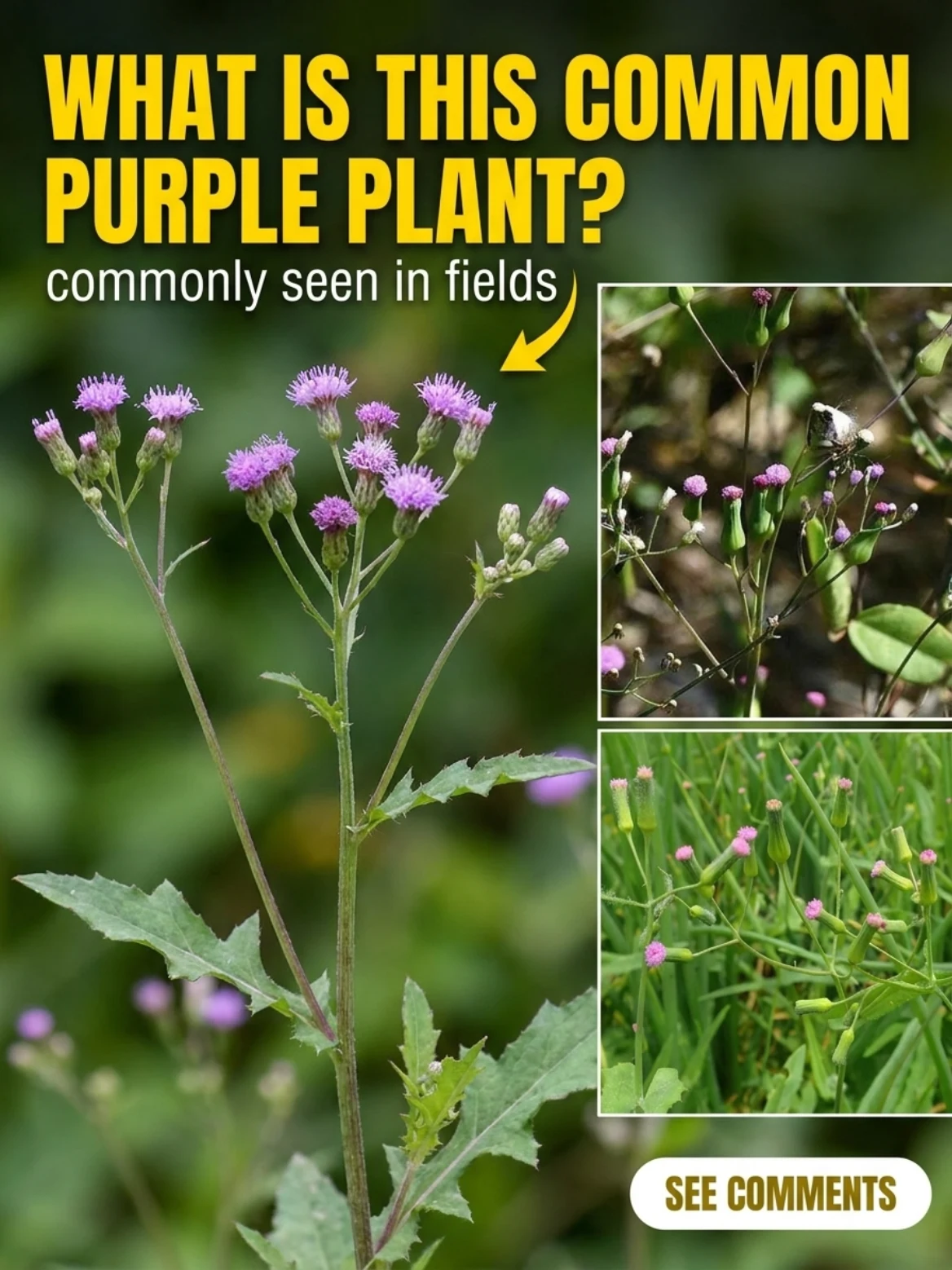
The purple plant in the image appears to be Emilia sonchifolia, commonly known as lilac tasselflower, Cupid’s shaving brush, purple sow thistle, or tassel flower.
It is often seen in fields, roadsides, gardens, and open grassy areas. The plant has soft green leaves, thin upright stems, and small purple-pink flower heads that look like tiny brushes. After flowering, the heads form narrow green seed capsules with soft white fluff.
In traditional herbal use, Emilia sonchifolia is usually valued as a cooling, soothing, edible medicinal herb, but it should still be used carefully and correctly.
What Lilac Tasselflower Is Traditionally Used For
Emilia sonchifolia has been used in folk medicine across parts of Asia, Africa, and tropical regions. Traditional use often focuses on the leaves, young stems, and aerial parts.
In some cultures, the tender leaves are eaten as a vegetable or added to traditional salads. Reviews describe Emilia sonchifolia as an edible medicinal plant used in traditional vegetable salads in Malaysia, Bangladesh, and India.
Traditionally, the plant has been used for:
- Mild feverish feelings.
- Sore throat and throat irritation.
- Cough and respiratory discomfort.
- Skin rashes, itching, and small wounds.
- Diarrhea and digestive upset.
- Inflammation and swelling.
- Eye-related folk remedies.
- General cooling after body heat or fatigue.
Some ethnomedicinal reports also mention its use for asthma, burns, piles, worms, diabetes, liver-related complaints, and breast abscesses, but these uses should not be treated as proven cures.
Why People Still Care About This Plant
People still care about lilac tasselflower because it is common, easy to recognize, and deeply rooted in folk medicine.
It is not a rare imported herb. It grows close to homes, fields, and gardens. That makes it familiar to older generations who learned how to use wild plants for simple wellness support.
Modern research has also kept interest alive. Reviews on Emilia sonchifolia report that the plant contains several phytochemicals, including flavonoids, alkaloids, phenolic compounds, tannins, saponins, terpenoids, and glycosides. These compounds are often studied for antioxidant, anti-inflammatory, antimicrobial, and wound-supporting effects.
This explains why traditional healers cared about it. However, research interest does not mean it can replace medical treatment. Most available studies are early-stage, laboratory-based, animal-based, or traditional-use reports.
The best way to understand this plant is simple: it may be useful as a gentle traditional herb, but it is not a miracle cure.
Traditional Preparation Style
The most common traditional preparation is a mild decoction or fresh herb tea made from the leaves and tender stems. Some communities may also use crushed fresh leaves externally for skin comfort.
For home-style use, keep the preparation light and short-term.
Ingredients
- 1 small handful fresh Emilia sonchifolia leaves and tender stems.
- Or 1 to 2 teaspoons dried aerial parts.
- 2 cups clean water.
- Small pot with lid.
- Fine strainer.
Optional additions:
- 1 teaspoon honey for throat comfort.
- A few drops of lime after cooling for taste.
Do not use plants collected from sprayed fields, roadsides, polluted soil, or areas with animal waste.
Instructions
- Wash the fresh plant material very well.
- Remove old, dirty, or damaged leaves.
- Cut the leaves and tender stems into smaller pieces.
- Add the herb to 2 cups of clean water.
- Bring it to a gentle simmer.
- Let it simmer for 7 to 10 minutes.
- Turn off the heat and cover for another 5 minutes.
- Strain carefully before drinking or using externally.
The liquid should be mild and light. Do not boil it into a strong, dark extract.
How It Is Usually Used
For traditional internal use, people usually take a small amount of the mild decoction after food.
A gentle serving is:
- 100 to 150 ml once daily.
- Used for 2 to 3 days only.
- Best taken warm after meals.
For throat comfort, honey may be added after the liquid cools slightly. For skin use, the cooled decoction may be used as a gentle wash on unbroken skin.
Fresh leaves may also be cooked as a vegetable in some traditional food cultures. This is different from taking concentrated herbal extracts. Food-style use is usually milder.
A realistic timeline is important. For throat soothing or body-heat comfort, people may feel mild relief within the same day. For skin comfort, it may take several gentle washes. If symptoms worsen, spread, or last longer than a few days, medical care is the safer choice.
Safety Notes
Emilia sonchifolia is used as an edible plant in some regions, but it still needs caution.
Avoid using it if you are pregnant, breastfeeding, trying to conceive, giving it to young children, taking regular medication, or managing liver disease, kidney disease, diabetes, immune disorders, or chronic digestive problems.
Do not use it on deep wounds, infected wounds, burns, or serious rashes. Seek medical care if there is pus, fever, strong pain, swelling, spreading redness, or breathing difficulty.
Use only correctly identified plants. Several small purple field plants can look similar, including other Asteraceae weeds. Misidentification is a real risk.
Start small. Stop immediately if you notice nausea, diarrhea, itching, rash, dizziness, stomach cramps, or unusual fatigue.
Final Thoughts
Lilac tasselflower, or Emilia sonchifolia, is a common purple field plant with a long history in traditional wellness. People have used its leaves and tender stems for cooling, throat comfort, skin washes, digestive support, and inflammation-related folk remedies.
The safest approach is gentle use: clean plant material, mild preparation, short duration, and realistic expectations.
The final takeaway: this is a traditional support herb, not a replacement for medical care.
Related Source Science
Scientific reviews describe Emilia sonchifolia as an edible medicinal plant with traditional uses for fever, inflammation, wounds, diarrhea, sore throat, respiratory discomfort, and skin-related concerns. Research has reported phytochemicals such as flavonoids, alkaloids, tannins, saponins, terpenoids, glycosides, and phenolic compounds. Studies have explored antioxidant, anti-inflammatory, antimicrobial, analgesic, anti-ulcer, and wound-related potential, but stronger human clinical evidence is still needed before making treatment claims.