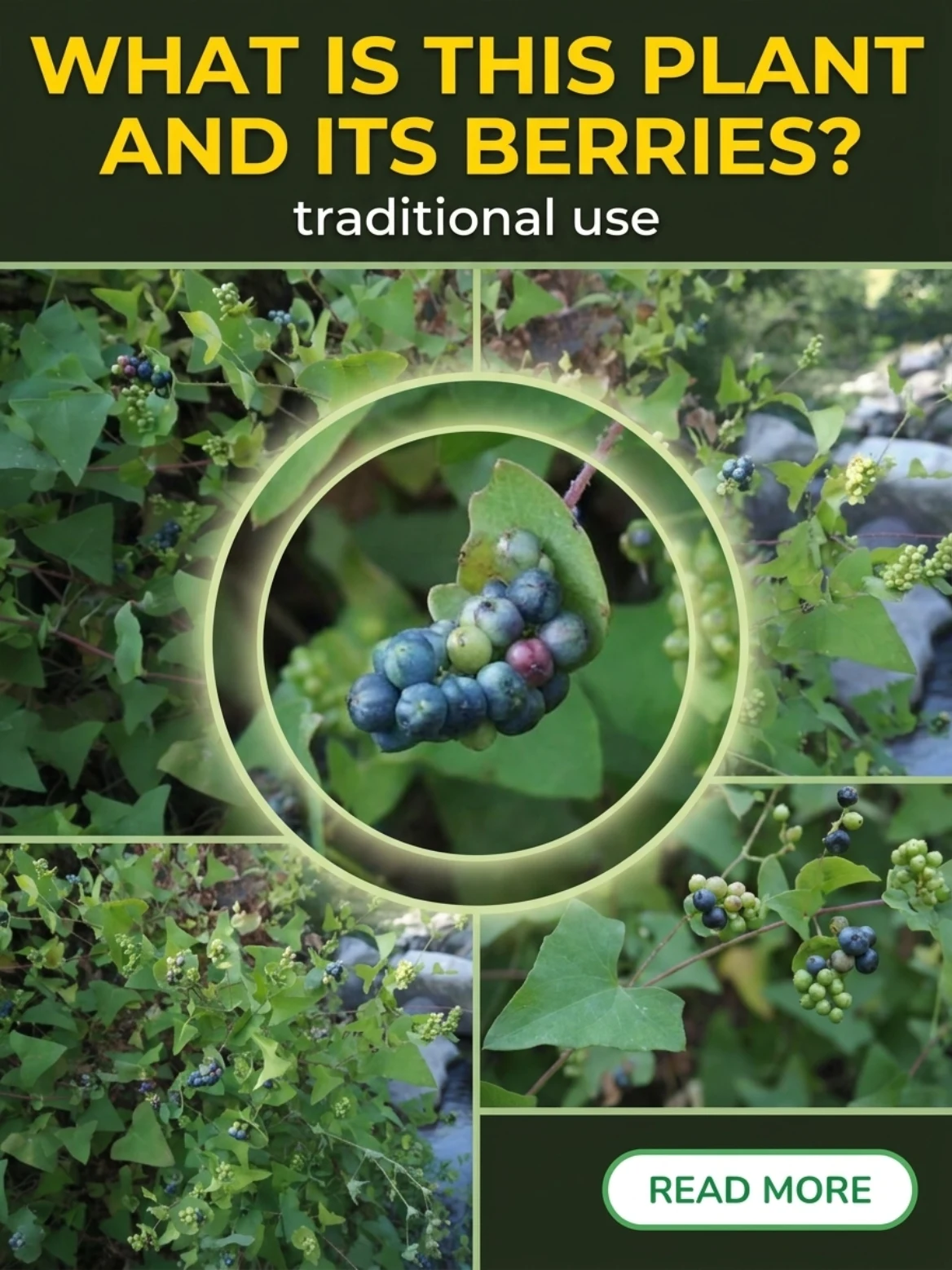
Rau má ngọ, or Polygonum perfoliatum L., is a climbing herb that many people notice because of its small berry-like fruits. At first glance, the berries can look tempting, but this is not a plant to snack on casually like regular fruit.
In traditional herbal use, the whole aerial part of the plant may be used, especially the fresh or dried vine, leaves, and tender stems. It is often prepared as a mild decoction or wash.
Most people are curious about this plant because it has a strong folk reputation for “cooling,” cleansing, and helping the body during heat-related discomfort. Modern reviews also describe Polygonum perfoliatum as a folk medicinal plant used in China for internal, surgical, and gynecological conditions, with many compounds identified from the plant.
What Polygonum Perfoliatum Is Traditionally Used For
Traditionally, Polygonum perfoliatum has been used for heat-clearing, detox-style remedies, skin problems, swelling, urinary discomfort, sore throat, and inflammatory conditions.
In folk practice, it may be used when the body feels “hot,” heavy, irritated, or inflamed. This does not mean it removes toxins in the modern medical sense. It means traditional systems often viewed the plant as cooling and clearing.
Common traditional uses include:
- Supporting comfort during body heat.
- Helping with mild skin irritation in folk washes.
- Supporting urinary comfort.
- Traditional use for swelling and inflammation.
- Folk use for sore throat or mouth discomfort.
- General cleansing-style herbal preparations.
These are traditional uses, not guaranteed medical effects. It should not replace treatment for infection, fever, urinary tract infection, liver disease, or skin disease.
Why People Still Care About This Plant
People still care about rau má ngọ because it has both visual recognition and traditional value. The vine grows easily, the berries are noticeable, and the plant has been passed down in folk medicine for generations.
Research interest is also growing. A pharmacology review reports that around 80 chemical constituents have been isolated from Polygonum perfoliatum, including flavonoids, anthraquinones, terpenoids, phenolic acids, phenylpropanoids, and alkaloids. Flavonoids are considered one of the main active groups in the plant.
These compounds are often studied for antioxidant, anti-inflammatory, antimicrobial, and tissue-supporting activity. Another review on Persicaria and Polygonum plants notes that these genera are widely used in traditional medicine and contain diverse bioactive compounds, including flavonoids and sesquiterpenes.
This helps explain why rau má ngọ is still discussed today. But research interest is not the same as proof that a homemade drink cures disease.
Traditional Preparation Style
The most common traditional preparation is a decoction, which means the plant is simmered in water. Fresh vine, leaves, and tender stems may be used. Dried material can also be used in smaller amounts.
The berries should not be eaten casually, especially if the plant is not identified with certainty.
Ingredients
- 1 small handful fresh Polygonum perfoliatum vine, leaves, and tender stems.
- Or 5 to 8 grams dried plant material.
- 2 cups clean water.
- Small pot with lid.
- Fine strainer.
Optional additions:
- 1 small slice of ginger if using it for cold stomach discomfort.
- A little honey after cooling if using it as a throat-soothing drink.
Do not add random wild berries from the plant into the drink unless guided by a knowledgeable herbal practitioner.
Instructions
- Wash the fresh rau má ngọ carefully to remove soil and insects.
- Cut the vine and tender stems into small pieces.
- Add the plant material to 2 cups of clean water.
- Bring it to a gentle boil.
- Reduce the heat and simmer for 10 to 15 minutes.
- Turn off the heat and cover for another 5 minutes.
- Strain well.
- Drink warm, or allow it to cool for external use.
The decoction should be mild. Do not boil it down into a very strong, dark extract.
How It Is Usually Used
Traditionally, rau má ngọ is used in small amounts and for short periods.
For internal use, people may take a small cup of mild decoction after meals. A gentle amount is around 100 to 150 ml once daily, used for a few days only.
For external use, the cooled decoction may be used as a wash or compress for mild skin irritation. Apply it only to unbroken skin. Leave it for 10 to 15 minutes, then rinse if the skin feels sticky or uncomfortable.
A realistic timeline is simple. For throat or body-heat comfort, people may feel soothed the same day. For skin comfort, mild calming may be noticed after one or two uses if the skin tolerates it. For deeper health concerns, do not expect quick results and do not delay medical care.
Safety Notes
Use Polygonum perfoliatum with caution.
Avoid internal use if you are pregnant, breastfeeding, trying to conceive, giving it to children, taking medication, or managing liver, kidney, heart, blood sugar, immune, or digestive conditions.
Do not eat the berries casually. Wild berries can be misidentified, and safety depends on correct plant identification and preparation.
Stop using it if you notice nausea, stomach pain, diarrhea, dizziness, rash, itching, swelling, breathing discomfort, or unusual fatigue.
Do not use this remedy as a replacement for antibiotics, fever treatment, urinary infection care, liver care, cancer treatment, or wound care. If symptoms are severe, persistent, or worsening, seek medical help.
Final Thoughts
Polygonum perfoliatum L., or rau má ngọ, is a traditional vine with cooling, cleansing, and skin-supporting folk uses. Its leaves, vine, and tender stems are more relevant for remedy preparation than the berries.
The best way to approach this plant is gently: identify it correctly, use mild preparation, avoid long-term daily use, and never treat it as a cure-all.
Related Source Science
Scientific reviews describe Polygonum perfoliatum L. as a traditional medicinal plant with identified compounds such as flavonoids, anthraquinones, terpenoids, phenolic acids, phenylpropanoids, and alkaloids. Modern studies have explored antioxidant, anti-inflammatory, antimicrobial, and other pharmacological activities, but much of the evidence remains preclinical. This means rau má ngọ may be scientifically interesting, but home use should remain cautious and supportive rather than medical.