Good digestion and steady energy don’t always come from complicated diets or expensive supplements. Sometimes, small everyday habits can make a meaningful difference. The foods and combinations in this guide are commonly used because they provide nutrients, fiber, antioxidants, or compounds that may support digestive comfort, blood sugar balance, and overall wellness.
While no single food is a miracle solution, incorporating several of these habits into a balanced lifestyle may help you feel your best throughout the day.
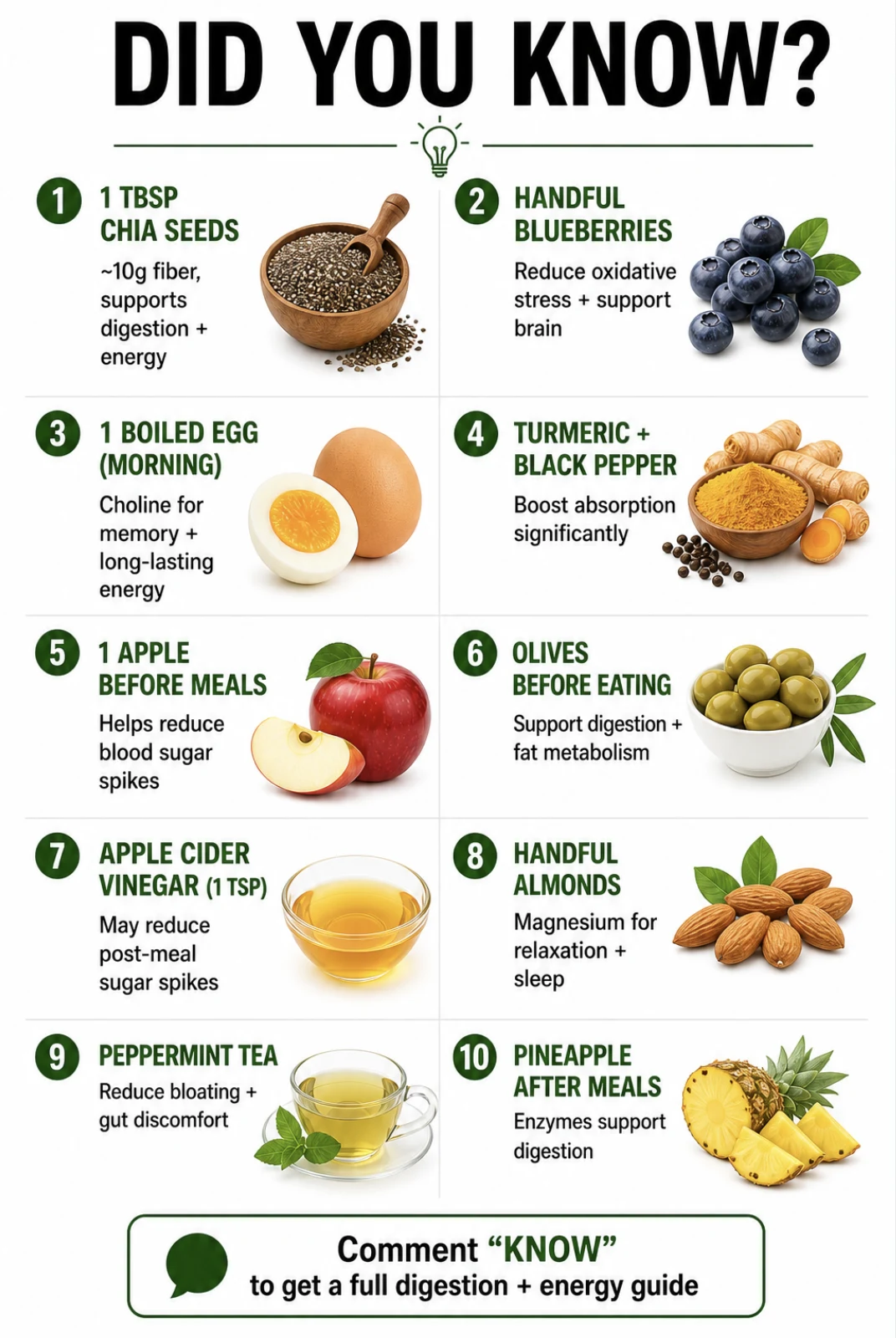
1. Add a Tablespoon of Chia Seeds
Chia seeds are small but incredibly nutrient-dense.
Just one tablespoon provides fiber, omega-3 fats, and plant compounds that can support digestive health.
Benefits
- Helps promote regular bowel movements
- May improve feelings of fullness
- Supports steady energy release
- Provides plant-based omega-3s
Easy Ways to Use Chia Seeds
- Stir into yogurt
- Add to smoothies
- Mix into oatmeal
- Make chia pudding overnight
For best results, drink plenty of water when increasing fiber intake.
2. Enjoy a Handful of Blueberries
Blueberries are rich in antioxidants known as anthocyanins, which help protect cells from oxidative stress.
Potential Benefits
- Supports brain health
- Provides vitamins and fiber
- May help reduce inflammation
- Naturally sweet and low in calories
How to Eat Them
- Fresh as a snack
- Mixed into yogurt
- Added to smoothies
- Sprinkled over oatmeal
A small handful is often enough to add nutritional value to your day.
3. Start the Morning with a Boiled Egg
Eggs are one of the most nutrient-dense foods available.
They contain high-quality protein and choline, a nutrient involved in brain function and metabolism.
Benefits
- Supports muscle maintenance
- Helps increase satiety
- Provides long-lasting energy
- Rich in essential nutrients
Quick Breakfast Ideas
- One or two boiled eggs with fruit
- Eggs alongside whole-grain toast
- Added to breakfast bowls
- Sliced into salads
4. Combine Turmeric with Black Pepper
Turmeric contains curcumin, a compound studied for its antioxidant and anti-inflammatory properties.
Interestingly, black pepper contains piperine, which may significantly improve curcumin absorption.
Ways to Use This Combination
- Golden milk
- Soups
- Curry dishes
- Roasted vegetables
A small pinch of black pepper can help maximize turmeric’s potential benefits.
5. Eat an Apple Before Meals
Apples provide fiber, water, and natural plant compounds.
Eating an apple before a meal may help increase fullness and slow the speed at which food is consumed.
Benefits
- Supports digestive health
- Provides fiber
- May help manage appetite
- Easy and convenient snack
Choose whole apples whenever possible rather than juice to maximize fiber intake.
6. Snack on Olives
Olives contain healthy monounsaturated fats and beneficial plant compounds.
Potential Benefits
- Supports heart health
- Provides antioxidants
- Adds healthy fats to meals
- May improve meal satisfaction
Easy Serving Ideas
- Add to salads
- Serve with cheese and vegetables
- Include in Mediterranean-style meals
- Enjoy as a simple snack
7. Use Apple Cider Vinegar Carefully
Apple cider vinegar is often discussed for its potential role in blood sugar management.
Some research suggests it may help reduce post-meal blood sugar rises when used appropriately.
Safe Usage Tips
- Always dilute before drinking
- Mix 1 teaspoon into water
- Use as part of salad dressings
- Avoid excessive amounts
Individuals with digestive conditions should consult a healthcare professional before regular use.
8. Enjoy a Handful of Almonds
Almonds provide protein, fiber, healthy fats, and magnesium.
Benefits
- Supports satiety
- Provides important minerals
- May support relaxation and sleep quality
- Convenient portable snack
Serving Suggestions
- Eat raw or roasted
- Add to yogurt
- Mix into oatmeal
- Use in homemade trail mix
A small handful is typically an appropriate serving size.
9. Sip Peppermint Tea
Peppermint tea has been traditionally used to support digestive comfort.
Potential Benefits
- May reduce feelings of bloating
- Can help soothe occasional digestive discomfort
- Naturally caffeine-free
- Supports hydration
Best Times to Drink It
- After meals
- In the evening
- During periods of digestive discomfort
Individuals with acid reflux may find peppermint aggravates symptoms, so personal tolerance matters.
10. Enjoy Pineapple After Meals
Pineapple contains bromelain, a natural enzyme that helps break down proteins.
Benefits
- Supports digestion
- Provides vitamin C
- Adds natural sweetness
- Contains antioxidants
Easy Ways to Enjoy Pineapple
- Fresh fruit after meals
- Added to smoothies
- Mixed into fruit salads
- Combined with Greek yogurt
Fresh pineapple generally contains more active enzymes than heavily processed versions.
A Sample Digestion-Friendly Day
Morning
- Boiled egg
- Blueberries
- Whole-grain toast
Mid-Morning
- Handful of almonds
Lunch
- Large salad with olives
- Apple before the meal
Afternoon
- Peppermint tea
Dinner
- Protein-rich meal seasoned with turmeric and black pepper
Dessert
- Fresh pineapple
This combination provides protein, fiber, healthy fats, antioxidants, and digestive-supportive foods throughout the day.
Important Reminder
While these foods may support digestion and energy, they are not treatments for medical conditions. Digestive symptoms such as persistent bloating, pain, reflux, diarrhea, constipation, or unexplained fatigue should be discussed with a healthcare professional.
Final Thoughts
Supporting digestion and maintaining steady energy often comes down to consistent daily habits rather than dramatic changes. Foods such as chia seeds, blueberries, eggs, turmeric, apples, olives, almonds, peppermint tea, and pineapple can all play a role in a balanced eating pattern. By incorporating these simple foods regularly and pairing them with adequate hydration, sleep, and physical activity, you can create a foundation for better digestive health and more consistent energy throughout the day.