Many people are surprised to learn that vegetables like green peas, kale, broccoli, and Brussels sprouts contain protein. However, simply eating these vegetables isn’t always the most effective way to maximize protein intake.
The key is understanding how to prepare, combine, and portion these foods so your body gets the greatest nutritional benefit.
Why Protein Numbers Can Be Misleading
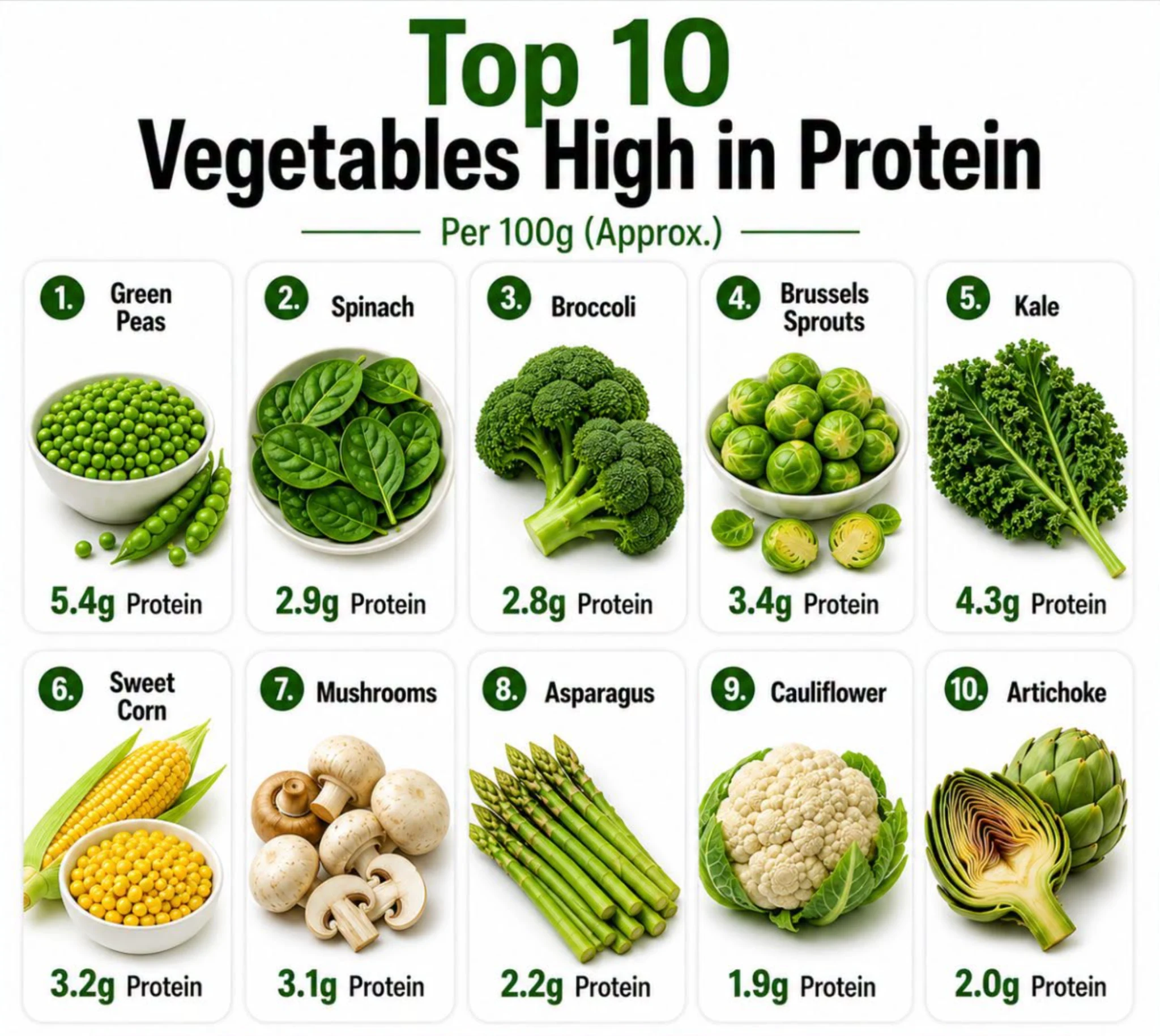
The protein values shown for vegetables are usually measured per 100 grams of the edible portion.
For example:
- Green peas: about 5.4g protein per 100g
- Kale: about 4.3g protein per 100g
- Brussels sprouts: about 3.4g protein per 100g
- Sweet corn: about 3.2g protein per 100g
- Mushrooms: about 3.1g protein per 100g
While these vegetables contribute protein, few people eat only 100 grams of a single vegetable. The real goal is building meals that combine several protein-rich plant foods together.
The Best Cooking Methods to Preserve Protein
Protein itself is relatively stable during cooking, but overcooking vegetables can reduce overall nutritional quality.
Steam Instead of Boiling
Steaming helps vegetables retain more nutrients compared with prolonged boiling.
Best for:
- Broccoli
- Kale
- Brussels sprouts
- Asparagus
- Cauliflower
Light Stir-Frying
Quick cooking preserves texture and nutrients while adding flavor.
Best for:
- Mushrooms
- Spinach
- Asparagus
- Broccoli
Roasting
Roasting concentrates flavor without significantly affecting protein content.
Best for:
- Brussels sprouts
- Cauliflower
- Broccoli
- Artichokes
Avoid Overboiling
Long boiling times may cause water-soluble vitamins to leach into cooking water.
If boiling is necessary, consider using the cooking liquid in soups or sauces.
Pair Vegetables With Other Plant Proteins
Vegetables alone are not major protein sources. To maximize protein intake, combine them with:
- Lentils
- Chickpeas
- Black beans
- Kidney beans
- Edamame
- Tofu
- Tempeh
Example Protein Bowl
- Broccoli
- Green peas
- Kale
- Chickpeas
- Quinoa
This provides substantially more protein than vegetables alone while remaining completely plant-based.
Add Healthy Protein Boosters
Simple additions can dramatically increase total protein.
Great options include:
- Hemp seeds
- Chia seeds
- Pumpkin seeds
- Almonds
- Greek yogurt
- Cottage cheese
- Eggs
For example, a spinach salad with pumpkin seeds and boiled eggs contains much more protein than spinach by itself.
Eat Larger Portions of the Highest-Protein Vegetables
If protein is your goal, prioritize:
Green Peas
One of the highest-protein vegetables available.
Ways to eat:
- Soups
- Rice bowls
- Salads
- Side dishes
Kale
Works well in:
- Smoothies
- Salads
- Stir-fries
Brussels Sprouts
Excellent roasted with olive oil and seasonings.
Mushrooms
Their meaty texture makes them a great protein-supporting ingredient in vegetarian meals.
Sample High-Protein Vegetable Day
Breakfast
Greek yogurt with chia seeds and berries
Lunch
Large salad with kale, green peas, chickpeas, and pumpkin seeds
Snack
Roasted edamame
Dinner
Roasted broccoli, Brussels sprouts, mushrooms, and grilled tofu
This approach provides far more protein than relying on vegetables alone.
Common Mistakes
Many people reduce their protein intake by:
- Eating only small portions of vegetables
- Overcooking vegetables
- Not pairing vegetables with legumes
- Choosing mostly low-protein vegetables
- Skipping protein-rich toppings such as seeds and legumes
Final Thoughts
High-protein vegetables are a valuable part of a healthy diet, but the smartest strategy is combining them with legumes, seeds, dairy, eggs, or soy-based foods. Green peas, kale, Brussels sprouts, broccoli, and mushrooms can all contribute meaningful amounts of protein, especially when prepared with gentle cooking methods and included in balanced meals.
Instead of focusing on a single vegetable, think about building protein-rich plates where vegetables work together with other nutrient-dense foods. That’s the easiest way to increase protein intake while enjoying the benefits of a plant-forward diet.