In the journey toward holistic wellness, the food we choose plays a monumental role. Yet, a common misconception is that eating healthy must be an expensive endeavor, reserved for those with ample budgets. We believe that nourishing your body with wholesome foods is a right, not a luxury. The truth is, a vibrant, nutrient-rich diet is incredibly accessible, regardless of your financial situation. It all comes down to making smart, informed choices.
We often encounter comparisons between different food items, some perceived as ‘premium’ and others as ‘basic.’ While certain foods indeed come with a higher price tag due to factors like sourcing, demand, or unique nutritional profiles, many affordable staples offer equally impressive health benefits. The key is understanding nutritional equivalence and embracing the power of smart swaps.
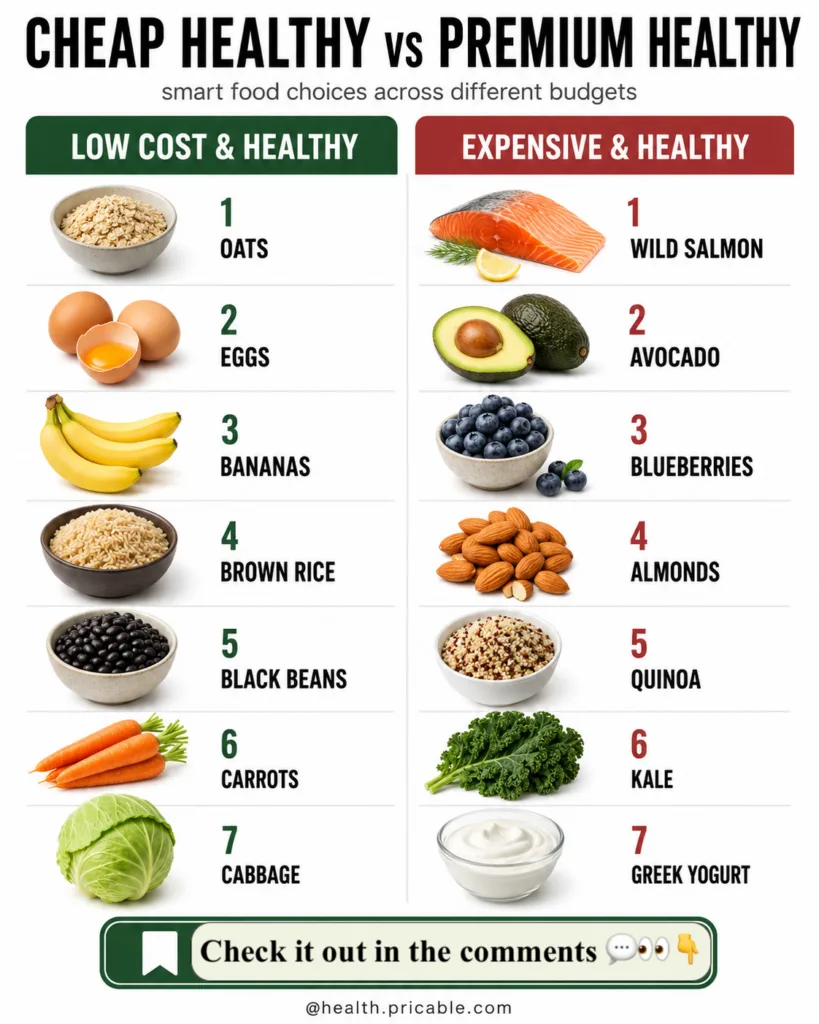 Making smart food choices means understanding that healthy eating is achievable across all budgets.
Budget-Friendly Wellness: Nourishing Choices That Won’t Break the Bank
Let’s dive into some incredible, affordable foods that are nutritional powerhouses, often offering similar benefits to their more expensive counterparts:
1. Oats vs. Wild Salmon
- Oats: A true breakfast champion, oats are incredibly versatile, packed with soluble fiber (beta-glucan) that supports heart health and stable blood sugar. They offer sustained energy, are rich in manganese, phosphorus, magnesium, and iron, and are incredibly cheap per serving.
- While wild salmon is celebrated for its omega-3 fatty acids and lean protein, a bowl of oatmeal provides a fantastic, budget-friendly start to your day, keeping you full and energized.
2. Eggs vs. Avocado
- Eggs: Often called nature’s multivitamin, eggs are one of the most complete and affordable sources of protein. They contain essential amino acids, choline (crucial for brain health), and vitamins D and B12. Whether scrambled, boiled, or poached, they’re quick, easy, and nutritious.
- Avocados are known for their healthy monounsaturated fats and potassium, but eggs deliver a powerful nutritional punch at a fraction of the cost, making them excellent for satiety and nutrient intake.
3. Brown Rice vs. Quinoa
- Brown Rice: A whole grain staple, brown rice is an excellent source of complex carbohydrates, fiber, and essential minerals like magnesium and selenium. It provides sustained energy release and supports digestive health.
- Quinoa is praised as a complete protein, but brown rice offers similar benefits in terms of fiber and minerals, and is significantly more economical for daily consumption. Pair it with lentils or beans for a complete protein meal.
4. Lentils vs. Nuts & Seeds
- Lentils: These humble legumes are a powerhouse of plant-based protein, fiber, and iron. They are incredibly filling, support digestive health, and can be used in countless dishes from soups and stews to salads and veggie burgers. They absorb flavors beautifully and are very inexpensive.
- While nuts and seeds are rich in healthy fats and micronutrients, lentils offer a high-protein, high-fiber, and iron-rich alternative that’s far more budget-friendly and versatile as a meal base.
5. Bananas vs. Berries
- Bananas: A fantastic source of potassium, vitamins B6 and C, and dietary fiber, bananas offer a quick energy boost and are incredibly convenient. They’re usually very affordable year-round.
- Berries are celebrated for their antioxidants, but bananas provide excellent nutritional value, satiety, and natural sweetness, making them a superb budget-friendly fruit choice.
6. Cabbage vs. Kale/Spinach
- Cabbage: This often-overlooked cruciferous vegetable is packed with vitamins K and C, fiber, and powerful antioxidants. It’s incredibly versatile, delicious raw in salads, sautéed, or fermented, and remarkably inexpensive.
- While kale and spinach are dark leafy green stars, cabbage offers similar nutritional benefits at a much lower price point, making it a fantastic base for salads or cooked dishes.
7. Chicken Thighs vs. Grass-fed Beef
- Chicken Thighs: A flavorful and more economical cut of chicken, thighs are a great source of lean protein, B vitamins, and essential minerals like zinc. They’re versatile for roasting, grilling, or stewing.
- Grass-fed beef offers a richer nutrient profile, but chicken thighs provide excellent protein and essential nutrients for a fraction of the cost, making healthy protein accessible for everyday meals.
Embracing Premium Choices: When to Splurge Wisely
It’s important to acknowledge that ‘premium’ healthy foods like wild salmon, avocados, quinoa, or grass-fed beef do offer fantastic nutritional benefits. They might provide specific types of fats, amino acids, or micronutrients in different concentrations. When your budget allows, incorporating these items can certainly add variety and enhance your nutrient intake.
The message isn’t to avoid these foods entirely, but rather to understand that they are not the only path to wellness. Consider them as occasional additions or treats rather than daily necessities. Perhaps you buy wild salmon when it’s on sale, or use a smaller portion of avocado to savor its unique texture and healthy fats.
Making It Work for YOU: Practical Tips for Budget-Conscious Healthy Eating
Beyond choosing the right ingredients, how you plan and prepare your meals can significantly impact your food budget and health outcomes:
- Meal Planning & Shopping Lists: This is your superpower! Plan your meals for the week, make a precise shopping list, and stick to it to avoid impulse buys and reduce waste.
- Buy in Season: Seasonal produce is typically more abundant, fresher, and cheaper.
- Batch Cooking: Prepare larger quantities of staples like brown rice, lentils, or roasted vegetables to use in multiple meals throughout the week. This saves time and money.
- Utilize Sales and Discounts: Keep an eye out for promotions on healthy staples.
- Cook from Scratch: Preparing meals at home gives you full control over ingredients and is almost always cheaper than eating out or buying pre-made foods.
- Reduce Food Waste: Get creative with leftovers! Transform yesterday’s roasted chicken into today’s salad or soup.
Your Wellness, Your Way
Eating healthily doesn’t require a high income or a pantry full of exotic ingredients. It requires knowledge, mindfulness, and a commitment to making the best choices for your body and your circumstances. By understanding the nutritional value of common, affordable foods and embracing smart swaps, you can build a diet that is both nourishing and financially sustainable.
We champion an inclusive approach to health. Empower yourself with these insights, get creative in the kitchen, and discover the joy of vibrant health, no matter your budget. Your wellness journey is unique, and we’re here to support you every step of the way.