Protein is often associated with meat, eggs, and dairy products, but legumes are among the most nutritious plant-based protein sources available. Whether you’re vegetarian, vegan, trying to reduce meat consumption, or simply looking for budget-friendly protein options, legumes can play a major role in a healthy diet.
Beyond protein, legumes provide fiber, vitamins, minerals, and complex carbohydrates that support overall health and long-lasting energy.
Why Legumes Are a Nutritional Powerhouse
Legumes offer a unique combination of nutrients that make them valuable in almost any eating pattern.
Benefits include:
- Rich source of plant-based protein
- High in dietary fiber
- Naturally low in saturated fat
- Support digestive health
- Help promote fullness and satiety
- Provide important minerals such as iron, magnesium, potassium, and zinc
Because they contain both protein and fiber, legumes can help keep you satisfied longer than many refined carbohydrate foods.
Understanding Protein Content
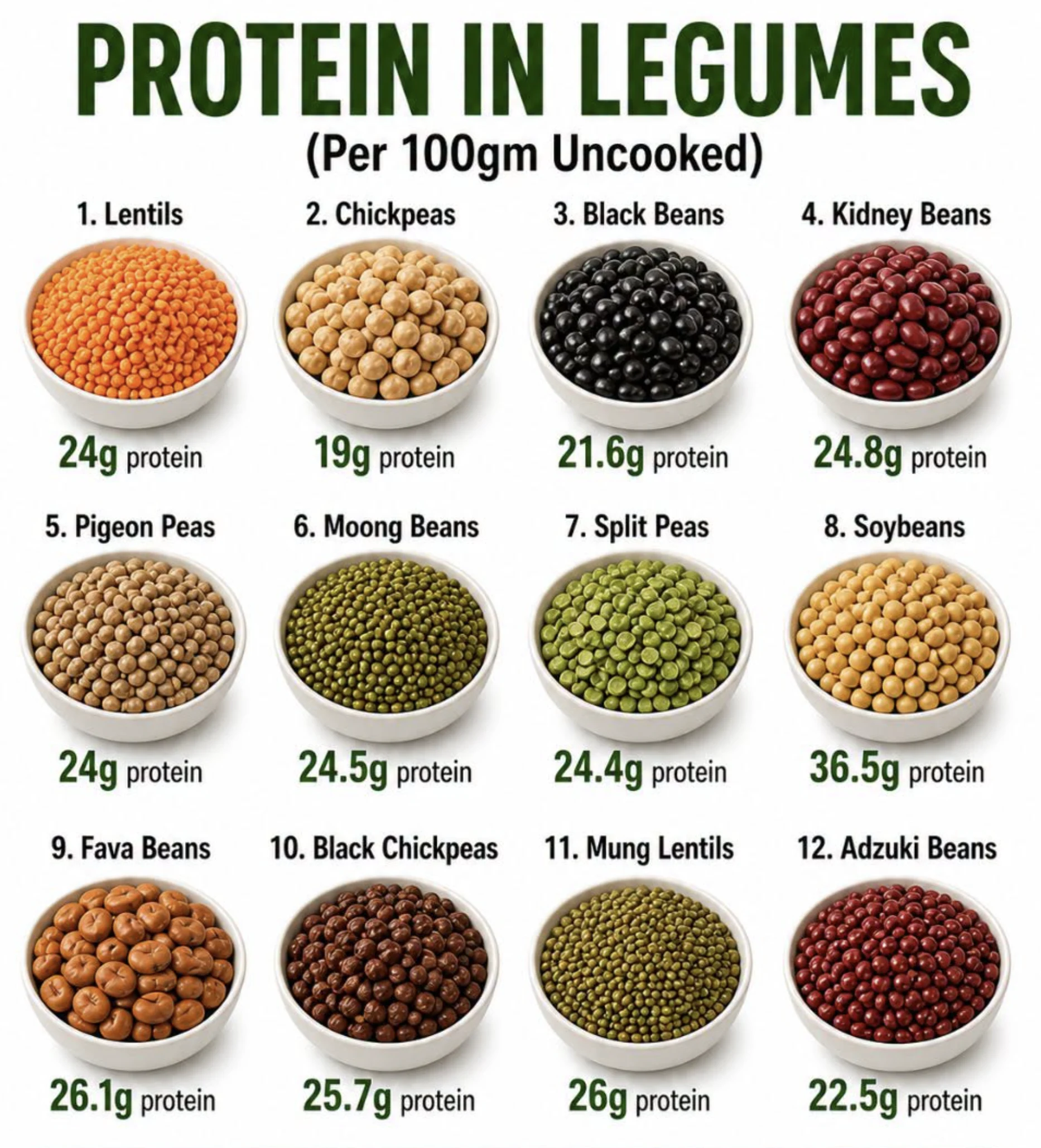
The protein values shown below are based on approximately 100 grams of dry, uncooked legumes. After cooking, legumes absorb water and increase in weight, so the protein concentration per 100 grams cooked will be lower.
However, they remain excellent protein sources and can contribute significantly toward daily protein goals.
1. Lentils – 24g Protein
Lentils are one of the most versatile legumes.
They cook relatively quickly and work well in:
- Soups
- Stews
- Curries
- Salads
- Plant-based burger recipes
Lentils are also rich in iron and fiber, making them particularly popular among plant-based eaters.
2. Chickpeas – 19g Protein
Chickpeas, also known as garbanzo beans, are a staple in many cuisines around the world.
Popular ways to enjoy chickpeas include:
- Hummus
- Roasted chickpeas
- Salads
- Grain bowls
- Curries
Their mild flavor makes them easy to incorporate into a variety of meals.
3. Black Beans – 21.6g Protein
Black beans provide a combination of protein, fiber, and antioxidants.
They pair well with:
- Rice
- Tacos
- Burrito bowls
- Soups
- Vegetable dishes
Combining black beans with whole grains can help create a more complete amino acid profile.
4. Kidney Beans – 24.8g Protein
Kidney beans are well known for their use in chili and hearty stews.
They provide:
- Plant protein
- Fiber
- Iron
- Folate
Their firm texture makes them ideal for meal prep and batch cooking.
5. Pigeon Peas – 24g Protein
Pigeon peas are commonly used in Caribbean, African, and South Asian cuisines.
They offer:
- High protein content
- Good fiber levels
- Essential minerals
They are often served with rice or incorporated into soups and stews.
6. Mung Beans – 24.5g Protein
Mung beans are popular throughout Asia and can be eaten cooked or sprouted.
Potential benefits include:
- Easy digestion
- Protein-rich nutrition
- Fiber and antioxidants
Sprouted mung beans are especially popular in salads and stir-fries.
7. Split Peas – 24.4g Protein
Split peas are a protein-rich ingredient commonly found in comforting soups.
They also provide:
- Significant fiber
- Slow-digesting carbohydrates
- Long-lasting satiety
Split pea soup remains one of the simplest ways to enjoy their nutritional benefits.
8. Soybeans – 36.5g Protein
Soybeans contain one of the highest protein levels among legumes.
Soy-based foods include:
- Edamame
- Tofu
- Tempeh
- Soy milk
Unlike most plant proteins, soy provides all essential amino acids, making it a complete protein source.
9. Fava Beans – 26.1g Protein
Fava beans have been enjoyed for centuries in Mediterranean and Middle Eastern cuisines.
They are rich in:
- Protein
- Fiber
- Folate
- Iron
Their creamy texture works well in spreads, salads, and cooked dishes.
10. Black Chickpeas – 25.7g Protein
Black chickpeas are a darker, denser variety of chickpea with a slightly nuttier flavor.
They can be used in:
- Curries
- Salads
- Roasted snacks
- Grain bowls
Their impressive protein content makes them a valuable addition to plant-based diets.
11. Mung Lentils – 26g Protein
Mung lentils are another protein-dense legume frequently used in soups and traditional dishes.
They provide:
- Plant protein
- Complex carbohydrates
- Dietary fiber
Their mild flavor makes them easy to pair with herbs and spices.
12. Adzuki Beans – 22.5g Protein
Adzuki beans are widely used in East Asian cuisine.
They are known for:
- Slightly sweet flavor
- Protein content
- Fiber and minerals
Although often associated with sweet preparations, they also work well in savory recipes.
How to Build Muscle on a Plant-Based Diet
Getting enough protein from plants is entirely possible when meals are planned thoughtfully.
Consider combining:
- Legumes
- Whole grains
- Nuts
- Seeds
- Soy foods
- Vegetables
Examples include:
- Lentils with brown rice
- Chickpeas with quinoa
- Black beans with whole-grain tortillas
- Tofu with vegetables and rice
These combinations help provide a broader range of amino acids while supporting overall nutrition.
Tips for Increasing Legume Intake
If you’re new to legumes, start gradually.
Helpful strategies include:
- Add beans to salads
- Blend chickpeas into hummus
- Include lentils in soups
- Snack on roasted chickpeas
- Use beans in grain bowls
- Replace part of the meat in recipes with legumes
Increasing water intake alongside higher fiber consumption can also help support digestive comfort.
Common Myths About Plant Protein
Myth: Plant proteins are inferior
Many plant foods contain substantial protein, and eating a variety of sources throughout the day can help meet protein needs.
Myth: You must combine proteins at every meal
Current nutrition research suggests that consuming a variety of protein-rich foods across the day is generally sufficient.
Myth: You can’t build muscle without meat
Athletes and active individuals can build and maintain muscle on plant-based diets when total protein and calorie needs are met.
Final Thoughts
Legumes are among the most affordable, nutritious, and versatile protein sources available. From lentils and chickpeas to black beans and soybeans, these foods provide impressive amounts of protein while also delivering fiber, vitamins, minerals, and long-lasting energy.
Whether your goal is supporting muscle growth, improving nutrition, or simply adding more plant foods to your meals, legumes are an excellent place to start. A well-balanced diet that includes a variety of beans, peas, lentils, and soy foods can help support both health and performance for years to come.