Hey there, fellow garden enthusiasts! Have you ever looked at a truly vibrant garden, bursting with life and color, and wondered how some folks achieve such a harmonious display? Well, today, I want to share a little secret weapon that many successful gardeners and homesteaders swear by: companion planting. It’s like building a friendly neighborhood right in your garden bed, where plants help each other thrive, naturally ward off pests, and even boost each other’s flavors.
Imagine your garden as a bustling community. Just like we choose good neighbors, companion planting involves placing specific plants next to each other because they offer mutual benefits. It’s a centuries-old practice rooted in observation and a deep understanding of nature, and it’s perfectly suited for anyone dreaming of a more resilient and productive homestead.
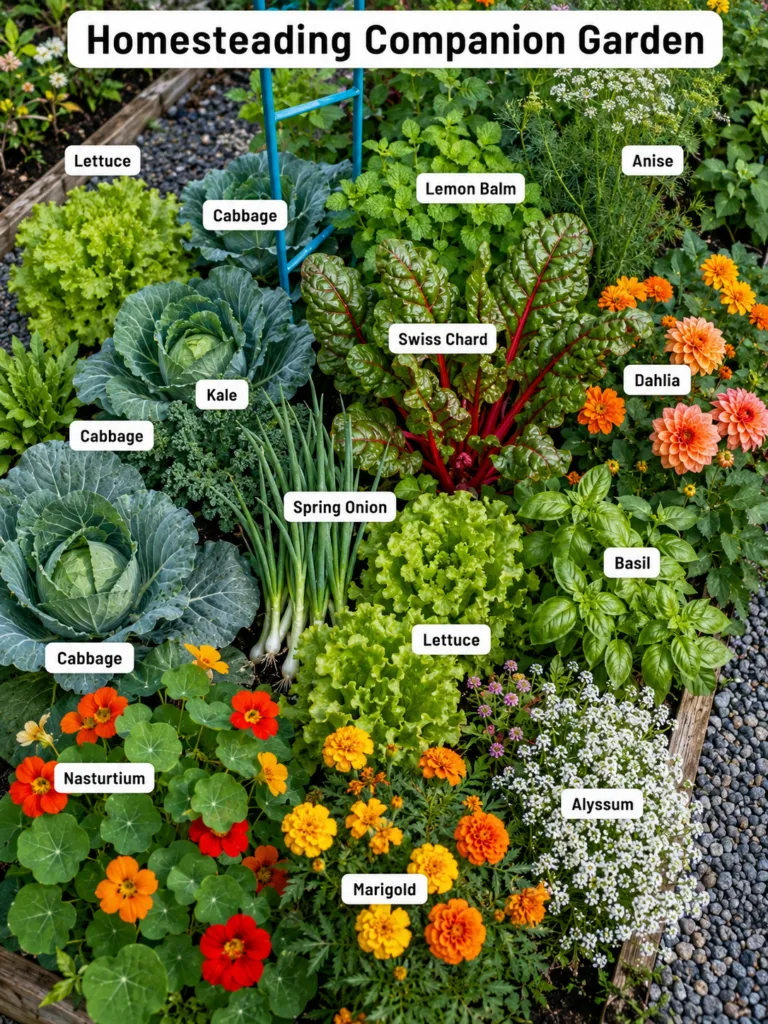 A thriving example of a homestead companion garden, showing how diverse plants can co-exist beautifully.
What is Companion Planting? Why It’s a Game Changer for Homesteaders
At its heart, companion planting is the art and science of placing different species of plants close together for mutual benefit. This could mean one plant deters pests from another, or one plant attracts beneficial insects that pollinate or prey on pests. Some plants can even improve soil health for their neighbors or provide structural support. For homesteaders, this approach is invaluable because it promotes:
- Sustainability: Reducing the need for chemical interventions.
- Biodiversity: Creating a more robust and resilient ecosystem.
- Resource Efficiency: Maximizing space and nutrient usage in your garden beds.
The Symphony of Your Garden: Benefits You’ll Love
When plants work together, your garden truly sings. Here are some of the fantastic benefits you’ll start to notice:
Natural Pest Patrol
Many plants naturally repel common garden pests. For instance, the strong scent of marigolds, basil, and anise (all visible in our example garden!) can confuse or deter pests from finding their target plants. Nasturtiums, with their vibrant colors, can act as a trap crop, luring aphids away from more precious vegetables.
Attracting Good Guys
Just as some plants repel bad insects, others attract beneficial ones. Flowers like alyssum provide tiny nectaries and pollen for predatory insects like hoverflies and ladybugs, which feast on aphids. Lemon balm can also draw in pollinators, ensuring a better fruit set for your edible plants. A diverse array of flowers, like the dahlias and marigolds in our example, adds beauty while supporting a healthy insect population.
Boosting Growth & Flavor
It sounds almost magical, but some plants can actually improve the growth and flavor of their neighbors. For example, basil is often said to improve the flavor of tomatoes (though not directly pictured in our example, it’s a classic pairing!). Legumes can fix nitrogen in the soil, making it available for nearby nitrogen-hungry plants.
Making the Most of Your Space
In a raised garden bed, like the one we’re admiring, companion planting helps you utilize every inch efficiently. Taller plants can provide shade for sun-sensitive plants, while vining plants can climb trellises (like the blue one in the background!) or grow along the ground without competing for light with their upright neighbors.
Building Your Own Homestead Companion Garden: A Step-by-Step Guide
Ready to turn your garden into a self-sufficient ecosystem? Here’s how you can start:
1. Observe and Plan
Before you dig, take a good look at your garden space. Note the sun exposure, soil type, and any existing issues. Think about what you want to grow for your homestead – leafy greens, root vegetables, herbs, or flowers. Having a clear vision will help you choose your plant partners wisely.
2. Choose Your Plant Partners (Inspired by Our Garden!)
Let’s draw some inspiration from our thriving example garden, which beautifully showcases a mix of edibles and flowers. Here are some pairings to consider:
- Leafy Greens (Lettuce, Cabbage, Kale, Swiss Chard): These nitrogen-loving plants benefit from companions that deter common pests like cabbage worms. Consider planting them alongside:
- Marigolds: Known for deterring nematodes and other soil pests.
- Nasturtiums: Can act as a trap crop for aphids, diverting them from your greens.
- Spring Onions: Their pungent smell can confuse pests, making it harder for them to find your greens.
- Herbs (Basil, Lemon Balm, Anise): These aromatic plants are excellent at deterring pests and attracting beneficial insects. Plant basil near your greens or other vegetables. Lemon balm and anise are great additions for attracting pollinators.
- Flowers (Dahlias, Marigolds, Nasturtiums, Alyssum): Don’t underestimate the power of flowers! They add beauty, attract pollinators, and can provide pest control. Alyssum, in particular, creates a living mulch and attracts tiny beneficial insects.
3. Layout and Design
When planning your layout, consider the mature size of each plant. In a raised bed, like the one we saw, you can plant densely. Place taller plants where they won’t shade out shorter, sun-loving plants. Use vertical space with trellises for climbing beans, cucumbers, or even certain squash varieties, creating layers of growth and efficiency.
4. Nurturing Your Living Tapestry
Once planted, your companion garden will still need your care. Ensure good soil health by adding compost, provide consistent watering, and observe your plants regularly. The beauty of companion planting is that it encourages you to interact more closely with your garden, noticing the subtle interactions and learning from nature.
Making It Your Own: Tips for Success
- Start Small: Don’t try to transform your entire garden overnight. Pick one raised bed or a small section to experiment with companion planting.
- Keep Notes: What worked well? What didn’t? Your garden journal will be your best friend in learning what combinations thrive in your specific environment.
- Experiment: Gardening is a journey of discovery! Don’t be afraid to try new pairings and see what magic unfolds.
- Enjoy the Process: The joy of watching your garden flourish, knowing you’re working with nature, is one of the most rewarding aspects of homesteading.
Creating a homestead companion garden is about more than just growing food; it’s about fostering a vibrant, interconnected ecosystem. It’s about slowing down, observing, and working with the natural world to create abundance. So, grab your trowel, choose some friendly plant neighbors, and start cultivating a garden that not only feeds your family but also nourishes your soul. Happy gardening!