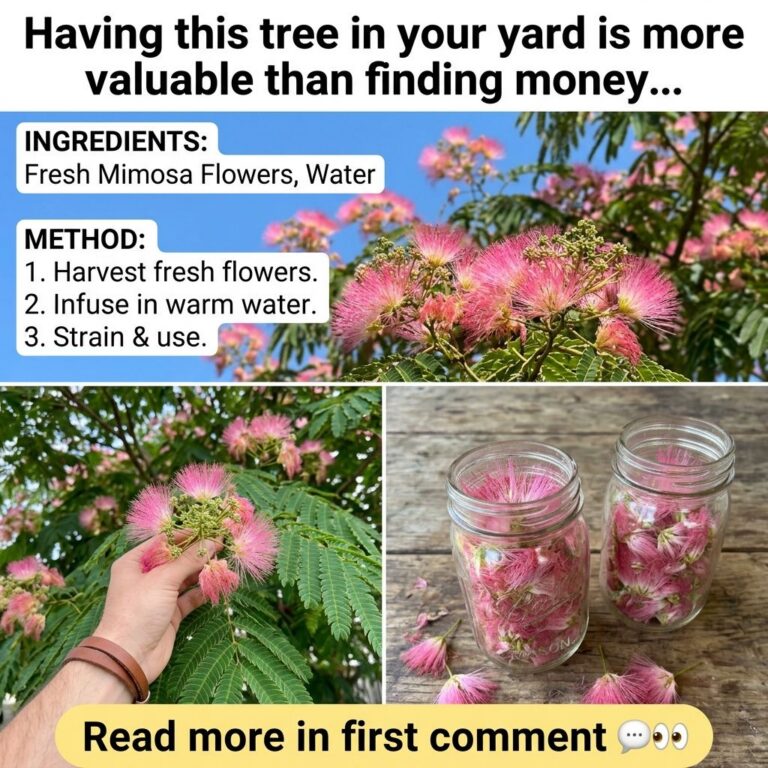
Most people walk right past it, perhaps admiring its delicate pink blossoms and sweet fragrance, but completely unaware of the hidden treasure growing right in their own backyard. The Mimosa tree, often dismissed as just an ornamental, holds a secret that many herbalists and natural remedy enthusiasts consider more valuable than a lucky find. This isn’t about finding money; it’s about finding calm, peace, and natural support directly from nature’s pharmacy.
One small preparation mistake, however, can dilute its potency and turn a potentially soothing remedy into a bland, ineffective tea. If you have an *Albizia julibrissin* – commonly known as the Mimosa tree or Silk Tree – in your vicinity, you’re about to unlock a simple, potent, and incredibly valuable remedy.
What It Is: The Mimosa Flower Infusion
We’re talking about a gentle, aromatic infusion made from the fresh flowers of the Mimosa tree (*Albizia julibrissin*). For centuries, traditional practices have revered the Mimosa tree, particularly its bark and flowers, for their unique properties. While the bark is often used for deeper, more sustained support, the flowers offer a lighter, more immediate sense of calm and upliftment. Think of it as nature’s gentle embrace, helping to soothe the spirit after a long day.
Ingredients You’ll Need
- Fresh Mimosa Flowers: Approximately 1/2 to 1 cup, loosely packed. Ensure they are free from pesticides or pollutants.
- Filtered Water: 8-10 ounces (about 1 cup).
Approximate Measurements for Your Tea
These measurements are flexible. For a single serving, start with 1/2 cup of fresh flowers. If you prefer a stronger brew, you can increase to a full cup.
The Simple Formula: Mimosa Flower Infusion
This is not a complex concoction. The goal is to gently extract the beneficial compounds from the delicate flowers without destroying them with excessive heat.
Step-by-Step Method
- Harvest Fresh Flowers: In the morning, after the dew has dried, gently pluck the fresh, fluffy pink Mimosa blossoms from the tree. Choose flowers that are fully open and vibrant. Avoid any that look wilted, discolored, or insect-damaged.
- Rinse Gently: Place the harvested flowers in a colander and rinse them very gently under cool running water to remove any dust or small insects. Pat them lightly dry with a clean cloth or allow them to air dry for a few minutes.
- Prepare for Infusion: Place the rinsed flowers into a heat-proof mug or small teapot.
- Heat Water: Bring your filtered water to a gentle boil, then immediately remove it from the heat. Allow it to cool for just a minute or two – you want it hot, but not aggressively boiling, to protect the delicate compounds in the flowers.
- Infuse: Pour the hot (but not boiling) water over the Mimosa flowers.
- Steep: Cover the mug/teapot to trap the steam and steep for 10-15 minutes. This allows the beneficial properties to infuse into the water. The water will likely turn a pale yellow or pinkish hue.
- Strain & Serve: Strain the liquid into another mug, discarding the spent flowers. Your Mimosa flower infusion is ready.
How to Use This Soothing Brew
Drink the Mimosa flower infusion warm. It has a subtly sweet, almost honey-like flavor, and a comforting aroma. Many find it particularly pleasant in the evening, as part of a winding-down ritual.
How Often to Use
You can enjoy one to two cups per day as needed for gentle relaxation. It’s best to listen to your body and adjust frequency accordingly. For extended use, consider taking breaks.
Quick Tip: Best Time to Use It
Many find a cup of Mimosa flower tea in the late afternoon or evening helps to transition from the day’s stresses into a more relaxed state, preparing the mind and body for restful sleep.
How to Buy / How to Choose Ingredients
The best way to ensure quality is to harvest your own fresh flowers. If you don’t have a Mimosa tree, consider these points:
- Source Locally: Look for organic farms or trusted local foragers who can guarantee the flowers are *Albizia julibrissin* and free from pesticides.
- Identify Correctly: Ensure the tree is indeed *Albizia julibrissin*. There are many trees with similar-looking blossoms. When in doubt, do not consume.
- Freshness is Key: While dried Mimosa flowers (often available as bark in traditional medicine shops) have their uses, this specific infusion benefits most from fresh blossoms for their subtle aroma and delicate compounds.
Fresh vs. Dried Mimosa Flowers: A Quick Comparison
| Feature | Fresh Mimosa Flowers (for Infusion) | Dried Mimosa Flowers/Bark (often for decoction/tincture) |
|---|---|---|
| Flavor/Aroma | Subtly sweet, floral, delicate | More earthy, less distinct floral notes |
| Potency/Use | Gentle, uplifting, immediate calming effect | More robust, for deeper, longer-term emotional balance (often bark) |
| Preparation | Infusion (steep in hot water) | Decoction (simmer), tincture, powder |
| Shelf Life | Consume immediately | Months to years (if stored correctly) |
Storage
- Fresh Flowers: Use immediately after harvesting for best results. They do not store well fresh.
- Prepared Infusion: Best consumed fresh. If you must store it, refrigerate in a sealed container for no more than 24 hours. Reheat gently, but fresh is always superior.
Practical Tips for the Best Brew
- Water Quality: Use good quality filtered water to enhance the subtle flavors.
- Temperature Control: Avoid boiling the flowers. The ideal temperature for infusion is just off the boil, around 180-200°F (82-93°C).
- Cover During Steeping: This helps to retain volatile aromatic compounds that contribute to the flavor and effect.
Common Mistakes to Avoid
- Using Pesticide-Treated Flowers: Never harvest from trees that have been sprayed with chemicals. This is paramount for your safety.
- Boiling the Flowers: High, prolonged heat can destroy the delicate compounds that give Mimosa flowers their beneficial properties.
- Misidentification: Always be 100% certain you are harvesting from an *Albizia julibrissin* tree. Consuming unknown plants can be dangerous.
- Over-Steeping: While not harmful, over-steeping can sometimes lead to a slightly bitter taste. Stick to the 10-15 minute guideline.
Cautions / Who Should Avoid It
While Mimosa flower tea is generally considered safe for most adults, always exercise caution:
- Pregnancy and Breastfeeding: Avoid use during pregnancy and breastfeeding due to insufficient research on safety.
- Medication Interactions: If you are on any medications, particularly sedatives, antidepressants, or other mood-altering drugs, consult with a healthcare professional before incorporating Mimosa tea into your routine.
- Allergies: If you have allergies to other plants in the pea family (Fabaceae), exercise caution.
- Children: Not recommended for children without professional guidance.
Quick Summary: Your Mimosa Flower Remedy at a Glance
- Best Preparation: Gentle infusion of fresh flowers.
- Best Use-Case: For mild stress, promoting relaxation, and a sense of emotional uplift.
- Storage: Consume fresh; prepared tea can be refrigerated for up to 24 hours.
- When to Use: As needed, particularly in the afternoon or evening.
- What to Avoid: Pesticide-treated flowers, boiling, misidentification.
FAQ: Your Top Questions Answered
- Can I use dried Mimosa flowers for this tea? While dried Mimosa bark is common, for this specific delicate, aromatic infusion, fresh flowers are preferred for their unique subtle qualities.
- How long do fresh Mimosa flowers last after harvesting? They are best used immediately. Their delicate nature means they wilt quickly.
- Can I make a larger batch and store it? It’s best consumed fresh. If absolutely necessary, refrigerate for up to 24 hours, but the flavor and efficacy diminish.
- What part of the Mimosa tree is best for calming? Both the flowers and the bark are traditionally used. The flowers offer a lighter, more uplifting effect, while the bark is considered more grounding.
- Is it safe to pick Mimosa flowers from any tree? Only pick from trees you are certain are *Albizia julibrissin* and that have not been sprayed with pesticides or other chemicals.
- What if I don’t like the taste? You can add a squeeze of lemon or a touch of honey to sweeten it, though the natural flavor is usually quite mild and pleasant.
You may also like: The Secret Benefits of Passionflower Tea for Restful Sleep
Conclusion
The Mimosa tree in your yard, with its beautiful, fleeting blossoms, truly offers a gift more profound than any monetary find. By understanding how to properly harvest and prepare its flowers, you gain access to a simple, natural remedy for moments of stress and a gentle uplift for your spirit. It’s a reminder that sometimes, the most valuable treasures are the ones growing quietly around us, waiting to be discovered and appreciated.
Read more: DIY Herbal Infusions for Daily Wellness