Are you meticulously tracking your meals, making healthy choices, yet still struggling to reach your wellness goals? The culprit might not be your main meals, but rather the small, seemingly innocent snacks and sips you enjoy throughout the day. This phenomenon, known as “mindless grazing” or the “bite-size trap,” involves unintentional calorie leaks that can silently sabotage your efforts.
It’s easy to overlook these hidden calories because each individual bite or sip feels insignificant. However, when added up, these small indulgences can make a big difference, especially for those aiming for weight management or mindful eating. Understanding where these calorie leaks occur is the first step to reclaiming control over your diet.
In this article, we’ll expose nine common mindless grazing calorie leaks that might be flying under your radar. From seemingly healthy dips to your daily coffee, discover how these bite-sized habits can accumulate and learn practical strategies to outsmart the trap.
The Sneaky Culprits: 9 Mindless Grazing Calorie Leaks
Let’s dive into the most common sources of unintentional calorie intake, often disguised as harmless snacks or additions to our meals.
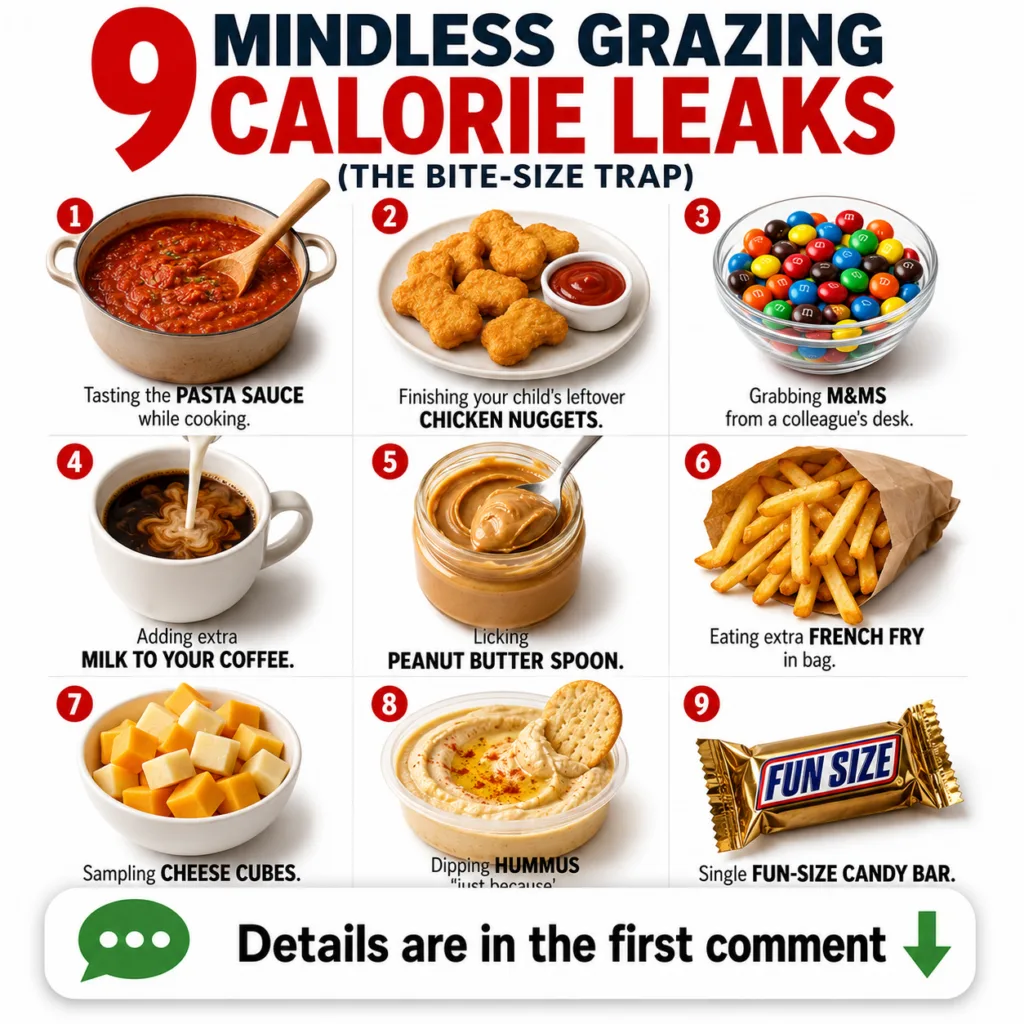
1. Pasta Sauce: The Unseen Sugar and Fat
While pasta sauce is often seen as a healthy accompaniment to vegetables or whole-grain pasta, many store-bought varieties are loaded with hidden sugars and excessive amounts of oil. A few extra spoonfuls beyond a measured serving can quickly add hundreds of calories without much thought.
- Why it’s a leak: High sugar content (to enhance flavor), added oils for texture, and easy over-serving.
- The fix: Read labels carefully for low-sugar, low-oil options. Better yet, make your own sauce at home using fresh tomatoes and herbs, allowing you to control the ingredients and portions.
2. Chicken Nuggets & Fries: Double Trouble
Often a go-to for convenience or a quick indulgence, chicken nuggets and fries combine several calorie traps. The breading on nuggets absorbs oil, and fries are deep-fried, making them calorie-dense. Add a side of dipping sauce, and you’ve compounded the issue.
- Why it’s a leak: Deep-frying, breading, and calorie-rich dipping sauces. Easy to eat more than intended due to their small size.
- The fix: Opt for baked or air-fried chicken breast strips and sweet potato fries. Choose healthier dipping options like mustard or a small amount of Greek yogurt-based sauce.
3. M&M’s & Small Sweets: The “Just One” Deception
Small candies or chocolates seem harmless, but their bite-sized nature makes it incredibly easy to consume multiple pieces. Each “just one” quickly adds up, leading to a significant intake of sugar and empty calories without feeling truly satisfied.
- Why it’s a leak: High sugar content, small individual size encourages overconsumption, provides little satiety.
- The fix: If you crave something sweet, opt for a piece of fruit, a small square of dark chocolate, or measure out a small, defined portion of your favorite treat.
4. Coffee with Milk & Sugar: Your Morning (or Afternoon) Calorie Bomb
Your daily coffee habit might be a silent calorie saboteur. Adding full-fat milk, cream, and multiple spoonfuls of sugar, syrups, or whipped cream can transform a simple beverage into a calorie-laden dessert, often consumed several times a day.
- Why it’s a leak: Creamers, full-fat milk, sugar, and flavored syrups drastically increase calorie and sugar content.
- The fix: Enjoy black coffee, or use unsweetened almond milk, skim milk, or a modest splash of low-calorie creamer. Gradually reduce sugar and syrup usage.
5. Peanut Butter: A Spoonful Can Add Up
Peanut butter is celebrated for its healthy fats and protein, but it’s also highly calorie-dense. A single tablespoon can contain around 90-100 calories, and it’s notoriously easy to go for a second (or third) spoonful straight from the jar without measuring.
- Why it’s a leak: High calorie density (healthy fats are still calories), easy to over-serve due to its appealing texture and taste.
- The fix: Always measure your peanut butter. Stick to natural varieties with minimal added sugar and oil. Pair it with fiber-rich options like apple slices or celery sticks to boost satiety.
6. French Fries: The Irresistible Salty Snack
While mentioned with chicken nuggets, french fries deserve their own spotlight as a major calorie leak. Their crispy, salty appeal makes them incredibly difficult to stop eating, and the deep-fried preparation means they soak up a lot of oil.
- Why it’s a leak: High fat content from frying, high sodium drives further consumption, often eaten without mindful portion control.
- The fix: Make homemade baked potato or sweet potato fries. Experiment with air frying. If ordering out, choose the smallest portion size available or share with a friend.
7. Cheese Cubes & Crackers: Savory But Surreptitious
A handful of cheese cubes and crackers might seem like a light snack, but cheese is dense in calories and saturated fat, and crackers often add refined carbohydrates and sodium. It’s easy to pop several pieces without thinking, especially when snacking casually.
- Why it’s a leak: High fat content in cheese, refined carbs in crackers, and the ease of continuous consumption.
- The fix: Measure a small portion of cheese and pair it with fiber-rich vegetables like cucumber slices or bell pepper strips instead of crackers. Choose lower-fat cheese options when possible.
8. Hummus: Healthy But Not Calorie-Free
Hummus is lauded as a healthy dip, rich in fiber and plant-based protein. However, it’s also made with tahini (sesame paste) and olive oil, making it surprisingly calorie-dense. Mindlessly dipping vegetables or pita bread can quickly lead to an excessive calorie intake.
- Why it’s a leak: Calorie-dense due to tahini and olive oil, easy to over-serve, especially when using larger dippers like pita bread.
- The fix: Always measure your hummus. Use it with crunchy, non-starchy vegetables like carrots, celery, or bell peppers. Consider making your own hummus to control oil content.
9. Fun-Size Candy Bars: The Small Package, Big Impact
Fun-size candy bars are often perceived as a small treat, but they are still packed with sugar and fat. The danger lies in their “fun-size” label, which tricks us into believing they have negligible impact, often leading to eating multiple in a single sitting.
- Why it’s a leak: Concentrated sugar and fat, psychologically perceived as a small, guilt-free treat, leading to multiple servings.
- The fix: If you crave chocolate, opt for a small square of dark chocolate, or try a piece of fruit. The best approach is to avoid having them readily available.
How to Outsmart the Bite-Size Trap
Awareness is the first step, but action is key. Here are practical strategies to help you avoid these common calorie leaks:
Practice Mindful Eating
Before you eat anything, take a moment to ask yourself if you’re truly hungry or just bored, stressed, or thirsty. Pay attention to the taste, texture, and aroma of your food. Eating slowly allows your body time to register fullness.
Master Portion Control
Use measuring cups and spoons for calorie-dense foods like peanut butter, hummus, and sauces. Pre-portion snacks into small containers to avoid eating directly from the original packaging, which can lead to overconsumption. This is especially useful for high-protein breakfast items and meal prep ideas.
Plan Your Snacks
Don’t wait until you’re ravenous to choose a snack. Plan healthy, satisfying options in advance. Focus on snacks that combine protein and fiber, like Greek yogurt with berries, a handful of almonds, or vegetables with a small portion of hummus.
Read Food Labels Diligently
Be aware of hidden sugars, unhealthy fats, and calorie counts in processed foods, sauces, and beverages. Opt for products with shorter ingredient lists and lower added sugar content.
Stay Hydrated
Sometimes, what feels like hunger is actually thirst. Drink a glass of water before reaching for a snack. Aim for at least 8 glasses of water a day.
Final Thoughts
Mindless grazing calorie leaks are a common challenge, but they are not insurmountable. By becoming aware of these subtle traps and implementing mindful eating and portion control strategies, you can take significant steps toward achieving your health and wellness goals. Remember, every small, conscious choice contributes to your overall success. Start by tackling one or two of these calorie leaks, and gradually build healthier habits for a more balanced and effective diet.
Medical Disclaimer
The information provided in this article is for general knowledge and informational purposes only, and does not constitute medical advice. It is essential to consult with a qualified healthcare professional or registered dietitian before making any significant changes to your diet or health regimen, especially if you have underlying health conditions or specific dietary needs.