Bread is a staple in many diets, offering convenience, versatility, and often, a comforting presence at the table. However, with so many varieties available, choosing the right loaf can feel overwhelming, especially when you’re focused on specific health goals. From calorie content to protein levels, understanding what’s inside your bread can make a significant difference to your daily nutrition.
We’ve created this guide to help you navigate the world of bread, making it easier to compare popular types by their key nutritional values, such as calories and protein per 100g. Let’s dive in and find out which bread best supports your individual health journey!
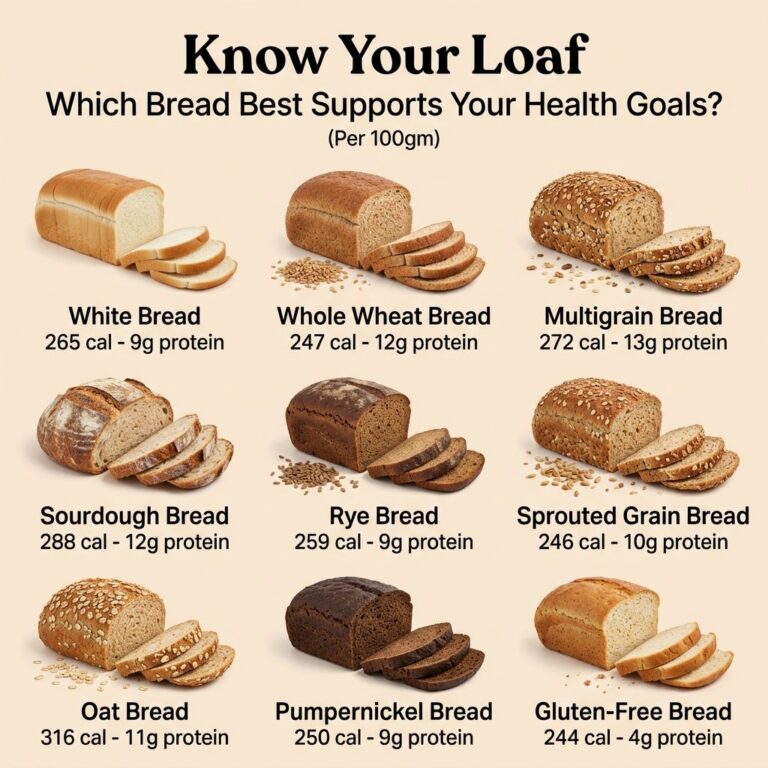
Why Your Bread Choice Matters
The type of bread you choose can significantly impact your calorie intake, satiety, blood sugar levels, and even your energy throughout the day. Not all breads are created equal, and their nutritional profiles vary widely.
- Calories: If weight management is a goal, opting for breads with lower calorie counts per serving can help you stay within your daily targets.
- Protein: Protein is essential for muscle repair, growth, and keeping you feeling full longer. Breads higher in protein can be an excellent choice for those looking to increase their protein intake, especially vegetarians or vegans.
- Fiber: While the brief focuses on calories and protein, it’s worth noting that fiber-rich breads (typically whole grain) are crucial for digestive health and can also contribute to satiety.
Understanding Nutritional Information on Bread
When you look at a nutrition label, especially for bread, pay close attention to serving sizes and the values per 100g. This provides a standardized way to compare different products accurately. Our guide focuses on calories and protein per 100g to give you a clear, apples-to-apples comparison.
What to Look For:
- Calories: This indicates the energy content. Higher calorie breads might be denser or have added ingredients like nuts or seeds, which can be beneficial but also add to the caloric value.
- Protein: Look for breads with a higher protein content if you’re aiming for increased satiety or muscle support. Often, whole grain or enriched breads will offer more protein.
Choosing the Right Loaf for Your Goals
Here’s how different bread types might align with various health objectives:
For Weight Management
If you’re aiming to manage your weight, breads that offer a good balance of fiber and a moderate calorie count are often the best choice. Look for options that provide sustained energy without excessive calories. Whole-wheat or lighter rye breads can be good options, as they often contain more fiber and can help you feel full.
For Muscle Support and Satiety
To support muscle maintenance and recovery, or to simply feel more satisfied after a meal, opt for breads with a higher protein content. Sprouted grain breads, some whole-wheat varieties, and those with added seeds can boost your protein intake. Pairing your bread with lean protein toppings like chicken, eggs, or hummus further enhances this benefit.
For Digestive Health
While our focus here is calories and protein, remember that fiber is paramount for digestion. Whole grain breads, especially those clearly labeled with ‘100% whole wheat’ or ‘whole grain,’ are excellent sources of dietary fiber. This helps maintain regular bowel movements and supports a healthy gut microbiome.
Tips for Making Healthy Bread Choices
- Read the Ingredients List: Always check the first few ingredients. Look for