Ever find yourself gazing at your beautiful garden, only to spot unwelcome guests munching on your hard work? It’s a common struggle for every gardener, from the backyard hobbyist to the seasoned homesteader. While chemical solutions might seem like a quick fix, many of us prefer a gentler, more harmonious approach. What if I told you your garden could have its very own natural defense squad? It’s true! By carefully choosing which plants you grow together, you can create a vibrant ecosystem where pests are naturally deterred and beneficial insects are welcomed with open arms.
Think of it as inviting allies to your garden party. These aren’t just pretty faces; they’re hardworking heroes, each with a unique talent for keeping your plants healthy and happy. Let’s dig into how you can recruit these nine amazing natural garden helpers to build a robust, organic pest defense team!
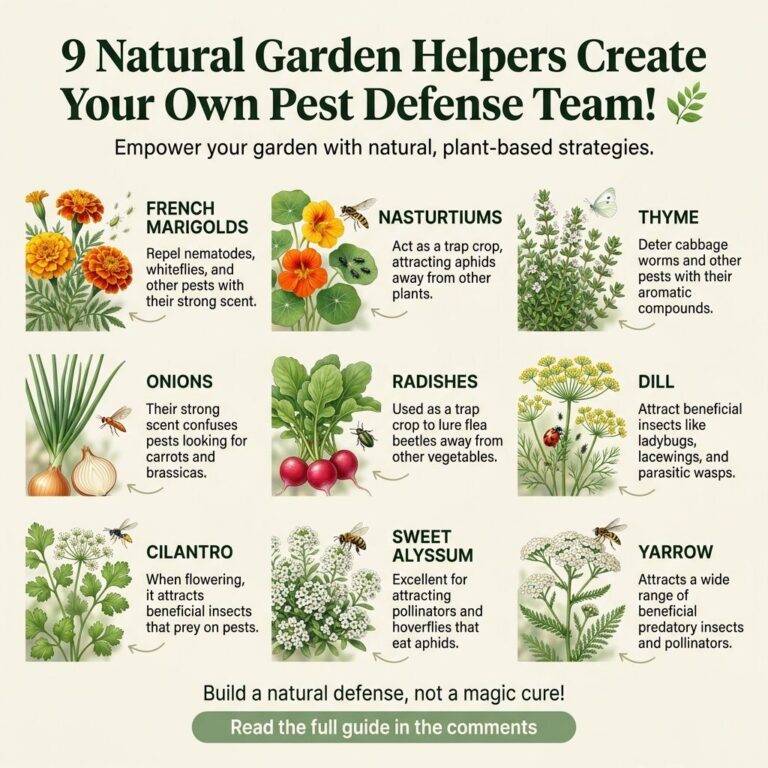
Your Garden’s Natural Defense Team: Meet the Plant Heroes
Here are nine fantastic plants that can transform your garden into a fortress against pests, all while adding beauty and biodiversity.
1. French Marigolds (Tagetes patula)
- The Nematode Ninja: These cheerful annuals are superstars at repelling nematodes, tiny soil-dwelling worms that can wreak havoc on root systems. Plant them directly in your vegetable beds, especially near tomatoes, potatoes, and even roses, to protect against these unseen enemies.
- Beyond Roots: Their strong scent also deters whiteflies and aphids.
2. Nasturtiums (Tropaeolum majus)
- Aphid Magnets (in a good way!): Nasturtiums act as a ‘trap crop’ for aphids. Pests prefer to feast on nasturtiums, leaving your more valuable crops alone. Plant them around the edges of your garden or near brassicas (cabbage, broccoli) to lure aphids away.
- Edible Beauty: Plus, their peppery leaves and vibrant flowers are delicious in salads!
3. Thyme (Thymus vulgaris)
- Fragrant Fortress: This aromatic herb is more than just a kitchen staple. Its strong scent confuses and deters common pests like cabbage worms and whiteflies.
- Beneficial Bug Haven: Thyme flowers attract tiny beneficial wasps that prey on various garden pests.
- Garden Use: Plant it as a living mulch or border around your vegetable beds.
4. Onions & Other Alliums (Allium cepa, Allium sativum, etc.)
- Powerful Pungency: The entire allium family (onions, garlic, chives, leeks) emits sulfur compounds that repel a wide array of pests, including aphids, slugs, carrot rust flies, and Japanese beetles.
- Companion Pairing: Plant them strategically near carrots, lettuce, and brassicas for enhanced protection.
5. Radishes (Raphanus sativus)
- Diversion & Deterrent: Radishes are quick-growing and can act as another excellent trap crop, especially for flea beetles who prefer their leaves over those of other plants.
- Root Protection: Some varieties are also thought to deter squash bugs and cucumber beetles.
- Grow Guide: Plant them alongside squash and cucumber plants, or scatter them throughout your garden.
6. Dill (Anethum graveolens)
- Beneficial Bug Magnet: Dill’s lacy flowers are irresistible to beneficial insects like ladybugs, hoverflies, and parasitic wasps, all of whom are voracious predators of aphids, spider mites, and cabbage worms.
- Careful Placement: Plant dill near brassicas, corn, or even cucumbers to invite these pest-patrolling allies.
7. Cilantro (Coriandrum sativum)
- Pollinator & Predator Attractor: Like dill, cilantro (especially when allowed to flower) attracts beneficial insects such as hoverflies, whose larvae are relentless aphid eaters. It’s also a good pollinator magnet.
- Pest Repellent: Some gardeners find it helps deter spider mites.
- Growing Tip: Let some of your cilantro bolt (go to seed) to enjoy its pest-fighting benefits, even if you prefer to harvest the leaves when young.
8. Sweet Alyssum (Lobularia maritima)
- Living Carpet of Protection: This low-growing, fragrant annual creates a beautiful groundcover and produces clusters of tiny flowers that attract beneficial insects like minute pirate bugs, hoverflies, and parasitic wasps. These tiny helpers feast on aphids, thrips, and other small pests.
- Garden Integration: Plant sweet alyssum as a border around vegetable beds or between rows to create a ‘living mulch’ that supports your pest defense.
9. Yarrow (Achillea millefolium)
- Biodiversity Booster: Yarrow is a hardy perennial with flat-topped flower clusters that are a favorite landing pad for ladybugs, hoverflies, and predatory wasps.
- Soil Healer: It’s also known as a dynamic accumulator, meaning its deep roots bring up nutrients from the soil, improving overall soil health.
- Strategic Spot: Plant yarrow at the edges of your garden or in perennial beds to establish a long-term beneficial insect habitat.
Beyond the Team: Cultivating a Healthy, Resilient Garden
While these nine plant heroes are fantastic, remember that they are part of a larger strategy for a healthy garden. Here are a few more tips to enhance your garden’s natural defenses:
- Healthy Soil, Healthy Plants: Rich, well-draining soil full of organic matter is the foundation for strong, disease-resistant plants that can better fend off pests. Consider composting and mulching regularly.
- Crop Rotation: Don’t plant the same crops in the same spot year after year. Rotating your crops helps break pest and disease cycles that can build up in the soil.
- Good Garden Hygiene: Remove diseased plant material and fallen leaves promptly to eliminate hiding spots for pests and fungal spores.
- Regular Observation: Spend time in your garden! The earlier you spot a pest problem, the easier it is to manage naturally. Hand-picking larger pests or hosing off aphids with a strong stream of water can often do the trick.
- Embrace Biodiversity: A diverse garden with a mix of flowers, herbs, and vegetables creates a more balanced ecosystem, making it harder for any single pest population to take over.
Ready to Get Started?
Building a natural pest defense team for your garden is one of the most rewarding steps you can take toward truly sustainable gardening. It might feel like a slow process compared to a chemical spray, but the long-term benefits for your garden, your health, and the environment are immeasurable. You’ll be fostering a vibrant, resilient ecosystem that thrives with minimal intervention.
Pick one or two of these plant helpers to try this season. Observe how they interact with your existing plants and the insects they attract. You’ll be amazed at the difference a little thoughtful planting can make. Happy gardening!