Unveiling Ancient Wisdom: The Allure of Rue Tea
For centuries, humanity has looked to nature for ways to support well-being. Across many ancient traditions, whispers have circulated about the surprising effects of a humble plant known as Rue, or Ruta graveolens. What if a simple 15-day ritual, perhaps incorporating Rue tea on an empty stomach, could be a path to discovering a natural secret for feeling better and easing common everyday discomforts?
Join us as we delve into the world of Rue, exploring the traditions and potential benefits that have made this herb a subject of intrigue for generations. Could this ancient wisdom hold a key to enhancing your wellness journey?
What is Rue and Its Historical Roots?
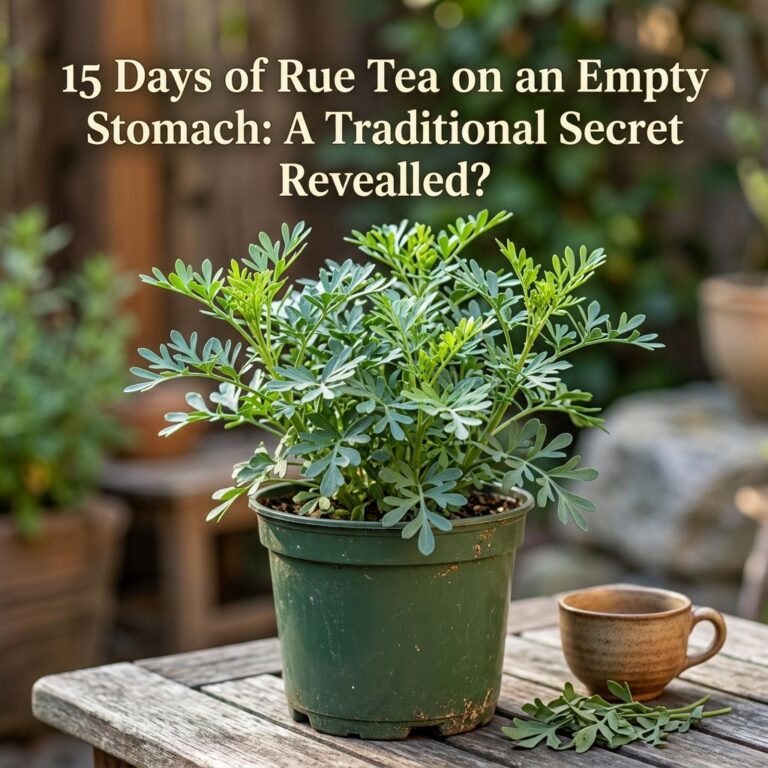
Rue is a perennial herb characterized by its distinctive blue-green, finely lobed leaves and a strong, somewhat bitter aroma. Native to the Balkan Peninsula, it has been cultivated worldwide for its traditional uses. Historically, Rue was highly regarded by ancient civilizations like the Greeks and Romans, who utilized it for various purposes, from culinary flavoring to supporting general health. Its reputation as an herb of protective qualities and a traditional aid for different ailments has persisted through folk medicine for centuries.
The ’15-Day Regimen’ and Traditional Uses
The idea of a ’15-day regimen’ with Rue tea often stems from traditional practices where herbs were consumed for a set period to observe their effects on the body. While specific scientific studies on a 15-day Rue tea regimen are limited, traditional uses suggest that Rue tea may:
- Support Digestive Comfort: In some traditional systems, Rue was believed to help soothe occasional digestive upset and promote a sense of balance in the gut.
- Promote Relaxation: Anecdotal evidence from folk medicine suggests that Rue may have properties that contribute to a calm mind and body, potentially aiding in relaxation.
- Support General Well-being: Across various cultures, Rue has been incorporated into wellness routines with the aim of fostering overall vitality and a feeling of being well-balanced.
It’s important to approach these traditional claims with a curious, yet cautious, mindset, recognizing that individual experiences can vary.
How to Traditionally Prepare Rue Tea (With Caution)
If you’re curious about traditional preparation, Rue tea is typically made by steeping a small amount of fresh or dried Rue leaves in hot water. Given Rue’s potent nature, it’s generally advised to use it sparingly.
Traditional Preparation Tip: Steep a very small sprig (about 1-2 small leaves) of fresh or dried Rue in a cup of hot water for 5-10 minutes. Strain before drinking. The flavor can be quite strong and distinct.
Important Considerations and Safety First
While exploring traditional remedies can be fascinating, it’s paramount to prioritize your health and safety. Rue is a powerful herb, and for some individuals, it may not be suitable. It is generally advised that pregnant or nursing women, children, and individuals with existing health conditions or those taking medications should strictly avoid Rue. Furthermore, Rue can increase photosensitivity in some people, meaning increased sensitivity to sunlight.
Always consult with a healthcare professional or a qualified herbalist before incorporating any new herbal remedy, including Rue tea, into your routine. They can provide personalized advice based on your health profile and ensure it’s appropriate for you.
Embracing Wellness Through Traditional Exploration
The journey into ancient wisdom and traditional remedies like Rue tea offers a unique perspective on natural wellness. While a ’15-day regimen’ might capture our curiosity, the true secret lies in approaching such practices thoughtfully, with respect for both tradition and modern health guidance. By staying informed and consulting experts, we can thoughtfully integrate time-honored knowledge into our modern healthy aging and wellness goals.
What traditional remedies have sparked your curiosity? Share your thoughts with us!