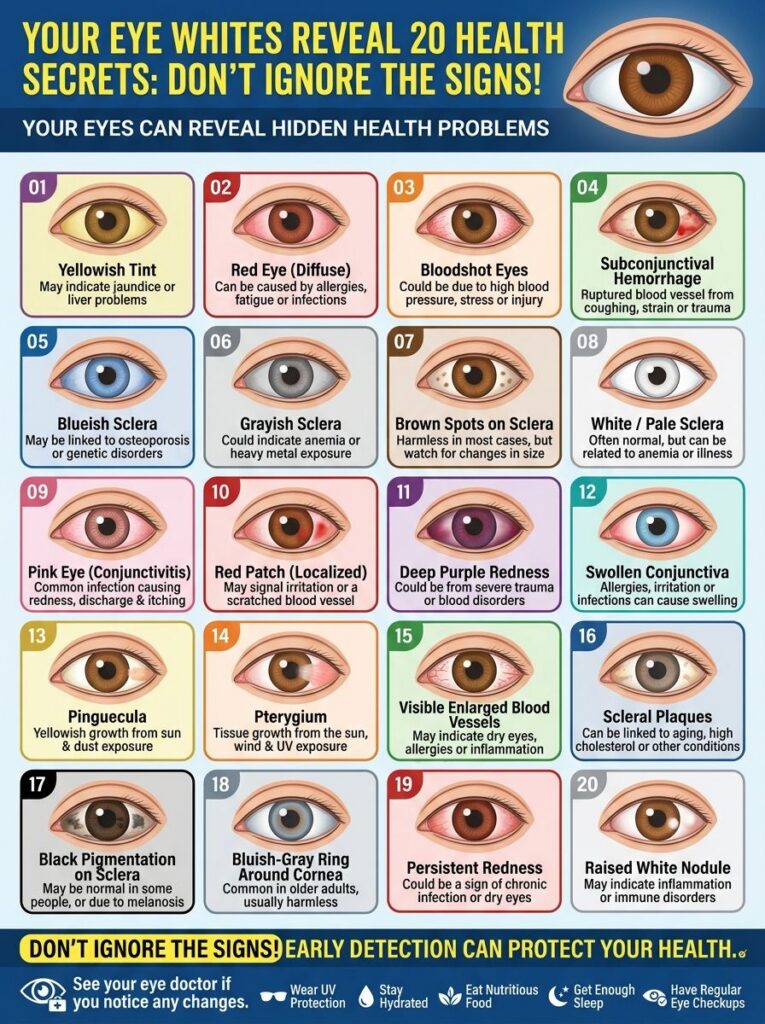
Did you know your eyes can tell a surprising story about your health? Often called the ‘windows to the soul,’ our eyes, particularly the sclera or white part, can also be a surprising indicator of our overall well-being. Changes in the color, texture, or appearance of your eye whites can signal underlying health conditions that might require attention. Understanding these signs can empower you to take proactive steps towards better health.
This infographic is a fantastic guide, highlighting 20 key changes in the white of your eyes and what they might signal about your overall health. It’s a powerful reminder that our body often gives us clues, and it’s essential to learn how to interpret them.
Decoding the Messages from Your Eye Whites
The sclera, the tough, white outer layer of your eyeball, is more than just a protective shield. Its appearance can change due to various factors, from simple irritations to more serious systemic diseases. Let’s dive into some common indicators and what they might suggest:
1. Yellowish Tint (Jaundice)
Perhaps one of the most well-known signs, a yellow discoloration of the sclera is often a primary indicator of jaundice. This condition occurs when there’s an excess of bilirubin, a yellow pigment, in the blood. Jaundice can be a sign of liver problems, such as hepatitis, cirrhosis, or blocked bile ducts. If you notice a yellowish tint, it’s crucial to consult a healthcare professional immediately.
2. Red Eye (Diffuse Redness)
General redness across the whites of your eyes can be caused by a multitude of factors. While often benign, such as fatigue, eye strain, or environmental irritants (like smoke or dust), diffuse redness can also indicate allergies, conjunctivitis (pink eye), or other infections. Persistent redness, especially if accompanied by pain, discharge, or vision changes, warrants a visit to your eye doctor.
3. Bloodshot Eyes (Prominent Red Blood Vessels)
When the tiny blood vessels on the surface of your eye become swollen and visible, it results in bloodshot eyes. This can be due to lack of sleep, excessive alcohol consumption, dry eyes, or even severe coughing. In some cases, it could point to a burst blood vessel (subconjunctival hemorrhage), which, while often harmless and self-resolving, can be alarming to witness. Regular occurrences should be discussed with a doctor.
4. Blue Tint
A bluish tint to the sclera is less common but can be a sign of certain underlying conditions. In some cases, it indicates thinner scleral tissue, allowing the underlying choroid (a layer with blood vessels) to show through. This can be associated with connective tissue disorders like osteogenesis imperfecta (brittle bone disease) or Ehlers-Danlos syndrome, or even iron deficiency anemia.
5. Small Brown Spots
While often harmless, akin to freckles on the skin, small brown spots on the sclera can sometimes be a sign of primary acquired melanosis (PAM) or even benign conjunctival nevi. In rare cases, changes in these spots could warrant investigation to rule out more serious conditions. Regular eye exams can help monitor any changes.
6. Pale Eye Whites
If your sclera appears unusually pale or almost white with a hint of dullness, it could be a sign of anemia, a condition where your blood lacks enough healthy red blood cells. Red blood cells carry oxygen throughout your body, and a deficiency can lead to fatigue, weakness, and paleness. A blood test can confirm anemia.
7. White or Grayish Ring Around the Cornea (Arcus Senilis)
A white or grayish ring that develops around the edge of the cornea is known as arcus senilis or arcus corneae. It’s usually a normal part of aging, caused by lipid deposits, and is common in older adults. However, if it appears in younger individuals, it might indicate high cholesterol and an increased risk of heart disease, making a lipid panel advisable.
General Health Tips for Optimal Eye Wellness
Beyond interpreting specific signs, maintaining good overall health is paramount for healthy eyes. Here are some actionable steps you can take:
- See Your Eye Doctor Regularly: Don’t wait for problems to arise. Routine comprehensive eye exams can detect issues early, sometimes even before you notice symptoms.
- Wear UV Protection: Shield your eyes from harmful ultraviolet (UV) rays by wearing sunglasses that block 99-100% of both UVA and UVB radiation.
- Stay Hydrated: Drinking enough water is vital for your entire body, including your eyes. Proper hydration helps maintain the moisture balance in your eyes, preventing dryness and irritation.
- Eat Nutritious Food: A balanced diet rich in fruits, vegetables, and omega-3 fatty acids supports eye health. Foods high in antioxidants like lutein and zeaxanthin (found in leafy greens, eggs, and colorful vegetables) are particularly beneficial.
- Get Enough Sleep: Adequate rest allows your eyes to repair and rejuvenate. Lack of sleep can lead to eye strain, dryness, and bloodshot eyes. Aim for 7-9 hours of quality sleep per night.
- Manage Screen Time: Prolonged use of digital devices can cause digital eye strain. Practice the 20-20-20 rule: every 20 minutes, look at something 20 feet away for at least 20 seconds.
Your eyes truly offer a window into your health. By paying attention to these subtle signals and adopting healthy habits, you can take significant steps toward proactive wellness and ensure your vision and overall health remain vibrant.
Remember, this information is for educational purposes and should not replace professional medical advice. Always consult with a healthcare provider for any health concerns.