Our bodies are incredibly intelligent, often sending us subtle signals when something isn’t quite right. When it comes to our lungs, these vital organs work tirelessly to keep us breathing and thriving, yet their cries for attention can sometimes be overlooked. Understanding these gentle nudges can be crucial for early detection and timely intervention, leading to better health outcomes.
Your lungs are responsible for a complex process: taking in oxygen and expelling carbon dioxide. When this process is compromised, it can impact every aspect of your well-being, from your energy levels to your heart health. Ignoring persistent or unusual symptoms can lead to more severe conditions, which is why paying attention to these early warnings is so important.
We’ve compiled 9 subtle signs that could indicate your lungs need a closer look. Let’s dive in and empower ourselves with knowledge for proactive wellness.
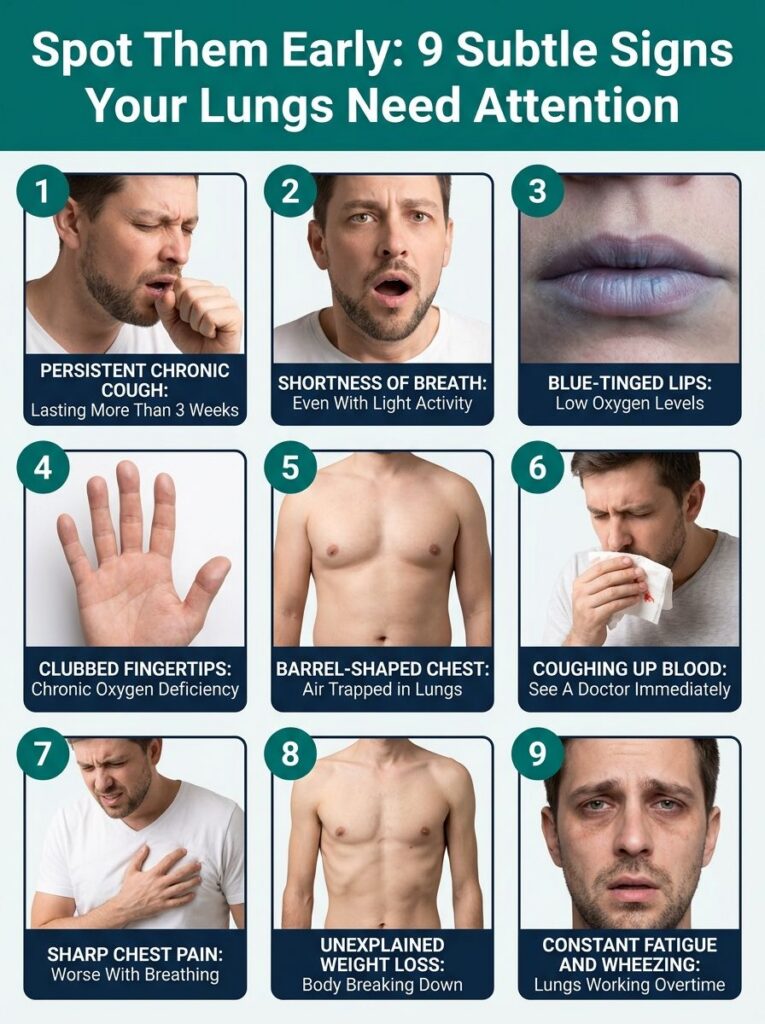
9 Subtle Signs Your Lungs Need Attention
1. Persistent Cough
A cough is a natural reflex, but if it lingers for more than three weeks, changes in character (e.g., becoming deeper, more productive, or painful), or is accompanied by other symptoms, it warrants attention. While often attributed to a common cold or allergies, a chronic cough can be a sign of underlying lung conditions like asthma, COPD, or even more serious issues.
2. Shortness of Breath (Dyspnea)
Feeling winded after a strenuous workout is normal, but experiencing shortness of breath during routine activities, or even at rest, is not. If you find yourself struggling to catch your breath while walking up stairs, doing light chores, or even just talking, it could indicate reduced lung capacity or other respiratory problems.
3. Chest Pain
Chest pain can be alarming and has many potential causes, including heart issues. However, if the pain is localized to your chest, feels sharper when you breathe deeply or cough, and is persistent, it could be related to your lungs. Conditions like pleurisy, pneumonia, or even lung inflammation can manifest as chest discomfort.
4. Unexplained Fatigue
Chronic tiredness that isn’t relieved by rest can be a symptom of many health issues, but it’s particularly relevant for lung health. When your lungs aren’t efficiently supplying oxygen to your body, your organs and muscles have to work harder, leading to pervasive fatigue. If you’re consistently feeling exhausted without a clear reason, it’s worth investigating.
5. Blue-Tinged Lips or Fingertips (Cyanosis)
This is a more noticeable sign and a clear indicator that your body isn’t getting enough oxygen. When blood lacks sufficient oxygen, it turns a bluish color. This change is most visible in areas with thin skin, such as your lips, fingers, or even under your fingernails. Cyanosis requires immediate medical attention.
6. Clubbed Fingertips
Digital clubbing refers to changes in the shape of your fingers and fingernails. The tips of your fingers enlarge, and your nails curve around the fingertips, often becoming softer or appearing shiny. This symptom develops gradually and is associated with chronic low oxygen levels in the blood, often linked to lung diseases like lung cancer, COPD, or cystic fibrosis.
7. Barrel-Shaped Chest
Over time, certain lung conditions, particularly emphysema (a type of COPD), can lead to changes in your chest cavity. The lungs become over-inflated, causing the chest to expand and take on a more rounded, barrel-like appearance. This is a subtle change that often develops over many years but can be a significant sign of chronic lung disease.
8. Unexplained Weight Loss
Losing weight without trying is a symptom that should never be ignored. Many chronic diseases, including severe lung conditions and lung cancer, can lead to significant and unintentional weight loss. This happens because the body uses a lot of energy just to breathe when the lungs are compromised, and inflammation can also suppress appetite.
9. Coughing Up Blood (Hemoptysis)
Any instance of coughing up blood, no matter how small the amount, is a serious symptom that requires immediate medical evaluation. It can range from blood-streaked sputum to larger quantities of bright red blood and can indicate infections, blood clots, or more severe conditions like lung cancer.
Take Action for Your Lung Health
Recognizing these subtle signs is the first step toward proactive health management. Your lungs are vital for life, and taking care of them means paying attention to what your body is telling you. If you experience any of these symptoms, especially if they are persistent, worsening, or new, please do not hesitate to consult a healthcare professional. Early diagnosis can make a significant difference in treatment outcomes and overall well-being. Share this information to help others stay informed and empowered about their lung health!