When we think of breathtaking beauty in the animal kingdom, our minds often jump to majestic mammals, graceful birds, or vibrant marine life. But hidden in plain sight, buzzing through gardens, forests, and tropical rainforests, is an entire miniature world of stunning creatures that rival precious gemstones in both color and design. These often-overlooked marvels are some of the most beautiful insects on Earth, proving that extraordinary beauty truly comes in all sizes.
These remarkable species have evolved their stunning appearances for crucial survival reasons—from intricate camouflage and clear communication to clever defense mechanisms. Some shimmer like polished gold, others mimic delicate flowers, while a few display colors so vibrant they seem almost unreal. Join us on a fascinating journey to explore seven of nature’s most spectacular insects, each a testament to the incredible diversity and artistry of the natural world.
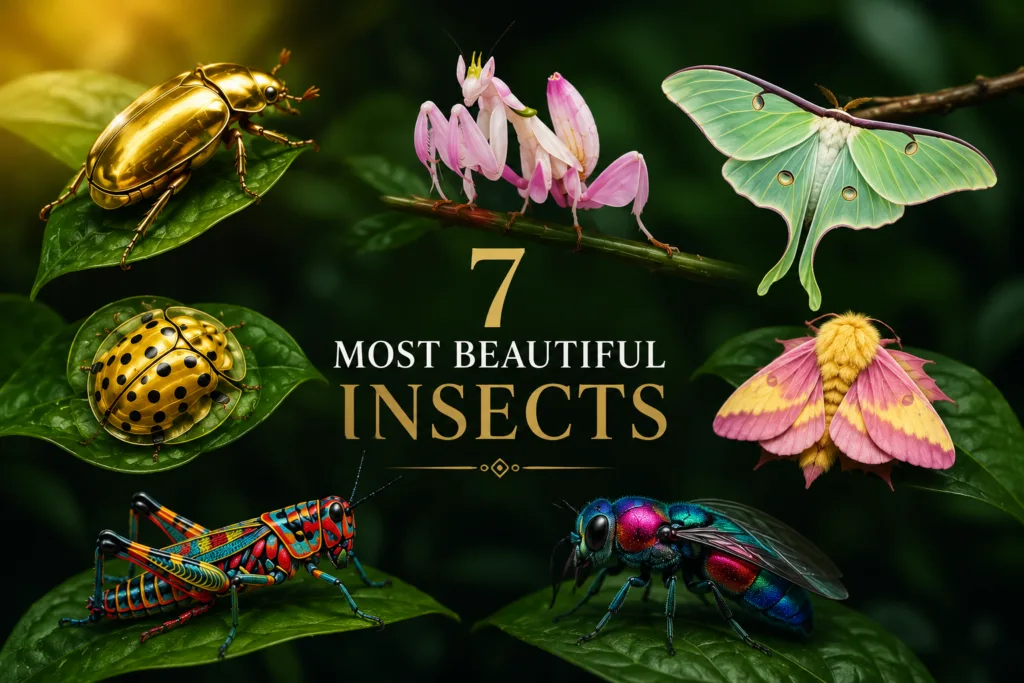 Discover the incredible artistry of nature’s smallest wonders!
Discover the 7 Most Beautiful Insects in the World
1. Golden Scarab Beetle (Chrysina aurigans)
Appearance: The Golden Scarab is arguably one of the world’s most dazzling beetles, captivating observers with its polished, metallic shell that reflects light like pure, gleaming gold. Its surface is so reflective, it can appear almost artificial or like a finely crafted piece of jewelry.
Habitat: These magnificent beetles are typically found in the misty cloud forests of Costa Rica and other regions of Central America, where humidity keeps the foliage perpetually damp and glistening.
Why it is unique: Scientists believe its mirror-like surface isn’t just for show; it may provide exceptional camouflage, allowing the beetle to blend seamlessly among wet, reflective leaves and water droplets in its environment, making it one of the most unique and exotic insects.
- Interesting fact: Its shell reflects nearly every wavelength of visible light, giving it its incredible, uniform golden shine.
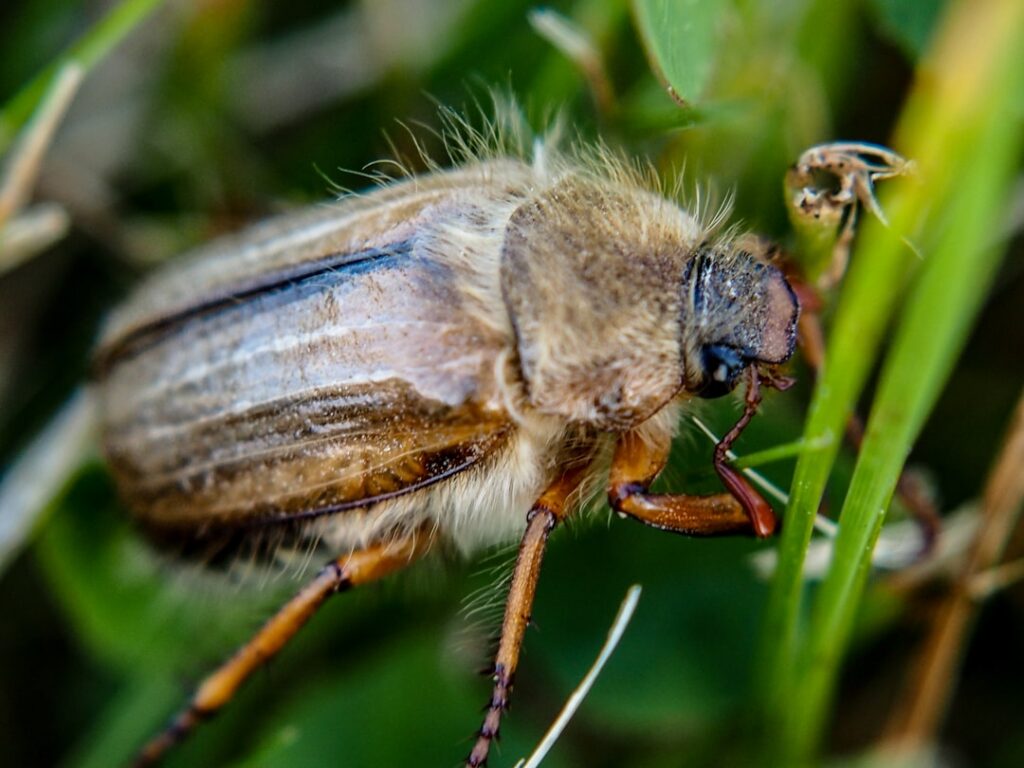 The Golden Scarab Beetle, a living jewel from the cloud forests.
2. Orchid Mantis (Hymenopus coronatus)
Appearance: A true master of disguise, the Orchid Mantis is breathtaking with its delicate pink and white coloration and flattened, lobe-like legs that perfectly mimic the petals of tropical orchids. Its form is so convincing, it’s often mistaken for a flower itself.
Habitat: These incredible insects are native to the rainforests of Southeast Asia, where they blend into their floral surroundings awaiting unsuspecting prey.
Why it is unique: Rather than hiding among leaves, the Orchid Mantis actively mimics flowers. This beautiful camouflage serves a dual purpose: it allows the mantis to remain undetected by predators and, more fascinatingly, attracts pollinating insects that mistake it for a flower – making them easy prey. It’s a stunning example of aggressive mimicry among colorful insects.
- Interesting fact: Female Orchid Mantises are significantly larger and often more vibrantly colored than males, displaying a more pronounced floral resemblance.
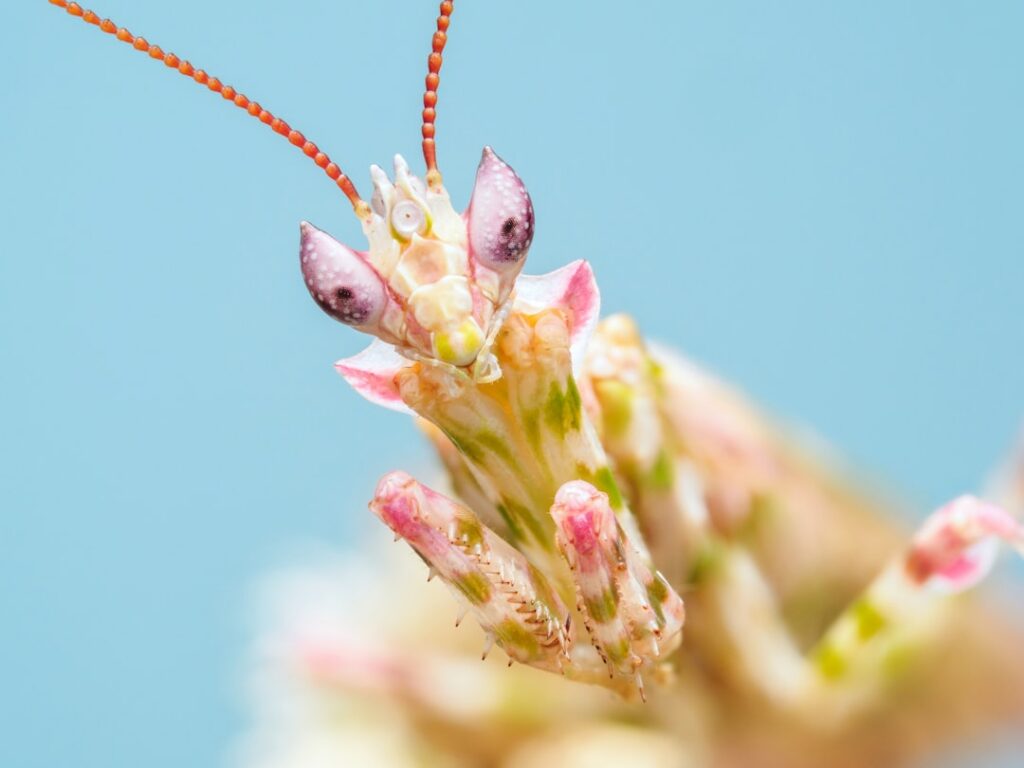 The Orchid Mantis: a flower’s beauty with a predator’s precision.
3. Luna Moth (Actias luna)
Appearance: With its ethereal pale green wings, often spanning several inches, and elegant, trailing tails, the Luna Moth possesses a magical and otherworldly beauty. Its eyespots on the wings add to its mystique.
Habitat: These enchanting moths flutter through deciduous forests across North America, from Canada to Mexico.
Why it is unique: Unlike many moths, adult Luna Moths have no functioning mouths or digestive systems. They emerge from their cocoons solely to reproduce, living only about one week on the energy stored as a caterpillar. Their fleeting, beautiful existence is purely dedicated to the continuation of their species, making them one of the most fascinating insects.
- Interesting fact: Their long, twisting tails are not just for aesthetics; they help confuse predators like bats by disrupting echolocation during flight, giving the moth a better chance of escape.
 The Luna Moth: a fleeting vision of emerald elegance.
4. Golden Tortoise Beetle (Charidotella sexpunctata)
Appearance: This tiny beetle, no bigger than a ladybug, typically gleams like a miniature golden shield, sometimes with black spots. Its most astonishing feature is its ability to change its coloration almost instantly.
Habitat: Found across North and South America, these small wonders inhabit gardens and fields, feeding on morning glory and sweet potato leaves.
Why it is unique: The Golden Tortoise Beetle has a truly remarkable ability to alter its appearance. Normally appearing bright golden, it can rapidly shift to reddish or bronze hues when stressed or disturbed. This dramatic color change is achieved by manipulating fluid movement beneath its transparent outer shell, which alters how light is reflected – a true chameleon of the insect world.
- Interesting fact: Scientists continue to study the precise physical mechanisms behind this intricate and rapid color-changing ability.
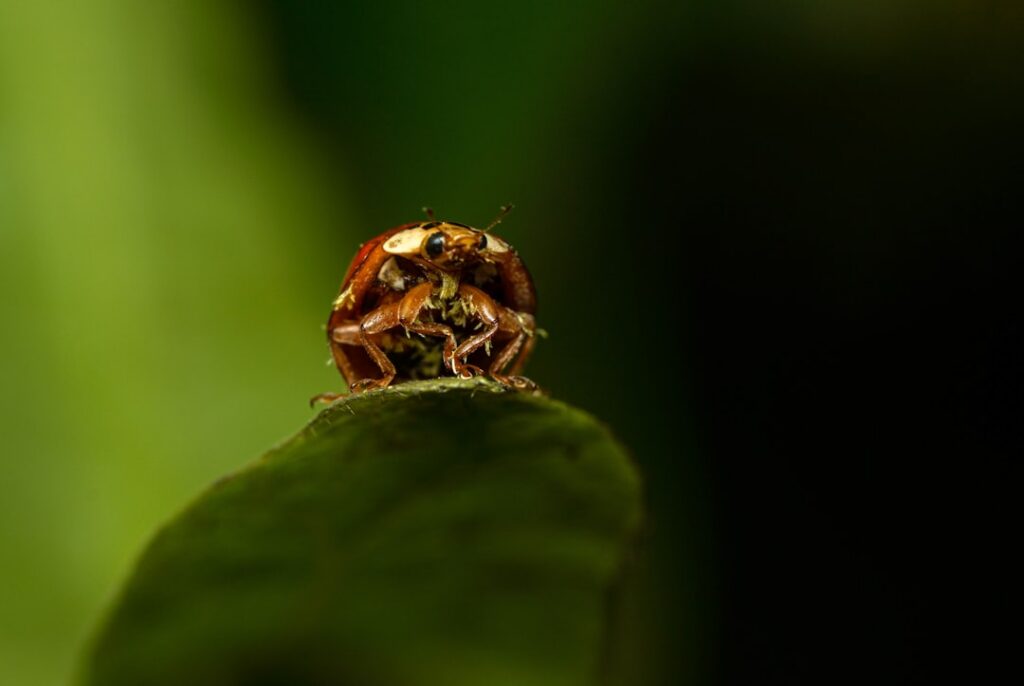 The Golden Tortoise Beetle: a master of instant disguise.
5. Rosy Maple Moth (Dryocampa rubicunda)
Appearance: Often affectionately called the “cotton candy moth,” this species is celebrated for its irresistibly soft, pastel pink and yellow wings, combined with a fuzzy, yellow body. Its vibrant yet gentle hues make it look like something out of a whimsical dream.
Habitat: These charming moths are common throughout Eastern North America, fluttering predominantly in forests where maple trees thrive.
Why it is unique: Despite its bright and attention-grabbing appearance, the Rosy Maple Moth is completely harmless. Its caterpillars, known as green-striped mapleworms, feed primarily on maple trees, hence the moth’s name. Its cheerful and distinctive colors have earned it a special place in the hearts of nature enthusiasts and made it one of the internet’s most beloved beautiful insects.
- Interesting fact: Like the Luna Moth, adult Rosy Maple Moths do not feed, living only a short time to reproduce.
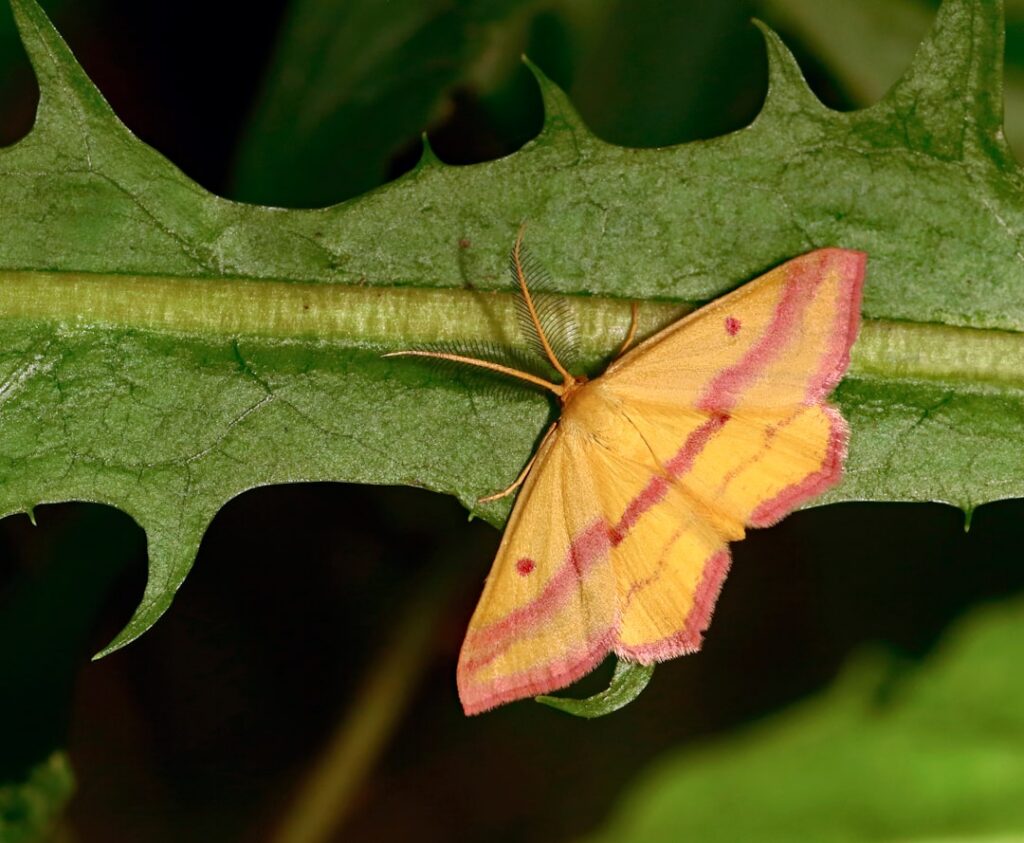 The Rosy Maple Moth: nature’s own cotton candy creation.
6. Rainbow Grasshopper (Dactylotum bicolor)
Appearance: Unlike most grasshoppers that rely on camouflage to blend into their surroundings, the Rainbow Grasshopper proudly displays an extraordinary palette of brilliant shades including blue, red, yellow, orange, and black, making it a truly colorful insect.
Habitat: This striking species can be found in grasslands and prairies across the southwestern United States and northern Mexico.
Why it is unique: These vibrant colors are not for attracting mates, but rather serve as a stark warning to potential predators. The bright hues signal that the insect may be unpleasant or toxic to eat, a defense mechanism known as aposematism. It’s a bold statement in the insect world.
- Interesting fact: Rainbow Grasshoppers cannot fly well because their wings are greatly reduced, relying more on hopping and their warning colors for survival.
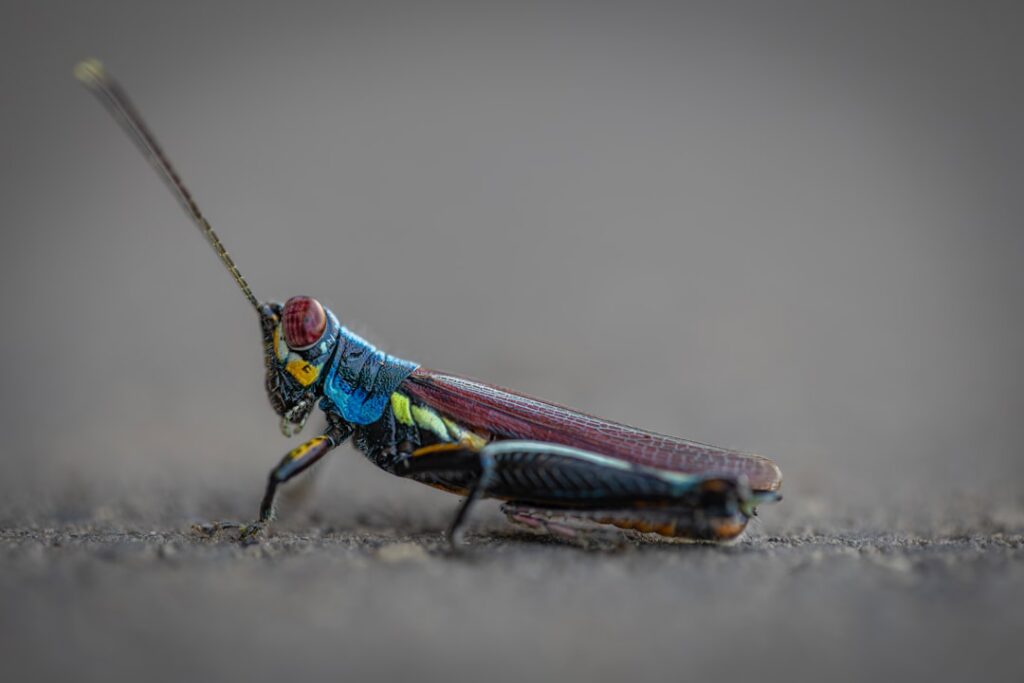 The Rainbow Grasshopper: a walking billboard of warning colors.
7. Cuckoo Wasp (Chrysis ignita)
Appearance: Small yet incredibly vibrant, the Cuckoo Wasp is a jewel of the insect world, shimmering with metallic blues, greens, reds, and purples. Its iridescent exoskeleton catches the light from every angle, making it appear like a tiny, flying gem.
Habitat: These stunning wasps are found across various regions globally, often frequenting gardens and areas with solitary bee and wasp nests.
Why it is unique: The Cuckoo Wasp’s spectacular, jewel-like colors don’t come from pigments but from microscopic structures on its exoskeleton that reflect and refract light. Its fascinating life cycle also gives it its name: the female lays her eggs inside the nests of other solitary wasps and bees, a brood parasitic behavior similar to that of cuckoo birds. This makes it one of the most intriguing and amazing insects.
- Interesting fact: When threatened, Cuckoo Wasps can curl into a tight, protective ball, thanks to their unusually hard and flexible exoskeleton, safeguarding their vulnerable underside.
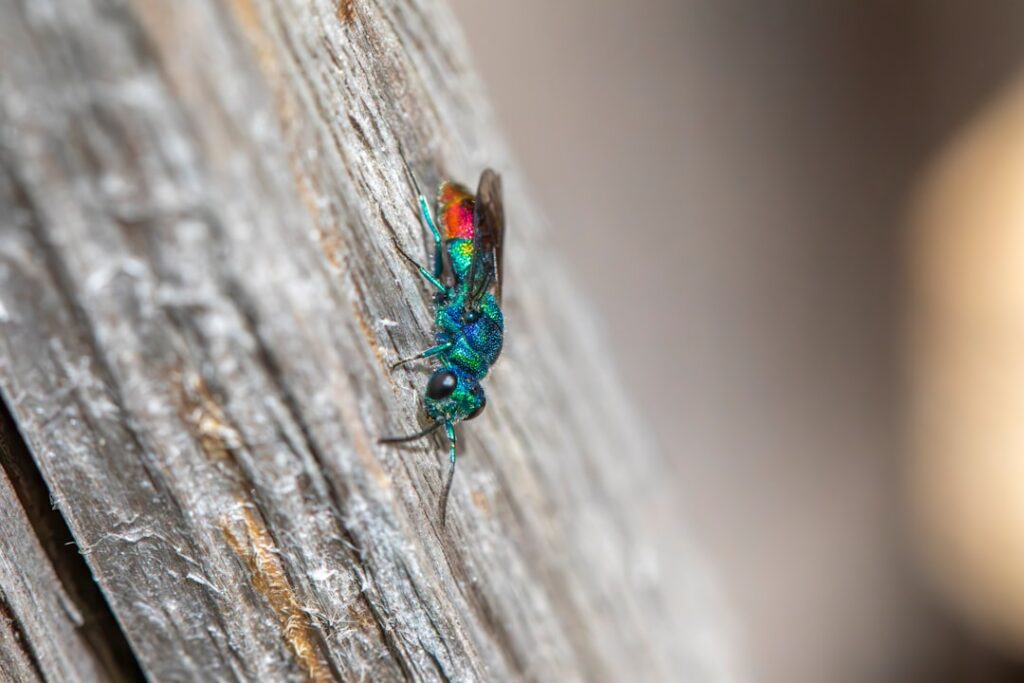 The Cuckoo Wasp: a tiny, living kaleidoscope of metallic brilliance.
Why Do These Insects Flaunt Such Dazzling Colors?
The incredible beauty of these insects isn’t merely for our admiration. Their spectacular appearances serve vital biological purposes, honed over millions of years of evolution. Here’s why these rare insects and their common cousins are so colorful:
- Camouflage: Like the Orchid Mantis, some insects use their colors and shapes to perfectly blend into their environment, mimicking flowers, leaves, or even water droplets, thereby hiding from both predators and prey.
- Warning Signals: For species like the Rainbow Grasshopper, brilliant colors act as a clear warning sign to predators, signaling toxicity or an unpleasant taste. This is often called aposematism.
- Attracting Mates: Bright, intricate patterns and vibrant hues can be crucial in attracting a suitable mate, indicating health and genetic fitness.
- Mimicry: Some insects imitate the appearance of more dangerous or distasteful species to deter predators.
- Reflecting Light for Protection: The metallic sheen of beetles like the Golden Scarab may help them camouflage or even reflect harmful UV radiation.
- Confusing Predators: Features like the Luna Moth’s long tails can confuse predators, such as bats, by distorting their echolocation, increasing the moth’s chances of survival.
Nature consistently proves that beauty often has a practical, life-sustaining purpose, making these creatures even more remarkable.
Nature’s Miniature Masterpieces: Appreciating Insect Diversity
These seven examples are just a glimpse into the boundless beauty and complexity of the insect world. They remind us that some of Earth’s greatest works of art are only a few centimeters long, showcasing incredible adaptations, stunning patterns, and dazzling colors. Their existence highlights the immense biodiversity of our planet and the endless wonders waiting to be discovered.
By appreciating these miniature marvels, we foster a deeper connection to the natural world and a greater understanding of the intricate ecosystems that support all life. Whether shimmering like gold or blending perfectly into a bloom, these amazing insects demonstrate that extraordinary beauty and vital lessons can be found in even the smallest corners of nature.
Which of these incredible insects amazed you the most? Share your favorite in the comments below, and follow us for more fascinating wildlife facts and nature discoveries that celebrate our planet’s incredible biodiversity!