Are you looking for simple, actionable ways to support your heart health and keep it happy? Taking control of your cholesterol levels is a powerful step towards a vibrant, healthier life. While cholesterol often gets a bad rap, it’s actually vital for many bodily functions. The key lies in balancing the ‘good’ (HDL) and ‘bad’ (LDL) types.
High levels of LDL cholesterol can lead to plaque buildup in your arteries, increasing your risk of heart disease. But the good news is that your diet plays a massive role in managing these levels! By making smart food choices, you can actively work to lower LDL and boost HDL, giving your heart the support it deserves.
This comprehensive guide will walk you through the top cholesterol-lowering superfoods to incorporate into your daily meals, as well as the foods you should limit. We’ll also share essential lifestyle tips to complement your dietary changes for overall heart wellness.
Understanding Cholesterol: The Basics
Before we dive into foods, let’s quickly clarify what cholesterol is. It’s a waxy, fat-like substance found in all the cells in your body. Your body needs cholesterol to make hormones, vitamin D, and substances that help you digest foods. Your liver makes all the cholesterol your body needs. However, you can also get cholesterol from foods you eat.
- LDL (Low-Density Lipoprotein) Cholesterol: Often called ‘bad’ cholesterol. High levels can lead to plaque buildup in your arteries, narrowing them and increasing the risk of heart attack and stroke.
- HDL (High-Density Lipoprotein) Cholesterol: Known as ‘good’ cholesterol. HDL helps carry cholesterol from other parts of your body back to your liver, which then removes it from your body. Higher levels are better.
Top Cholesterol-Lowering Superfoods
Incorporating these delicious and nutritious foods into your diet can make a significant difference in your cholesterol levels and overall heart health.
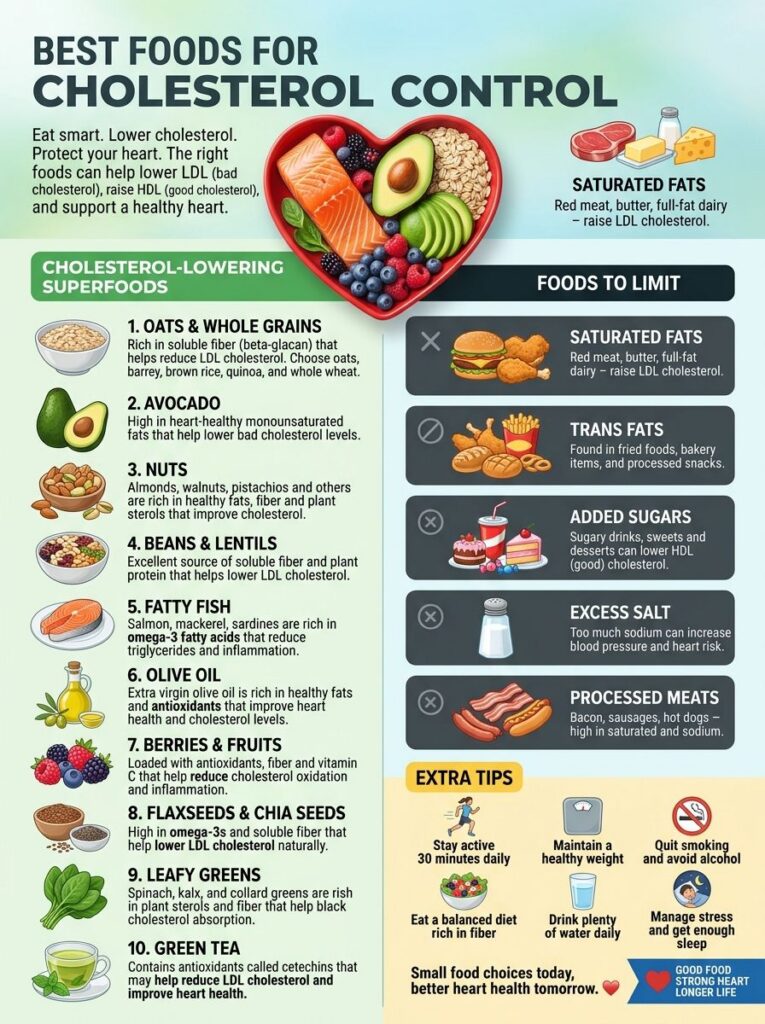
1. Oats and Barley (and other Whole Grains)
- Why they help: Rich in soluble fiber, particularly beta-glucan. Soluble fiber creates a gel in your gut that binds to cholesterol and prevents its absorption, carrying it out of your body.
- How to enjoy: Start your day with a bowl of oatmeal, add barley to soups, or choose whole-grain breads and pastas.
2. Fatty Fish (Salmon, Mackerel, Sardines)
- Why they help: Packed with omega-3 fatty acids, which can reduce triglycerides (a type of fat in the blood), slow the growth of plaque in the arteries, and slightly lower blood pressure.
- How to enjoy: Aim for at least two servings of fatty fish per week, baked, grilled, or broiled.
3. Avocados
- Why they help: A fantastic source of monounsaturated fats (MUFAs) and fiber, both of which can help lower LDL cholesterol and raise HDL cholesterol.
- How to enjoy: Add slices to salads, sandwiches, or make a creamy guacamole.
4. Nuts (Almonds, Walnuts)
- Why they help: Contain healthy fats (mono- and polyunsaturated), fiber, and plant sterols that block cholesterol absorption. Walnuts are particularly rich in alpha-linolenic acid (ALA), a plant-based omega-3.
- How to enjoy: A small handful (about 1.5 ounces) as a snack, or sprinkled over salads and yogurt.
5. Legumes (Beans, Lentils, Chickpeas)
- Why they help: An excellent source of soluble fiber, which, like oats, helps reduce LDL cholesterol. They are also rich in plant protein, making them a great meat alternative.
- How to enjoy: Add to soups, stews, salads, or make homemade hummus.
6. Berries (Strawberries, Blueberries, Raspberries)
- Why they help: Bursting with antioxidants and soluble fiber. Antioxidants protect LDL cholesterol from oxidation, a key step in plaque formation.
- How to enjoy: Enjoy fresh as a snack, blended into smoothies, or added to oatmeal and yogurt.
7. Flaxseeds and Chia Seeds
- Why they help: High in soluble fiber and omega-3 fatty acids (ALA). They contribute to lowering total and LDL cholesterol.
- How to enjoy: Sprinkle ground flaxseeds or chia seeds into smoothies, yogurt, cereal, or baked goods.
8. Olive Oil
- Why it helps: Extra virgin olive oil is rich in monounsaturated fatty acids and antioxidants, which can lower LDL cholesterol and have anti-inflammatory effects.
- How to enjoy: Use as a healthy cooking oil, in salad dressings, or as a dip for whole-grain bread.
9. Soy Products (Tofu, Edamame, Soy Milk)
- Why they help: Plant-based protein sources that can help lower LDL cholesterol. Studies suggest consuming about 25 grams of soy protein per day can significantly reduce LDL.
- How to enjoy: Incorporate tofu into stir-fries, snack on edamame, or use unsweetened soy milk in your cereal or coffee.
10. Sterol- and Stanol-Enriched Foods
- Why they help: Plant sterols and stanols are natural compounds found in small amounts in many plants. When added to foods like certain margarines, orange juice, or yogurt, they can block the absorption of cholesterol from the digestive tract.
- How to enjoy: Look for products fortified with plant sterols/stanols and use them as directed on the label.
Foods to Limit for Better Heart Health
Just as important as adding beneficial foods is reducing those that can negatively impact your cholesterol and heart health.
1. Saturated Fats
- Found in: Red meat, processed meats, full-fat dairy products, butter, coconut oil, fried foods.
- Why to limit: They directly raise your LDL (‘bad’) cholesterol levels.
2. Trans Fats
- Found in: Many commercially baked goods, fried fast foods, some margarines, and processed snacks.
- Why to limit: These are the worst type of fat, as they not only raise LDL cholesterol but also lower HDL (‘good’) cholesterol.
3. Added Sugars
- Found in: Sugary drinks (soda, sweetened juices), candies, pastries, desserts, and many processed foods.
- Why to limit: High intake can increase triglycerides, contribute to weight gain, and promote inflammation, all of which negatively impact heart health.
4. Excess Salt (Sodium)
- Found in: Processed and packaged foods, canned soups, frozen meals, deli meats.
- Why to limit: While not directly affecting cholesterol, high sodium intake can raise blood pressure, a major risk factor for heart disease.
5. Processed Meats
- Found in: Bacon, sausages, hot dogs, deli meats.
- Why to limit: Often high in saturated fat, sodium, and nitrates, which have been linked to an increased risk of heart disease.
Beyond Food: Essential Lifestyle Tips for Heart Health
Diet is a cornerstone of cholesterol management, but it works best in conjunction with other healthy lifestyle habits. These ‘extra tips’ from the infographic are crucial for a holistic approach to heart wellness.
- Stay Active: Regular physical activity helps increase HDL cholesterol and lower LDL cholesterol and triglycerides. Aim for at least 150 minutes of moderate-intensity exercise per week.
- Maintain a Healthy Weight: Losing excess weight can significantly reduce LDL cholesterol and improve overall cardiovascular health.
- Quit Smoking: Smoking damages blood vessels, lowers HDL cholesterol, and dramatically increases your risk of heart disease. Quitting is one of the best things you can do for your heart.
- Drink Plenty of Water: Staying hydrated is essential for all bodily functions, including metabolism and nutrient transport, indirectly supporting heart health.
- Manage Stress & Sleep: Chronic stress can contribute to high blood pressure and unhealthy habits. Quality sleep (7-9 hours per night) is vital for hormone regulation and cardiovascular repair.
Your Journey to a Healthier Heart Starts Now!
Taking proactive steps to manage your cholesterol doesn’t have to be overwhelming. By gradually incorporating more heart-healthy superfoods into your diet, limiting processed and unhealthy options, and embracing positive lifestyle changes, you can significantly improve your cardiovascular health.
Remember, consistency is key. Start with small, manageable changes and build on them over time. Your heart will thank you for it!