Pruning is one of the most essential skills in gardening, yet it often causes the most anxiety for growers. Cut at the wrong time, and you risk cutting off next season’s flower buds or leaving your plant vulnerable to harsh frost; cut at the right time, and you unlock explosive growth, better fruit yields, and vibrant blooms.
To eliminate the guesswork, here is your definitive month-by-month guide to pruning for a healthy, thriving garden all year long.
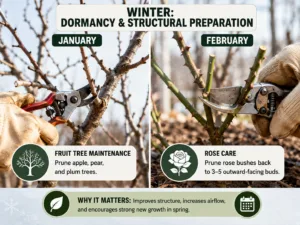
Winter: Dormancy & Structural Preparation
Winter is the golden window for major structural cuts. Because deciduous plants are dormant and leafless, their framework is fully visible, and the risk of spreading disease is minimal.
January: Fruit Tree Maintenance
-
Task: Prune apple, pear, and plum trees while they are in deep dormancy.
-
Why It Matters: Removing dead, diseased, or crossing branches during deep freeze encourages vigorous new growth in spring and allows better airflow and sunlight penetration into the center canopy.
February: Rose Care
-
Task: Prune rose bushes back to three to five outward-facing buds.
-
Why It Matters: Cutting just above an outward-facing bud forces new shoots to grow outward rather than inward, keeping the center of the bush open to sunlight and reducing fungal leaf diseases.
Spring: Growth Activation & Post-Bloom Management
Spring brings rapid sap movement and flowering. Timing during these months requires extra care to avoid destroying seasonal blooms.
March: Summer-Flowering Shrubs
-
Task: Cut back summer-flowering shrubs before bud break.
-
Why It Matters: Plants that bloom in late summer (such as Buddleja or Hydrangea paniculata) produce flowers on new wood (current season’s growth). Pruning them early stimulates heavy stem growth and larger summer blooms.
April: Hands Off Spring Bloomers!
-
Rule: DO NOT PRUNE spring-flowering shrubs while they are in bloom or setting flowers (e.g., lilacs, azaleas, rhododendrons).
-
Why It Matters: Spring bloomers form their flower buds on old wood during the previous year. Pruning in April cuts away this season’s flowers before they can open.
May: Post-Bloom Spring Shrubs
-
Task: Prune forsythia, mock orange, and lilac right after their spring flowering finishes.
-
Why It Matters: Trimming these shrubs immediately after their flowers fade gives them the entire summer to produce strong new growth and set new flower buds for the following spring.
Summer: Shape Control & Canopy Thinning
Summer pruning focuses on limiting excessive growth, shaping hedges, and maintaining energy distribution in fruit trees.
June: Formal Hedges
-
Task: Perform the first formal hedge trim of the year (boxwood, privet, beech).
-
Why It Matters: Trimming spring growth keeps formal garden lines sharp, promotes dense foliage development, and controls plant height.
July: Fruit Tree Water Shoots
-
Task: Remove vertical water shoots (vigorous, upright sucker branches) from fruit trees.
-
Why It Matters: Water shoots steal vital nutrients and block sunlight from ripening fruit. Removing them channels energy into developing fruit clusters instead of unwanted foliage.
August: Stone Fruit Post-Harvest
-
Task: Prune peach and nectarine trees right after harvest.
-
Why It Matters: Stone fruits are prone to silver leaf disease and bacterial canker if pruned in cold, damp weather. Pruning in warm late-summer weather speeds up wound healing.
Autumn: Clean-Up & Frost Protection
Autumn is a period of transition. The primary objective is removing spent growth without triggering tender new growth before winter.
September: Cane Fruit Clean-Up
-
Task: Cut down fruited raspberry canes at ground level.
-
Why It Matters: Summer-fruiting raspberries produce fruit on two-year-old canes. Once a cane has fruited, it dies back; removing old canes leaves space and resources for fresh one-year-old canes to flourish.
October: Protect Against Frost
-
Rule: Avoid hard pruning on trees and shrubs during mid-to-late autumn.
-
Why It Matters: Hard pruning stimulates fresh green shoots. These tender new growths will not have time to harden off before cold weather arrives and will suffer severe frost damage.
Late Autumn & Early Winter: Dormancy Prep & Tool Care
As foliage drops, focus shifts back to structural tree care and essential tool maintenance.
November: Deciduous Trees
-
Task: Prune deciduous shade trees after complete leaf fall.
-
Why It Matters: Once leaves have fully dropped, trees enter dormancy and sap flow drops. You can easily spot structural flaws, dead limbs, or rubbing branches without damaging active tissue.
December: Tool Sharpening & Sanitization
-
Task: Clean, sharpen, and disinfect all pruning tools (secateurs, saws, loppers).
-
Why It Matters: Dull blades crush plant stems rather than making clean cuts, leaving plants vulnerable to infection. Cleaning tools with rubbing alcohol and coating metal blades with tool oil prevents the spread of fungal spores and keeps equipment in peak condition for the coming year.
3 Rules of Thumb for Pruning Success
-
Follow the 3 Ds: Always remove Dead, Diseased, or Damaged wood first, regardless of the month or season.
-
Sharp Cuts Win: Use bypass pruners for clean cuts on live wood, and anvil pruners for dead, dry branches.
-
Never Prune in Rain: Avoid pruning during damp, wet days to prevent airborne fungal spores from invading fresh cut wounds.