Understanding the vital warning signs of a heart attack, cardiac arrest, and stroke is crucial for everyone. These are distinct medical emergencies, each requiring immediate recognition and swift action to improve outcomes and potentially save a life. Knowing the differences can empower you to respond effectively in critical moments.
In this article, we’ll break down each condition, clarifying what they are and, most importantly, detailing their specific warning signs. Equipped with this knowledge, you’ll be better prepared to act quickly, whether it’s for yourself or someone you care about.
Understanding the Differences: Heart Attack, Cardiac Arrest, and Stroke
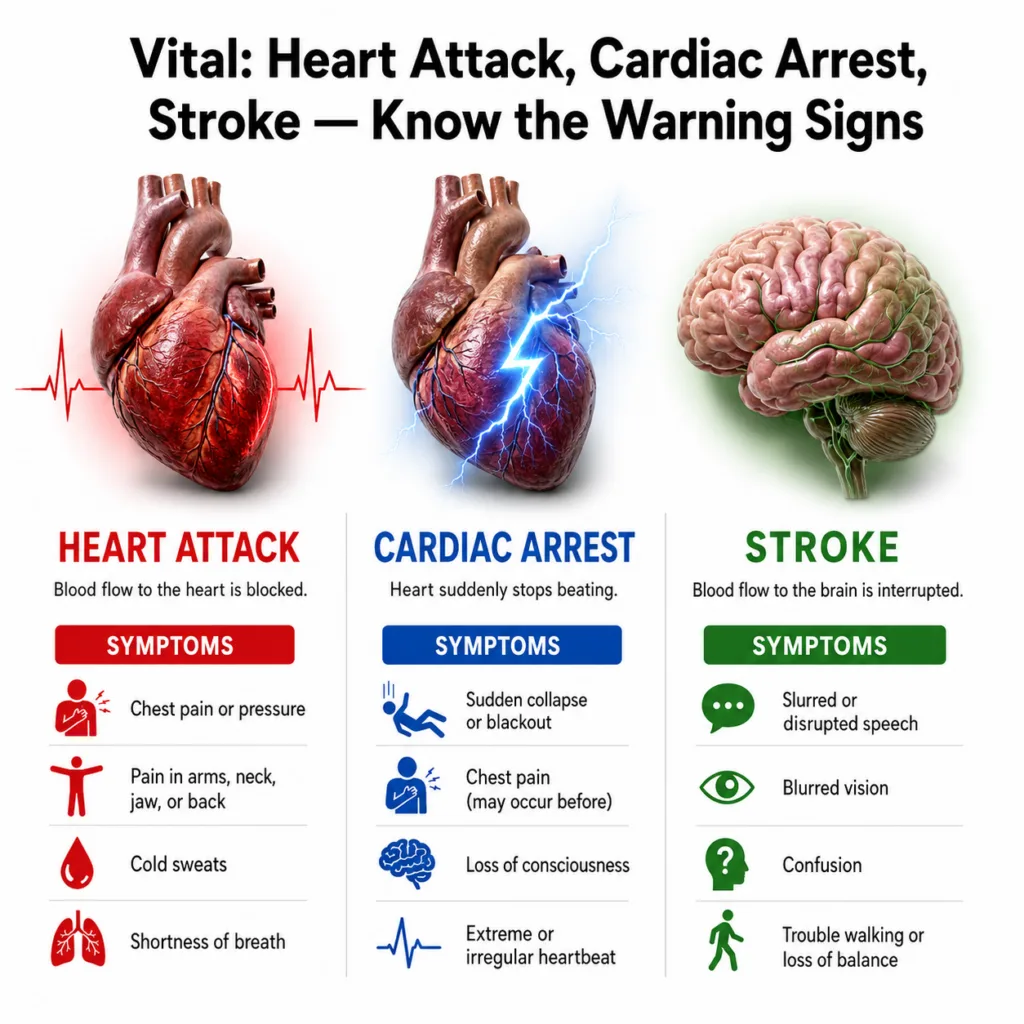
While often confused, heart attack, cardiac arrest, and stroke are distinct medical events. Recognizing their unique characteristics is the first step toward effective response.
What is a Heart Attack?
A heart attack occurs when blood flow to a part of the heart muscle is blocked, usually by a blood clot. This interruption deprives the heart muscle of oxygen, leading to damage or death of that section of the heart. During a heart attack, the heart typically continues to beat, but its function is severely compromised. It’s often described as a ‘circulation’ problem.
Key Warning Signs of a Heart Attack
- Chest Pain or Discomfort: This is the most common symptom. It can feel like pressure, squeezing, fullness, or a dull ache in the center of your chest. It may last for more than a few minutes, or go away and come back.
- Shortness of Breath: You may experience this with or without chest discomfort. It can feel like you can’t get enough air.
- Pain in Other Areas: Discomfort can spread to your left arm (though it can occur in both), jaw, neck, back, or stomach.
- Nausea or Vomiting: Feeling sick to your stomach, indigestion, or even vomiting can be signs.
- Lightheadedness or Dizziness: You might feel faint or dizzy, sometimes accompanied by a cold sweat.
- Cold Sweat: Breaking out in a cold sweat, often without any exertion.
Symptoms can vary between individuals, and women, in particular, may experience less typical symptoms like extreme fatigue, nausea, or jaw pain without intense chest pain.
What is Cardiac Arrest?
Cardiac arrest is an ‘electrical’ problem. It occurs when the heart suddenly and unexpectedly stops beating effectively, causing blood flow to the brain and other vital organs to cease. It’s often triggered by an electrical malfunction in the heart that disrupts its pumping action. Cardiac arrest is life-threatening and, if not treated immediately, leads to death within minutes.
Immediate Signs of Cardiac Arrest
- Sudden Collapse: The person may fall to the ground without any warning.
- Loss of Consciousness: The individual becomes unresponsive and cannot be roused.
- No Pulse: There is no detectable heartbeat or pulse.
- No Breathing: The person is not breathing, or is only gasping for air (agonal breathing), which is not effective.
- Seizure-like Activity: Sometimes, brief seizure-like movements may occur as the brain is starved of oxygen.
Time is critical during cardiac arrest. Immediate CPR and the use of an automated external defibrillator (AED) can be life-saving.
What is a Stroke?
A stroke is a ‘brain attack’ that happens when blood flow to an area of the brain is interrupted, either by a blocked artery (ischemic stroke) or a bleeding blood vessel (hemorrhagic stroke). Without oxygen, brain cells begin to die within minutes, leading to immediate loss of function in the body parts controlled by that area of the brain.
Recognizing the Signs of a Stroke: Act F.A.S.T.
Recognizing stroke symptoms quickly is essential. The acronym F.A.S.T. is an easy way to remember the most common signs:
- F – Face Drooping: Ask the person to smile. Does one side of the face droop or is it numb? Is the smile uneven?
- A – Arm Weakness: Ask the person to raise both arms. Does one arm drift downward? Is one arm weak or numb?
- S – Speech Difficulty: Ask the person to repeat a simple sentence. Is their speech slurred, strange, or are they unable to speak? Is the sentence repeated correctly?
- T – Time to Call 911: If someone shows any of these symptoms, even if they seem to go away, call emergency services immediately. Note the time symptoms first appeared.
Other Important Stroke Symptoms
- Sudden Numbness or Weakness: This typically affects one side of the body, including the face, arm, or leg.
- Sudden Confusion: Difficulty understanding speech or being confused.
- Sudden Trouble Seeing: Vision problems in one or both eyes.
- Sudden Trouble Walking: Dizziness, loss of balance, or lack of coordination.
- Sudden Severe Headache: A thunderclap headache with no known cause.
Every minute counts in a stroke. The faster medical attention is received, the better the chances of recovery.