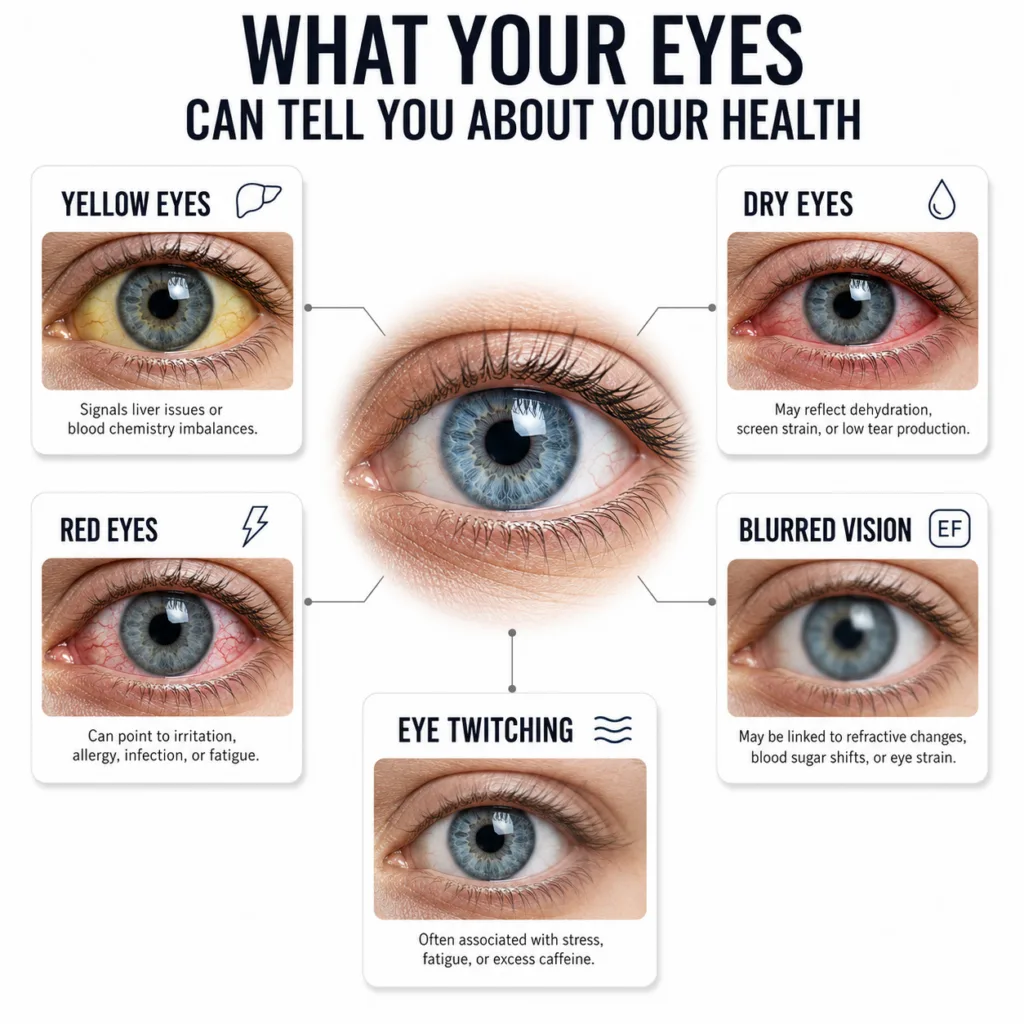
Your eyes can reveal surprising insights into your overall health. Far more than just organs of sight, they often act as a window, reflecting subtle changes and signals from within your body. Learning to recognize these often-overlooked signs can empower you to take proactive steps for your well-being, catching potential issues early before they become more serious.
From the color of your sclera (the white part of your eye) to the frequency of a twitch, your eyes are constantly communicating. Understanding what these subtle changes reveal is a crucial step towards better health awareness. Let’s explore five common eye signals and what they might be telling you about your health.
Yellow Eyes: A Signal from Your Liver
When the whites of your eyes, known as the sclera, take on a yellowish tint, it’s often a clear indicator of jaundice. This condition typically points towards issues with your liver or gallbladder, crucial organs for digestion and detoxification.
- Liver Problems: A compromised liver may struggle to process bilirubin, a yellow pigment produced during the breakdown of red blood cells. When bilirubin builds up, it can deposit in the skin and eyes, causing them to appear yellow.
- Hepatitis: Inflammation of the liver, often caused by viral infections (like hepatitis A, B, or C), can impair liver function and lead to jaundice.
- Gallstones: Blockages in the bile ducts caused by gallstones can prevent bile (which contains bilirubin) from reaching the small intestine, leading to a backup and subsequent yellowing of the eyes.
If you notice your eyes turning yellow, it’s essential to seek medical attention promptly for an accurate diagnosis and appropriate treatment.
Dry Eyes: More Than Just Discomfort
Persistent dry, gritty, or itchy eyes are more than just a nuisance; they can indicate several underlying factors, ranging from lifestyle habits to more serious health conditions.
- Dehydration: Insufficient water intake can affect the body’s ability to produce adequate tears, leading to dry eyes. Ensuring proper hydration is a simple yet effective remedy.
- Screen Time: Prolonged use of digital screens (computers, phones, tablets) often reduces your blink rate, causing tears to evaporate more quickly and contributing to digital eye strain and dry eye symptoms.
- Certain Medications: Many common medications, including antihistamines, decongestants, antidepressants, and some blood pressure drugs, can have dry eyes as a side effect.
- Autoimmune Diseases: Conditions like Sjögren’s syndrome, rheumatoid arthritis, and lupus can target the glands that produce tears, resulting in chronic dry eye.
For relief, consider taking regular screen breaks, using artificial tears, and consulting your doctor if medications are a suspected cause or if symptoms persist.
Red Eyes: Unmasking Irritation or Underlying Issues
Redness in the eyes, which can appear as bloodshot vessels, is a common complaint with a wide range of potential causes. While often benign, it can sometimes signal something more serious.
- Allergies: Exposure to allergens like pollen, pet dander, or dust can cause an allergic reaction, leading to itchy, watery, and red eyes.
- Infection (Conjunctivitis): Often called