Imagine a garden bursting with vibrant color and rich textures, yet demanding only a fraction of your time for upkeep. For many gardeners, the dream of a low-maintenance landscape feels just out of reach, often overshadowed by the perceived need for constant trimming and shaping. But what if you could have stunning blooms without the endless chore of heavy pruning? The secret lies in choosing the right plants.
This guide will introduce you to 15 incredible flowering plants that are naturally designed for a more hands-off approach. We’ll explore each plant’s unique characteristics, essential care requirements, and how to apply truly minimal pruning techniques to keep them looking their best. Get ready to reclaim your weekends and enjoy a beautiful, thriving garden with less effort and more joy.
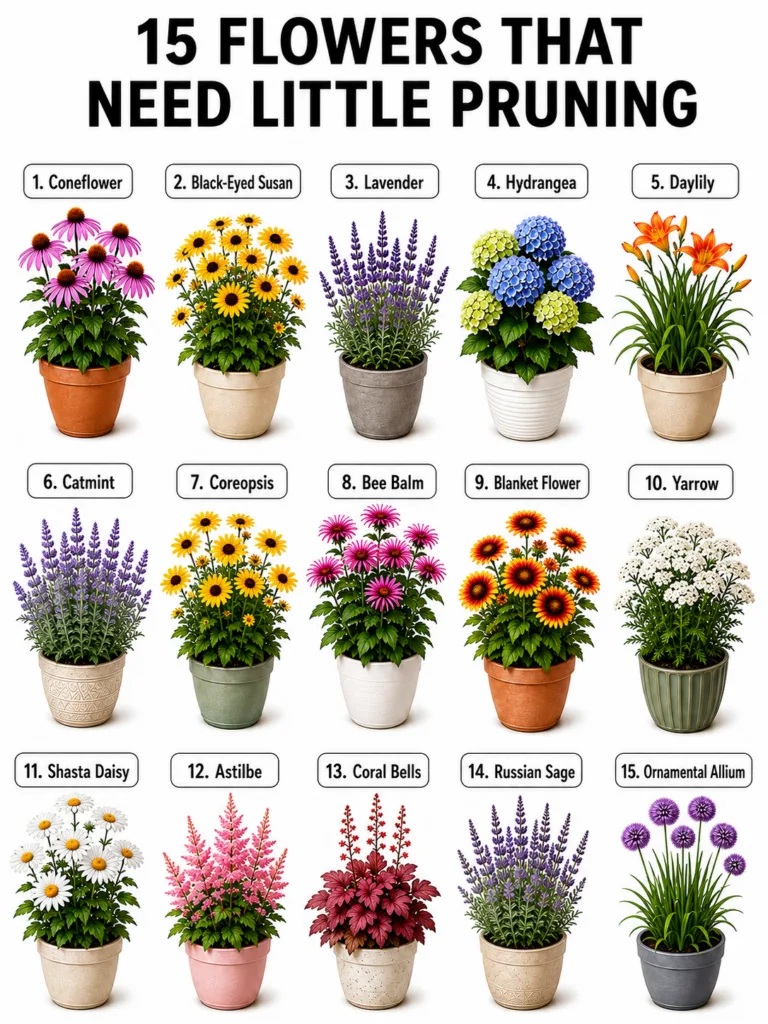 Discover 15 beautiful flowers that simplify your gardening routine.
The Art of Minimal Pruning: What It Means for Your Garden
When we talk about “minimal pruning,” we’re not suggesting you abandon your plants to their own devices entirely. Instead, it’s about intelligent, targeted care that enhances a plant’s natural beauty and health without requiring complex techniques or frequent attention. For the flowers discussed here, minimal pruning often means:
- Deadheading: Removing spent flowers to encourage new blooms, prevent unwanted self-seeding, and maintain a tidy appearance.
- Light Shaping: Occasionally trimming back leggy growth or spent stalks to keep the plant compact and vigorous, not to force a specific form.
- Rejuvenation Cuts: Infrequent, more significant cuts (typically in early spring) to remove old, woody stems and promote fresh growth, especially for sub-shrubs or clumping perennials.
- Removing Damaged Growth: Clipping away any dead, diseased, or broken stems at any time to improve plant health and prevent pest issues.
By understanding these simple actions, you’ll provide optimal care while keeping your pruning efforts truly minimal.
Your Guide to 15 Low-Pruning Beauties
1. Coneflower (*Echinacea purpurea*)
A North American native, coneflower is a pollinator magnet with distinctive daisy-like flowers and a prominent central cone. They are incredibly resilient and require very little hands-on care.
Hardiness: USDA Zones 3-9
Plant type: Perennial
Exposure: Full sun to partial shade
Height: 2-4 feet
Spread: 1-2 feet
Care Tip: Deadhead spent flowers to encourage more blooms and prolong the flowering season, but consider leaving some seed heads in fall for winter interest and as a food source for birds.
2. Bee Balm (*Monarda didyma*)
Known for its unique, shaggy flowers and aromatic foliage, Bee Balm is a favorite of bees, hummingbirds, and butterflies. It’s a robust perennial that thrives with little fuss.
Hardiness: USDA Zones 4-9
Plant type: Perennial
Exposure: Full sun to partial shade
Height: 2-4 feet
Spread: 2-3 feet
Care Tip: To encourage rebloom and prevent powdery mildew (especially in humid climates), deadhead spent flowers and ensure good air circulation between plants. Cut back all foliage in late fall after a hard frost.
3. Hydrangea (*Hydrangea*)
Hydrangeas are beloved for their large, showy flower clusters. Many modern cultivars are incredibly low-maintenance when it comes to pruning, especially those that bloom on new wood or rebloom throughout the season.
Hardiness: USDA Zones 3-9 (species-dependent)
Plant type: Deciduous shrub
Exposure: Full sun (morning sun is ideal) to partial shade
Height: 3-8 feet
Spread: 3-8 feet
Care Tip: For most garden hydrangeas, simply remove spent flower heads (deadheading) and any dead, damaged, or crossing branches. Minimal shaping cuts can be made in late winter or early spring, depending on whether your specific variety blooms on old or new wood.
4. Shasta Daisy (*Leucanthemum x superbum*)
The quintessential summer flower, Shasta Daisies bring classic white elegance to any garden. They are cheerful, easy-to-grow perennials that require minimal effort to flourish.
Hardiness: USDA Zones 5-9
Plant type: Perennial
Exposure: Full sun
Height: 1-3 feet
Spread: 1-2 feet
Care Tip: Consistent deadheading of spent blooms will encourage a longer flowering season. Divide clumps every 2-3 years in spring or fall to maintain vigor and prevent overcrowding.
5. Lavender (*Lavandula*)
Few plants combine beauty, fragrance, and utility like lavender. Its silvery foliage and purple flower spikes are deer-resistant and attract beneficial pollinators, all with minimal pruning needs.
Hardiness: USDA Zones 5-9 (species-dependent)
Plant type: Perennial sub-shrub
Exposure: Full sun
Height: 1-3 feet
Spread: 1-3 feet
Care Tip: Give lavender a light trim after its first flush of flowers to encourage a second, smaller bloom. The most important pruning is a more substantial trim in early spring, removing about one-third of the plant to maintain a compact, bushy form and prevent woodiness. Avoid cutting into old, woody stems without green leaves.
6. Daylily (*Hemerocallis*)
Daylilies are a gardener’s dream: tough, adaptable, and available in an astonishing array of colors and forms. While each bloom lasts only a day, the profusion of flowers ensures a long season of color.
Hardiness: USDA Zones 3-9
Plant type: Perennial
Exposure: Full sun to partial shade
Height: 1-4 feet
Spread: 1-3 feet
Care Tip: Remove spent flower scapes (the leafless stalks that carry the flowers) by cutting them close to the ground once all buds on the scape have opened. This tidies the plant and can encourage more blooms. Foliage can be cut back in late fall or left until early spring.
7. Catmint (*Nepeta x faassenii*)
Catmint is a workhorse perennial, offering clouds of lavender-blue flowers and aromatic, silvery-green foliage for months. It’s deer and rabbit resistant and incredibly drought tolerant once established.
Hardiness: USDA Zones 3-8
Plant type: Perennial
Exposure: Full sun
Height: 1-3 feet
Spread: 1-3 feet
Care Tip: Shear back the entire plant by about one-third to one-half after the first major flush of blooms. This promotes a bushier habit and a strong rebloom, ensuring color throughout the summer and fall.
8. Black-Eyed Susan (*Rudbeckia hirta*)
These cheerful, golden-yellow daisies with their dark centers are quintessential summer flowers, bringing warmth and a touch of wild beauty to the garden. They are often short-lived perennials but readily self-seed.
Hardiness: USDA Zones 3-9 (often grown as annuals or biennials)
Plant type: Perennial / Biennial / Annual
Exposure: Full sun
Height: 1-3 feet
Spread: 1-2 feet
Care Tip: Deadhead regularly to encourage continuous blooming and prevent excessive self-seeding. Allow some seed heads to mature if you wish for the plant to naturalize in your garden.
9. Coreopsis (*Coreopsis*)
Also known as Tickseed, Coreopsis offers a profusion of daisy-like flowers in shades of yellow, red, and pink. It’s a long-blooming perennial that thrives in sunny, well-drained locations.
Hardiness: USDA Zones 4-9 (species-dependent)
Plant type: Perennial
Exposure: Full sun
Height: 1-3 feet
Spread: 1-2 feet
Care Tip: Deadhead spent flowers to promote continuous blooming and prevent the plant from putting energy into seed production. For varieties that become leggy, a mid-summer shearing can rejuvenate the plant and encourage a fresh flush of blooms.
10. Russian Sage (*Salvia yangii*)
With its silvery foliage and airy spikes of lavender-blue flowers, Russian Sage adds a delicate texture and long-lasting color to the garden. It’s drought-tolerant, deer-resistant, and demands very little attention.
Hardiness: USDA Zones 4-9
Plant type: Perennial sub-shrub
Exposure: Full sun
Height: 2-4 feet
Spread: 2-3 feet
Care Tip: The most significant pruning for Russian Sage is a hard cut back in early spring (before new growth fully emerges). Cut stems back to about 6-12 inches from the ground to encourage strong, fresh growth and maintain a compact shape. No deadheading is generally needed during the season.
11. Yarrow (*Achillea millefolium*)
Yarrow is a resilient perennial known for its flat-topped clusters of tiny flowers and fern-like foliage. It’s drought-tolerant, attracts beneficial insects, and provides excellent cut flowers.
Hardiness: USDA Zones 3-9
Plant type: Perennial
Exposure: Full sun
Height: 1-3 feet
Spread: 1-3 feet
Care Tip: Deadhead spent flower stalks to encourage rebloom and prevent rampant self-seeding, which can lead to it becoming aggressive in some gardens. Divide established clumps every few years to maintain vigor.
12. Astilbe (*Astilbe*)
Astilbes are indispensable for shade gardens, offering feathery plumes of white, pink, red, or purple flowers and attractive, fern-like foliage. They thrive in moist, rich soil and require virtually no pruning.
Hardiness: USDA Zones 3-8
Plant type: Perennial
Exposure: Partial to full shade
Height: 1-4 feet
Spread: 1-3 feet
Care Tip: No specific pruning is required for Astilbe. You can remove spent flower stalks after blooming if you prefer a tidier look, or leave them for winter interest. Trim any yellowing or damaged foliage as needed.
13. Blanket Flower (*Gaillardia*)
These vibrant, daisy-like flowers bloom in shades of red, orange, and yellow, often with a striking bicolor pattern, resembling a brightly woven blanket. They are tough, drought-tolerant, and bloom for an extended period.
Hardiness: USDA Zones 3-10 (often short-lived perennials)
Plant type: Perennial
Exposure: Full sun
Height: 1-2 feet
Spread: 1-2 feet
Care Tip: Consistent deadheading is key to encouraging continuous blooming throughout the summer and can help extend the lifespan of these often short-lived perennials. Avoid over-fertilizing, as they prefer lean soil.
14. Coral Bells (*Heuchera*)
While Coral Bells do produce delicate flower spikes, they are primarily grown for their stunning, colorful foliage that comes in an incredible range of hues from lime green to deep purple, silver, and amber. They are excellent for adding year-round interest.
Hardiness: USDA Zones 4-9
Plant type: PerennialExposure: Partial shade to full sun (foliage color can vary)
Height: 1-2 feet (foliage), 1-3 feet (with flower stalks)
Spread: 1-2 feet
Care Tip: Very little pruning is needed. Remove spent flower stalks if you find them unsightly, or leave them for delicate texture. Trim any tattered or old leaves close to the base in early spring to refresh the plant.
15. Ornamental Allium (*Allium*)
Ornamental Alliums are striking bulbous perennials, known for their dramatic spherical flower heads that appear in late spring or early summer. They add architectural interest and are deer and rodent resistant.
Hardiness: USDA Zones 3-9
Plant type: Perennial (bulb)
Exposure: Full sun
Height: 1-4 feet (species-dependent)
Spread: 0.5-1 feet
Care Tip: Allow the foliage to ripen and yellow naturally after flowering. This process is crucial for the bulb to store energy for next year’s blooms. Once the foliage has completely died back, you can remove it. Spent flower heads can be cut for dried arrangements or removed for neatness, but do not cut green foliage.
General Care Tips for Low-Maintenance Flowers
Even low-pruning plants benefit from foundational good gardening practices. Adopting these habits will ensure your garden thrives with minimal intervention:
Understanding Soil & Drainage
Most of these plants, especially those that are drought-tolerant, demand well-drained soil. Heavy, waterlogged soil can lead to root rot. If you have clay soil, amend it generously with organic matter like compost before planting to improve structure and drainage. A simple test is to dig a hole and fill it with water; if it takes more than a few hours to drain, your soil needs improvement.
Sunlight Essentials
Always match your plant’s sunlight needs to your garden’s exposure. “Full sun” typically means 6+ hours of direct sunlight daily, while “partial shade” refers to 3-6 hours, often with protection from intense afternoon sun. Observing your garden’s light patterns throughout the day is crucial for plant success.
Watering Wisely
While many of these plants are drought-tolerant once established, consistent watering during their establishment phase (first year) is vital. Aim for deep, infrequent watering that encourages roots to grow deeper, rather than shallow, frequent sprinkles. Stick your finger an inch or two into the soil; if it feels dry, it’s time to water.
Mulch Magic
Applying a 2-3 inch layer of organic mulch (like wood chips, shredded bark, or compost) around your plants is a game-changer for low-maintenance gardening. Mulch conserves soil moisture, suppresses weeds, regulates soil temperature, and slowly adds nutrients as it breaks down. Keep mulch a few inches away from plant stems to prevent rot.
Pest & Disease Watch
Regular observation is your best tool. Spend a few minutes each week walking through your garden, looking at the undersides of leaves, and checking for any unusual spots or visitors. Early detection of pests or diseases allows for the least disruptive interventions, often just a strong spray of water or manual removal, before issues escalate.
Adapting to Your Climate: Regional Considerations
The United States encompasses a vast range of climates, and a plant’s performance can vary significantly across USDA hardiness zones. While these zones primarily indicate a plant’s winter cold tolerance, remember to consider other factors:
- Frost Dates: Know your local average last spring frost and first fall frost dates. These dictate safe planting times for many perennials.
- Soil Temperature: For spring planting, soil temperature is often more critical than air temperature. Many plants prefer soil to be consistently above 50-60°F before active growth begins.
- Summer Heat: Even in their hardiness zones, some plants may struggle in regions with extremely hot, humid summers (e.g., the Deep South) or very dry summers (e.g., the Southwest). Adjust watering schedules and consider afternoon shade for heat-sensitive varieties.
- Microclimates: Your garden might have unique microclimates—areas warmer due to a south-facing wall, or cooler due to dense shade. Use these to your advantage when placing plants.
Consulting your local university extension service can provide tailored advice for your specific region, helping you fine-tune these general guidelines for optimal success.
Cultivate Beauty, Not Backaches
Gardening should be a source of joy and relaxation, not a never-ending chore list. By thoughtfully selecting plants that naturally thrive with minimal pruning, you’re not just saving time; you’re creating a more resilient, harmonious, and beautiful outdoor space. These 15 flowers prove that stunning garden displays don’t have to come at the cost of your precious free time. Choose your favorites, give them a little love to get started, and then step back and savor the effortless beauty they bring. Happy gardening!