Ever wonder why some plants in your garden thrive while others struggle, even with the same care? The secret often lies beneath the surface – in your soil! Understanding your soil’s composition, pH, and drainage is like getting a personalized health report for your garden. It helps you make informed decisions, nurture healthier plants, and ultimately, grow the garden of your dreams.
Many gardeners think soil testing is a complex, lab-only affair, but we’re here to tell you that’s not always the case! There are several easy, hands-on tests you can do right in your backyard. These simple experiments will give you invaluable insights into your soil’s unique characteristics, empowering you to address issues like poor drainage or nutrient imbalances. Ready to become a soil detective?
Why Soil Testing is Your Secret Garden Weapon
Your soil is more than just dirt; it’s a living ecosystem. Healthy soil provides essential nutrients, proper aeration, and adequate water retention for your plants. Without a good foundation, even the most dedicated gardener can face challenges like wilting plants, stunted growth, or pest problems. Hands-on soil tests help you:
- Identify Soil Type: Is your soil sandy, loamy, or clay-heavy? This affects drainage and nutrient retention.
- Check pH Levels: Most plants prefer a slightly acidic to neutral pH. Knowing yours helps you choose the right plants or amend your soil.
- Assess Drainage: Poor drainage can lead to root rot, while too much drainage can mean nutrients wash away quickly.
- Observe Organic Matter: A healthy amount of organic matter improves soil structure and provides nutrients.
Let’s dive into six easy tests you can perform today!
Six Simple Hands-On Soil Tests You Can Do Today
1. The Squeeze Test (Soil Texture)
This simple test helps you understand the proportion of sand, silt, and clay in your soil.
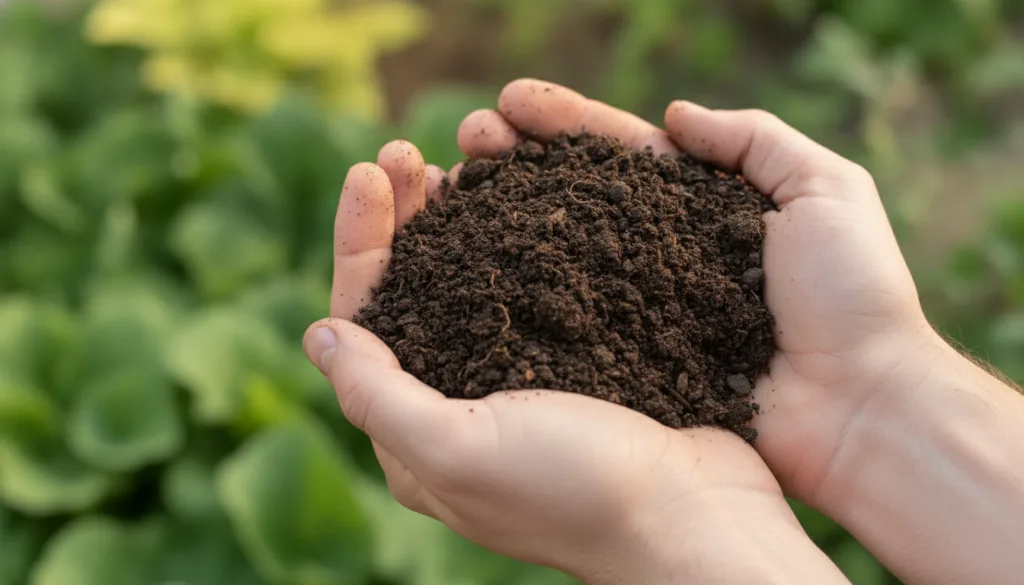
- How to do it: Take a handful of damp (but not wet) soil from your garden. Squeeze it firmly in your fist.
- What it tells you:
- Sandy soil: Crumbles easily, doesn’t hold a shape.
- Silty soil: Feels smooth, like flour, and holds a shape but breaks apart easily.
- Clay soil: Feels sticky, can be rolled into a long, thin ‘snake’ without breaking.
- Loamy soil: The ideal mix, holds a shape well but feels crumbly and somewhat spongy.
2. The Percolation Test (Drainage)
Good drainage is crucial for preventing waterlogging and root rot.
- How to do it: Dig a hole about 1 foot deep and 1 foot wide. Fill it with water and let it drain completely. Once empty, fill it again and time how long it takes for the water to drain.
- What it tells you:
- Fast drainage (drains in minutes): Sandy soil. May need more organic matter to retain moisture.
- Good drainage (drains within 1-2 hours): Loamy soil. Ideal for most plants.
- Slow drainage (takes several hours or more): Clay-heavy soil. May need aeration or organic amendments to improve structure.
3. The Jar Test (Soil Composition)
This visual test clearly separates the layers of sand, silt, clay, and organic matter.
- How to do it: Fill a clear jar (like a quart-sized mason jar) halfway with garden soil. Fill the rest of the way with water, leaving a bit of air at the top. Add a teaspoon of dish soap (it helps separate particles). Shake vigorously for 2-5 minutes, then let it sit undisturbed for 24 hours.
- What it tells you: You’ll see distinct layers:
- Bottom layer: Sand (heaviest, settles first).
- Middle layer: Silt.
- Top layer: Clay (lightest, takes longest to settle, may make water cloudy).
- Floating on top: Organic matter.
The thickness of each layer gives you a visual representation of your soil’s composition.
4. The pH Test (Acidity/Alkalinity)
Soil pH influences nutrient availability. Most garden plants prefer a pH between 6.0 and 7.0.
- How to do it: While you can buy inexpensive pH test kits at most garden centers, a simple DIY test involves baking soda and vinegar.
- Take two small soil samples. To the first, add a bit of white vinegar. If it fizzes, your soil is alkaline.
- To the second, add a bit of baking soda mixed with water. If it fizzes, your soil is acidic.
- No reaction to either means your soil is likely close to neutral.
- What it tells you: This gives you a general idea of whether your soil is acidic, alkaline, or neutral. For precise readings, a store-bought kit or a professional lab test is recommended.
5. The Earthworm Count (Soil Biology)
Earthworms are nature’s gardeners! They aerate the soil, improve drainage, and help break down organic matter.
- How to do it: Dig a small hole (about 1 foot deep and wide) in a moist area of your garden. Gently sift through the soil and count the number of earthworms you find.
- What it tells you:
- 10 or more worms: Excellent soil health and biological activity.
- 5-9 worms: Good soil health, but could be improved.
- Fewer than 5 worms: Your soil might be compacted, lacking organic matter, or facing other issues that deter these beneficial creatures.
6. The Nutrient Deficit Test (Observation & Simple Kit)
While a full nutrient analysis typically requires a lab, you can observe signs in your plants and use basic kits.
- How to do it: Pay close attention to your plants. Yellowing leaves, stunted growth, or poor flowering can all indicate nutrient deficiencies. For a more direct test, basic NPK (Nitrogen, Phosphorus, Potassium) kits are available at garden stores for a quick assessment.
- What it tells you: Observing plant symptoms and using a simple NPK kit can give you clues about potential nutrient gaps. For example, general yellowing of older leaves might suggest a nitrogen deficiency, while purplish leaves could indicate a lack of phosphorus.
Putting Your Soil Test Results to Work
Once you have a better understanding of your soil, you can make targeted improvements:
- Improve Clay Soil: Add organic matter like compost, aged manure, or peat moss to improve drainage and aeration.
- Enhance Sandy Soil: Incorporate plenty of organic matter to help retain moisture and nutrients.
- Adjust pH: To raise pH (make it more alkaline), add garden lime. To lower pH (make it more acidic), add sulfur or peat moss.
- Boost Nutrients: Use compost, worm castings, or balanced organic fertilizers based on your observations or NPK test results.
Your garden will thank you! By taking the time to understand your soil, you’re not just planting; you’re cultivating a thriving environment for all your beloved plants. Happy gardening!