Feeling heavy, bloated, or experiencing swelling in your extremities can often be attributed to fluid retention, a common concern for many. While various factors can contribute to this uncomfortable sensation, what’s on your plate plays a significant role. The good news is that making simple, strategic food swaps can make a profound difference in managing fluid retention and helping you feel naturally lighter and more energetic.
This guide dives into practical dietary changes inspired by proven wellness principles. We’ll explore which foods may exacerbate fluid retention and, more importantly, highlight delicious alternatives that can help your body maintain a healthy fluid balance. Get ready to discover how smart eating can transform how you feel.
Understanding Fluid Retention: What Makes You Feel Bloated?
Fluid retention, also known as edema, occurs when excess fluid builds up in your body’s tissues. This can lead to puffiness and swelling, particularly in your hands, feet, ankles, and legs. While temporary fluid retention can be linked to hormonal changes, long flights, or standing for extended periods, dietary choices are a major contributor.
High sodium intake, an imbalance of electrolytes, and a lack of certain nutrients can all hinder your body’s ability to excrete excess fluid efficiently. By understanding these connections, we can make informed decisions about what we eat to support our body’s natural balance.
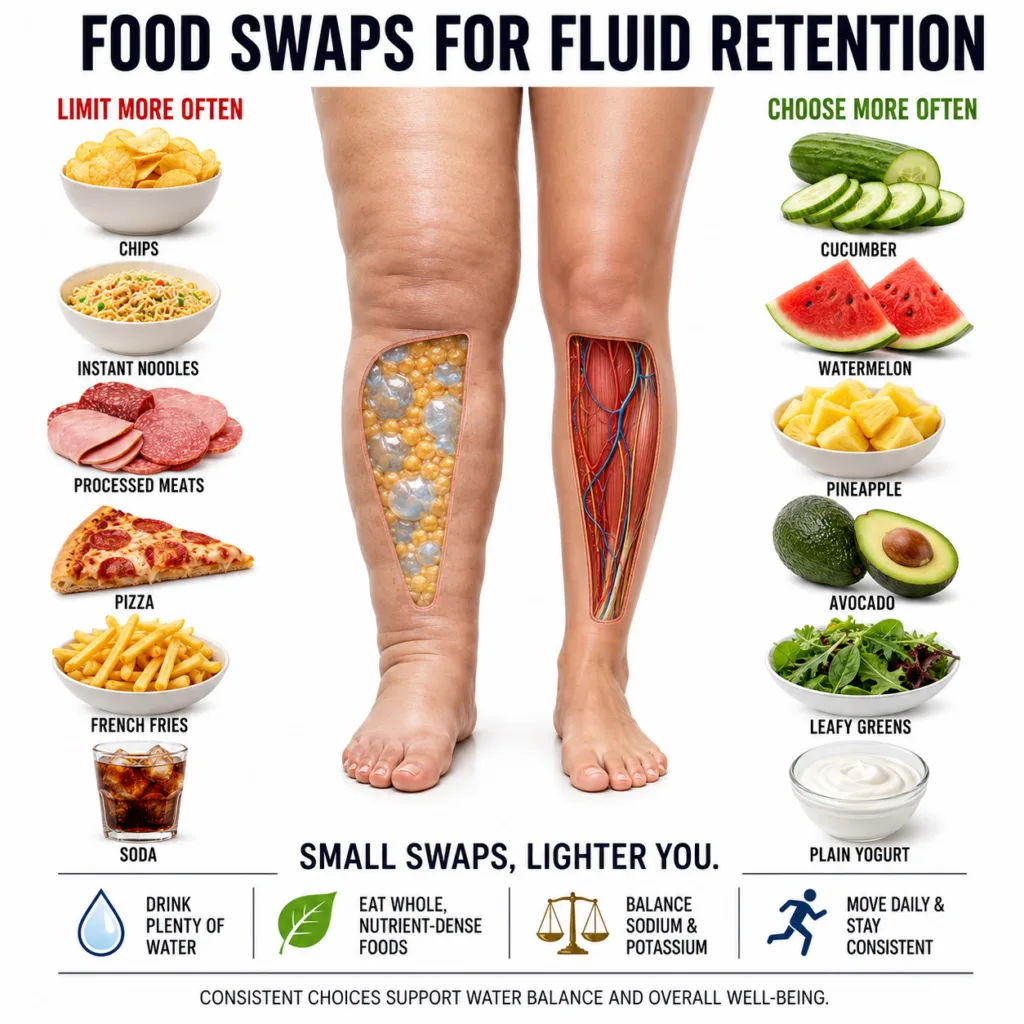
The “Limit More Often” List: Foods That Can Worsen Fluid Retention
Some foods, due to their composition, can actively contribute to fluid retention. Reducing your intake of these items is a crucial first step towards feeling lighter and reducing swelling.
High-Sodium Culprits
Sodium is an essential electrolyte, but too much of it can cause your body to hold onto water. When you consume excessive sodium, your body tries to dilute it by retaining fluid.
- Chips and Processed Snacks: These are often loaded with hidden sodium, artificial flavors, and unhealthy fats that can promote inflammation and fluid retention.
- Instant Noodles: A quick meal, but typically very high in sodium, contributing significantly to water weight.
- Processed Meats: Items like deli slices, sausages, and bacon are preserved with high amounts of sodium.
Ultra-Processed & Sugary Items
Beyond sodium, certain processed and sugary foods can also trigger inflammation and hormonal responses that may lead to fluid retention.
- Pizza: Often high in sodium from cheese and processed toppings, plus refined carbohydrates.
- French Fries: Deep-fried and heavily salted, they combine sodium with unhealthy fats.
- Soda and Sugary Drinks: High sugar content can lead to inflammation and impact kidney function, potentially affecting fluid balance.
Smart “Choose More Often” Swaps: Foods to Embrace for a Lighter Feel
Thankfully, nature offers a bounty of foods that actively support healthy fluid balance. Incorporating these into your diet can help your body naturally shed excess water and reduce bloating.
Hydrating Fruits and Vegetables
Many fruits and vegetables are rich in water and natural diuretics, helping to flush out excess fluids.
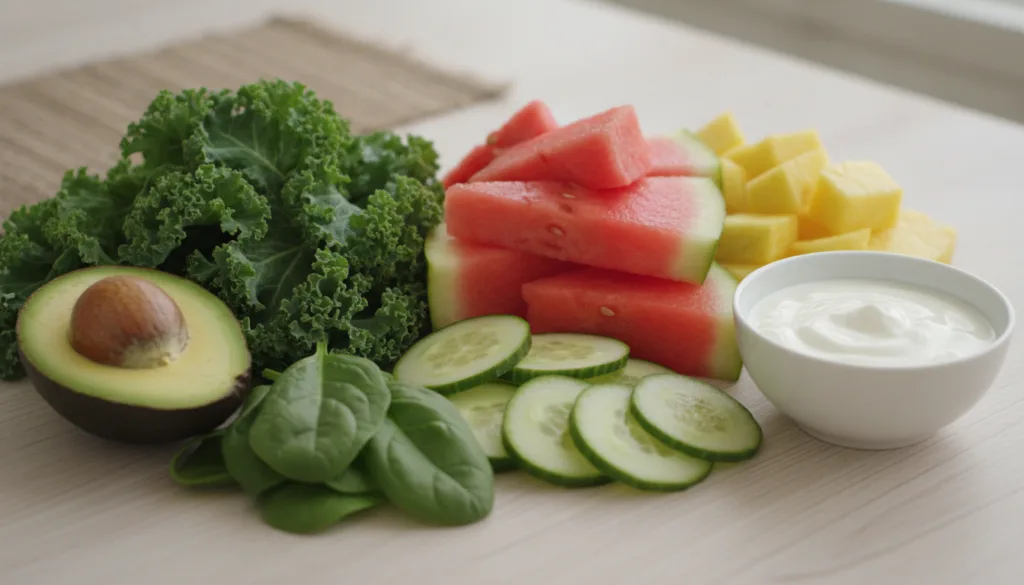
- Watermelon: Exceptionally high in water content and contains citrulline, which may help with fluid balance.
- Pineapple: Contains bromelain, an enzyme that may help reduce inflammation and support digestion. It also has a good water content.
- Cucumber: Composed of about 95% water, cucumbers are incredibly hydrating and contain compounds that may help reduce puffiness.
Potassium-Rich & Electrolyte Balancers
Balancing sodium with potassium is key. Potassium helps counteract the effects of sodium and supports kidney function in regulating fluid.
- Avocado: A fantastic source of potassium, healthy fats, and fiber, helping to maintain electrolyte balance.
- Leafy Greens (e.g., Spinach, Kale): Rich in potassium, magnesium, and other vital nutrients that support overall hydration and electrolyte balance.
Probiotic Powerhouse
A healthy gut contributes to overall wellness, including fluid regulation.
- Plain Yogurt: Provides beneficial probiotics that support gut health. While not a direct diuretic, a healthy gut flora can indirectly improve digestion and reduce bloating often mistaken for fluid retention. Opt for plain varieties to avoid added sugars.
Beyond Food: Holistic Strategies to Combat Fluid Retention
While food swaps are powerful, a holistic approach combines diet with other healthy lifestyle habits to effectively manage fluid retention.
Hydrate Smartly: The Importance of Drinking Enough Water
It may seem counterintuitive, but drinking plenty of water actually helps reduce fluid retention. When you’re dehydrated, your body tends to hold onto every drop of fluid. Adequate water intake signals to your body that it doesn’t need to conserve, encouraging it to release excess sodium and water. Aim for at least 8 glasses of water daily.
Prioritize Whole, Nutrient-Dense Foods
Beyond specific swaps, focusing on a diet rich in whole, unprocessed foods is paramount. These foods typically contain natural fiber, vitamins, and minerals that support all bodily functions, including fluid regulation. Think fresh fruits, vegetables, whole grains, and lean proteins over packaged and processed items.
Master Your Sodium-Potassium Balance
Sodium and potassium work together to maintain fluid balance within your cells and body. Many modern diets are high in sodium and low in potassium. By consciously increasing your intake of potassium-rich foods (like those listed above) and reducing high-sodium processed foods, you can help restore this vital balance.
Embrace Daily Movement
Physical activity, even moderate movement like walking, can significantly help reduce fluid retention. Movement helps improve circulation and stimulates the lymphatic system, which is responsible for draining excess fluid from tissues. Aim for at least 30 minutes of moderate activity most days of the week.
Final Thoughts
Reducing fluid retention and feeling lighter naturally is achievable through conscious dietary choices and consistent healthy habits. By making simple food swaps—limiting processed, high-sodium, and sugary items while embracing hydrating, potassium-rich, and whole foods—you empower your body to maintain its optimal fluid balance. Combine these smart eating strategies with adequate hydration and daily movement, and you’ll be well on your way to a lighter, more comfortable you.
Medical Disclaimer
The information provided in this article is for general knowledge and informational purposes only, and does not constitute medical advice. It is essential to consult with a qualified healthcare professional before making any decisions about your health or treatment. If you experience persistent or severe fluid retention, please seek medical attention immediately.