Maximize Your Harvest: A Guide to Vertical Gardening with 9 Climbing Crops
Do you dream of a bountiful garden, but feel limited by a small yard or balcony? You’re not alone! Many gardeners face the challenge of space, but the secret weapon for unlocking massive yields isn’t more square footage on the ground – it’s going vertical. By training climbing crops to grow upward instead of outward, you can transform even the tiniest patch into a productive powerhouse.
Vertical gardening with trellises isn’t just about saving space; it’s a game-changer for plant health, airflow, and even making harvesting easier. Imagine crisp cucumbers, sweet peas, juicy melons, and even some zucchini, all thriving skyward, easier to spot and pick. This method promotes healthier plants, reduces pest and disease issues by improving air circulation, and keeps your precious fruits cleaner. Let’s explore nine fantastic climbing crops that absolutely flourish with a little support, helping you transform your garden space and boost your yield!
The Power of Going Up: Why Vertical Gardening Works
Vertical gardening leverages natural plant habits to make the most of your growing area. When plants climb, they expose more leaves to sunlight, which is crucial for photosynthesis and fruit production. Elevating plants also keeps foliage off the damp ground, significantly reducing the risk of fungal diseases like powdery mildew and blight. Furthermore, it improves air circulation around the plants, which is vital for overall plant vigor and pest management. For gardeners, vertical growth means less bending for harvesting, cleaner produce, and a truly stunning visual display.
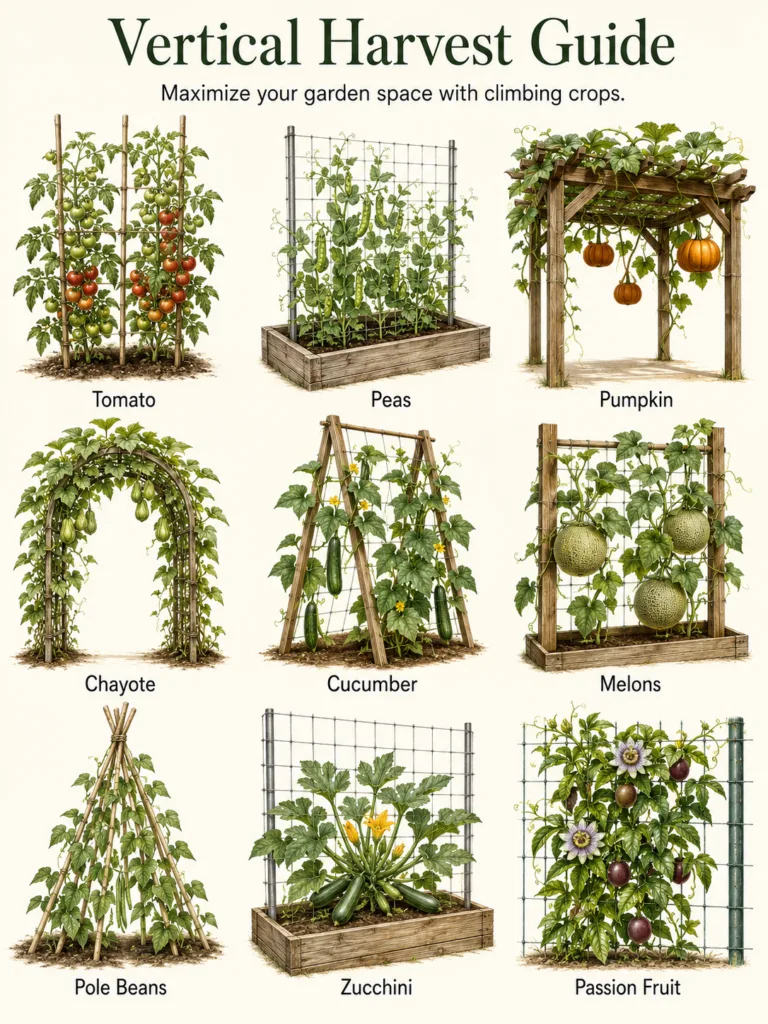
Your Vertical Harvest Guide: 9 Climbing Crops and Their Supports
Here are nine versatile climbing crops that are perfect candidates for vertical gardening, along with practical tips for success.
1. Indeterminate Tomatoes
Indeterminate tomatoes are vines that continue to grow, flower, and set fruit until frost. They are prime candidates for trellising.
- Hardiness: Annual in most zones, perennial in USDA Zones 10-11 if protected from frost.
- Plant type: Vining annual (or tropical perennial).
- Exposure: Full sun (at least 6-8 hours direct sunlight).
- Height: 6-10+ feet, some varieties much taller.
- Spread: Up to 2-3 feet wide if allowed to branch.
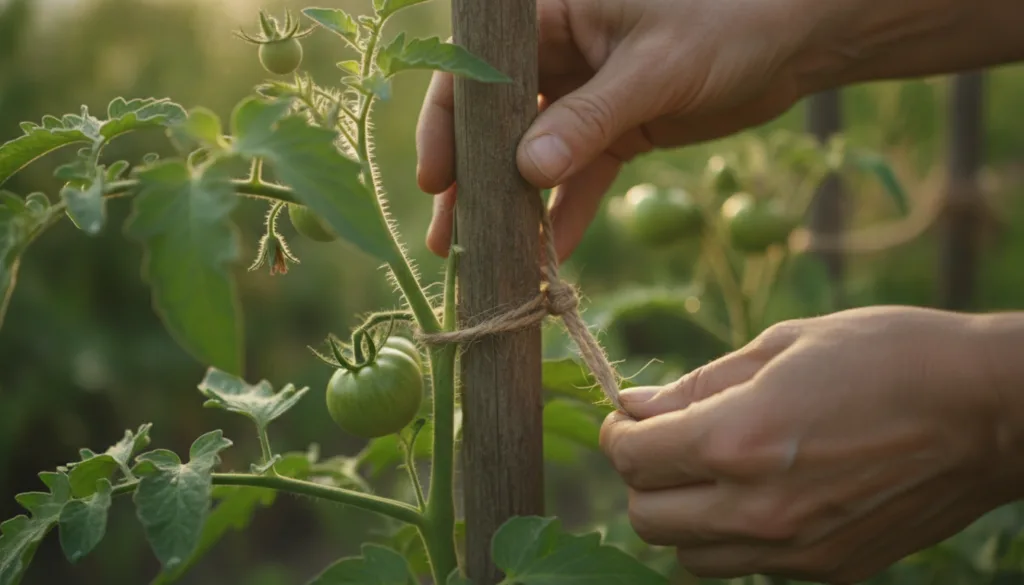
Trellising Tips: Use sturdy stakes, cages, or the string method (Florida weave or single string from above). As the plant grows, gently tie the main stem to the support every 8-12 inches using soft material like old nylons or gardener’s twine. Regularly prune suckers (small shoots that emerge between the main stem and a leaf branch) to direct energy into fruit production and maintain an open canopy for airflow.
Care Tip: Consistent watering is crucial, especially when fruits are setting, to prevent blossom end rot.
2. Peas (Vining Varieties)
Vining peas offer a delightful spring harvest and are surprisingly cold-tolerant.
- Hardiness: Annual, tolerant of light frosts.
- Plant type: Vining annual.
- Exposure: Full sun to partial shade (especially in warmer climates).
- Height: 3-6 feet.
- Spread: 1-2 feet.
Trellising Tips: Peas are self-clinging with tendrils, making them easy to trellis. Use netting, chicken wire, twiggy branches (peasticks), or small stakes arranged as a teepee. Sow seeds 1 inch deep and about 2-3 inches apart at the base of your chosen support structure. Plant early in spring as soon as the soil can be worked.
Care Tip: Keep the soil consistently moist, but avoid overwatering. Harvest regularly to encourage more production.
3. Pumpkins (Vining Varieties)
While often associated with sprawling patches, smaller vining pumpkin varieties can be successfully grown vertically on very strong supports.
- Hardiness: Annual.
- Plant type: Vining annual.
- Exposure: Full sun.
- Height: Vines can spread 10-20+ feet vertically when trellised.
- Spread: 3-5 feet when trained.
Trellising Tips: You’ll need an exceptionally robust trellis, arbor, or pergola for vining pumpkins due to the weight of the fruit. Train the main vine by gently weaving it through the support. Once fruits begin to form and grow, create slings made from old pantyhose, mesh bags, or fabric strips to support the individual pumpkins, preventing them from breaking the vine or falling.
Care Tip: Pumpkins are heavy feeders. Amend your soil with plenty of compost and consider a balanced fertilizer during the growing season.
4. Chayote
This pear-shaped squash, also known as mirliton, is a vigorous climber often grown for its fruit and sometimes its tuberous roots.
- Hardiness: Perennial in USDA Zones 8-11; typically grown as an annual in cooler climates.
- Plant type: Vining perennial (often annual).
- Exposure: Full sun.
- Height: Vines can reach 30-50+ feet in a single season.
- Spread: Can cover a large area.
Trellising Tips: Chayote is a very aggressive climber and requires an extremely strong, large trellis, arbor, or fence. Plant whole chayote fruits with the sprout end down, just barely covered by soil. It will quickly send out long vines that need guidance to cover the support.
Care Tip: Provide consistent moisture and fertile soil. In regions where it’s perennial, a thick layer of mulch can help protect the roots over winter.
5. Cucumbers (Vining Varieties)
Vining cucumbers are excellent for vertical growth, producing straight, clean fruits.
- Hardiness: Annual, sensitive to frost.
- Plant type: Vining annual.
- Exposure: Full sun.
- Height: 4-8 feet.
- Spread: 2-3 feet.
Trellising Tips: Cucumbers climb readily with tendrils. An A-frame trellis, netting, or a wire cage works perfectly. Plant seeds or transplants at the base of your support, spacing them about 1 foot apart. Gently guide the young vines onto the trellis as they begin to grow.
Care Tip: Provide consistent and ample water, especially during flowering and fruiting. Mulching around the base helps retain soil moisture and keeps roots cool.
6. Melons (Smaller Vining Varieties)
Similar to pumpkins, smaller melon varieties can be grown vertically with the right support, saving ground space and improving fruit quality.
- Hardiness: Annual, very sensitive to cold.
- Plant type: Vining annual.
- Exposure: Full sun.
- Height: Vines can spread 6-15+ feet vertically.
- Spread: 3-4 feet when trained.
Trellising Tips: Use a sturdy trellis or netting, similar to what you’d use for cucumbers. The critical difference is providing slings for the developing fruit. As melons grow heavier, they need individual support slings (made from pantyhose, mesh bags, or sturdy fabric) tied to the trellis to prevent the vines from breaking.
Care Tip: Melons require warm temperatures, plenty of sunlight, and consistent watering. Reduce watering as fruit ripens to concentrate sugars.
7. Pole Beans
Pole beans are vigorous climbers that offer a continuous harvest through the summer.
- Hardiness: Annual, sensitive to frost.
- Plant type: Vining annual.
- Exposure: Full sun.
- Height: 6-10+ feet.
- Spread: 1-2 feet.
Trellising Tips: Pole beans are classic climbers, spiraling naturally up supports. Teepees made from bamboo poles, single stakes, or netting are ideal. Plant seeds about 4-6 inches apart around the base of the support after all danger of frost has passed and soil has warmed.
Care Tip: Harvest beans frequently when young and tender to encourage more production. Avoid harvesting when plants are wet to prevent disease.
8. Zucchini (Vining or Semi-Bush Varieties)
While many zucchini are bush types, there are vining varieties and even semi-bush types that benefit greatly from vertical support to save space and improve airflow.
- Hardiness: Annual, sensitive to frost.
- Plant type: Bush or vining annual.
- Exposure: Full sun.
- Height: Bush types 2-3 feet; vining types 4-8 feet spread.
- Spread: Bush types 2-4 feet; vining types 3-5 feet.
Trellising Tips: For vining or semi-bush zucchini, use a robust cage or a single sturdy stake. You’ll need to gently tie the main stem to the support as it grows, as zucchini does not have tendrils. Keep an eye on heavy fruits and provide additional support if needed.
Care Tip: Zucchini are prolific producers! Harvest them when they are young and tender (6-8 inches long) for the best flavor and to encourage continuous fruiting.
9. Passion Fruit
A beautiful tropical vine producing exotic, delicious fruits.
- Hardiness: Perennial in USDA Zones 9-11; some varieties can tolerate Zone 8 with protection. Grown as an annual in cooler zones.
- Plant type: Vining perennial.
- Exposure: Full sun.
- Height: Vines can spread 15-20+ feet.
- Spread: 5-10 feet.
Trellising Tips: Passion fruit vines are vigorous and need a very strong, permanent trellis, arbor, or fence to support their weight and dense foliage. Their tendrils will readily grasp onto supports, but initial guidance may be helpful. Give them plenty of space to spread.
Care Tip: Provide consistently moist, well-drained soil. Regular fertilization, especially with phosphorus and potassium, will encourage flowering and fruiting. Prune to manage growth and promote branching for more flowers and fruit.
Common Mistakes to Avoid in Vertical Gardening
Even with the best intentions, vertical gardening can present a few hurdles:
-
Insufficient Support: Underestimating the mature weight and size of your plants is common. Always choose a trellis that is strong enough for the fully grown plant and its potential harvest. Reinforce structures if needed.
-
Trellising Too Late: Begin training your plants when they are young. It’s much harder to guide mature, sprawling vines without damaging them.
-
Wrong Trellis for the Plant: Some plants (like peas and cucumbers) have tendrils and will grip netting easily. Others (like indeterminate tomatoes or zucchini) need to be tied gently to stakes or cages as they grow because they lack tendrils.
-
Neglecting Tying and Pruning: Climbing plants, especially non-tendril types, need regular attention to be tied to their supports. Pruning (like removing tomato suckers) also helps direct energy and maintains an open growth habit.
-
Inadequate Spacing: While vertical gardening saves ground space, ensure there’s still enough distance between plants for good airflow to prevent fungal diseases.
Regional and Seasonal Considerations for U.S. Gardeners
The timing of your planting and the specific varieties you choose will depend heavily on your local climate and USDA Hardiness Zone. In warmer zones (like 9-11), you can often start cool-season crops earlier and grow warm-season crops for a longer period, sometimes even year-round for tropical perennials like chayote and passion fruit. In cooler zones (3-5), timing around your last frost date is critical, and you might need to select faster-maturing varieties. For all zones, monitoring local soil temperatures is a better indicator than calendar dates for when to plant heat-loving crops like tomatoes, cucumbers, and melons.
Ready to Grow Up?
Embracing vertical gardening is a rewarding way to make the most of your available space, whether you have a sprawling backyard or just a few pots on a patio. By providing the right support for these nine climbing crops, you’ll not only enjoy a healthier, more productive garden but also a more beautiful one. So, grab your stakes, string, and netting, and get ready to watch your garden dreams grow sky-high!
Which climbing crop will you be adding to your vertical garden this season? Share your plans and tips in the comments below!