Imagine a garden bursting with vibrant color and captivating textures, a place of peace and beauty that doesn’t demand every free moment. For many home gardeners, the dream of a breathtaking flower bed often clashes with the reality of busy schedules. But what if you could have both? The secret lies in thoughtful plant selection and intelligent pairing, creating compositions that thrive with minimal fuss.
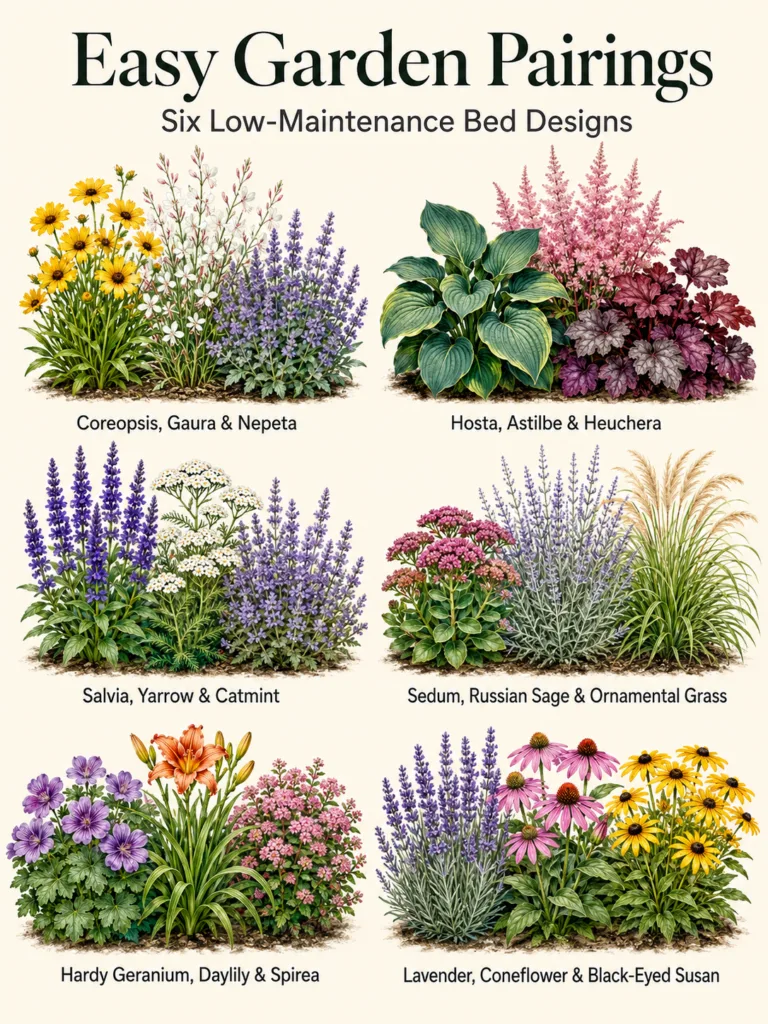
This guide will unlock the wisdom behind creating stunning, low-maintenance garden beds. We’ll explore six brilliant plant combinations, each designed to bring beautiful layers, enduring color, and visual interest to your landscape. You’ll discover how to choose plants that naturally complement each other in terms of light, water, and growth habits, ensuring a harmonious display that looks after itself, leaving you more time to simply enjoy your green oasis.
The Foundation of a Low-Maintenance Garden
The core principle behind a truly low-maintenance garden is selecting the right plants for the right place. This means understanding your garden’s sunlight exposure, soil type, and average rainfall, then choosing plants that naturally flourish in those conditions. Drought-tolerant species, for example, require less supplemental watering once established, while plants with similar growth rates and needs prevent one from outcompeting another.
By grouping plants with compatible requirements, you simplify care routines like watering, feeding, and even pest management. Additionally, consider plants that offer multi-season interest through their foliage, flowers, or seed heads, extending your garden’s beauty beyond a single bloom period. We’ll also consider USDA Plant Hardiness Zones, which indicate a plant’s ability to withstand winter cold, a crucial factor for perennials in the United States.
Six Inspiring, Low-Maintenance Garden Bed Designs
Let’s dive into these thoughtfully curated plant combinations, designed to bring lasting beauty to your landscape with minimal effort.
1. Sunny Sensation: Coreopsis, Nepeta, Gaura, & Ornamental Grass
This vibrant pairing thrives in full sun, offering a season-long display of cheerful colors and airy textures. It’s perfect for open, sunny beds and borders, attracting pollinators while requiring little attention.
- Coreopsis (Tickseed): These sun-loving perennials offer bright yellow, orange, or sometimes pink daisy-like flowers. They prefer well-drained soil and often bloom from early summer into fall, especially if deadheaded. Many varieties are drought-tolerant once established.
Hardiness: USDA Zones 4-9
Exposure: Full sun
Height: 1-2 feet
Spread: 1-2 feet - Nepeta (Catmint): A truly resilient workhorse, Nepeta provides long-lasting spikes of lavender-blue flowers and aromatic, grayish-green foliage. It’s exceptionally drought-tolerant, deer-resistant, and a favorite of bees. Shear back after the first flush of blooms for a second show.
Hardiness: USDA Zones 3-8
Exposure: Full sun
Height: 1-3 feet
Spread: 1-3 feet - Gaura (Whirling Butterflies): Delicate white or pink flowers hover like butterflies on thin, graceful stems, adding an ethereal quality to the bed. Gaura prefers full sun and well-drained soil, blooming from late spring until frost.
Hardiness: USDA Zones 5-9 (often grown as annual in colder zones)
Exposure: Full sun
Height: 2-4 feet
Spread: 1.5-2 feet - Ornamental Grass: Choose a slender, upright variety like ‘Karl Foerster’ Feather Reed Grass (Calamagrostis acutiflora ‘Karl Foerster’) or Little Bluestem (Schizachyrium scoparium) for vertical interest and movement. These grasses are generally drought-tolerant and add structure.
Hardiness: Varies by species, often Zones 4-9
Exposure: Full sun
Height: 3-6 feet
Spread: 1.5-3 feet
Care Tip: Ensure excellent drainage for all plants in this combination, especially in winter. Group them together where they can get at least six hours of direct sunlight daily.
2. Shade & Serenity: Hosta, Astilbe, & Heuchera
For those shadier garden nooks, this trio creates a lush, sophisticated tapestry of foliage and delicate blooms. It’s ideal for woodland gardens or under deciduous trees, offering a cool, calming aesthetic.
- Hosta (Plantain Lily): Beloved for their diverse foliage in shades of green, blue, and variegated patterns, Hostas are the cornerstone of shade gardens. They prefer consistent moisture and rich, well-drained soil. Choose different leaf sizes and colors for contrast.
Hardiness: USDA Zones 3-9
Exposure: Part shade to full shade
Height: 6 inches – 3 feet (varies by cultivar)
Spread: 1-5 feet - Astilbe: Known for their feathery plumes of pink, red, purple, or white flowers in summer, Astilbes add vertical elegance and bright color to shaded areas. They need consistently moist, humus-rich soil and can struggle in dry conditions.
Hardiness: USDA Zones 3-8
Exposure: Part shade to full shade
Height: 1-4 feet
Spread: 1-2 feet - Heuchera (Coral Bells): Grown primarily for their stunning foliage, which ranges from deep burgundy and amber to lime green and silver. Heucheras provide continuous color and texture. They prefer well-drained soil and part shade, with some varieties tolerating more sun in cooler climates.
Hardiness: USDA Zones 4-9
Exposure: Part shade
Height: 1-2 feet
Spread: 1-2 feet
Care Tip: Maintain consistent soil moisture, especially for Astilbes. Mulching helps retain moisture and keeps roots cool in summer. Watch for slugs and snails, which can be an issue for Hosta.
3. Pollinator Paradise: Salvia, Achillea, & Sedum
This dynamic trio is a magnet for bees and butterflies, thriving in full sun and well-drained soil. It’s a hardy, low-water option that delivers vibrant color from summer into fall, making it perfect for rock gardens or borders.
- Salvia (Perennial Sage): Numerous perennial Salvia varieties offer spikes of blue, purple, or pink flowers, known for their long bloom time and drought tolerance. They are deer-resistant and attract a host of beneficial insects.
Hardiness: USDA Zones 4-9
Exposure: Full sun
Height: 1.5-3 feet
Spread: 1.5-3 feet - Achillea (Yarrow): With flat-topped flower clusters in white, yellow, pink, or red, Yarrow is an incredibly resilient plant. It tolerates poor soil and drought conditions like a champion, blooming from early summer. Its fern-like foliage is also attractive.
Hardiness: USDA Zones 3-9
Exposure: Full sun
Height: 1.5-3 feet
Spread: 1.5-2 feet - Sedum (Stonecrop): Upright varieties like ‘Autumn Joy’ or ‘Autumn Fire’ feature succulent foliage and large, broccoli-like flower heads that start green, turn pink, then deepen to rusty red in fall. Sedum is remarkably drought-tolerant and provides late-season interest.
Hardiness: USDA Zones 3-9
Exposure: Full sun
Height: 1.5-2.5 feet
Spread: 1.5-2 feet
Care Tip: Avoid overwatering these plants, as they prefer drier conditions. Deadhead Salvia and Yarrow for extended bloom and cut back Sedum in late winter or early spring.
4. Rustic Charm: Black-Eyed Susan, Catmint, & Russian Sage
This combination evokes a wild, naturalistic feel, with an abundance of cheerful yellow and soft lavender-blue. It’s incredibly tough, heat-tolerant, and perfect for hot, sunny spots that might challenge other plants.
- Black-Eyed Susan (Rudbeckia hirta): Iconic yellow petals with a dark brown center characterize this cheerful flower. It’s often a short-lived perennial or biennial but readily self-seeds, providing continuous blooms from summer into fall. It prefers full sun and well-drained soil.
Hardiness: USDA Zones 3-9
Exposure: Full sun
Height: 1-3 feet
Spread: 1-2 feet - Catmint (Nepeta): As discussed before, Nepeta is a versatile perennial offering a haze of lavender-blue flowers for months. Its drought tolerance and low maintenance needs make it an excellent partner for bolder blooms like Rudbeckia.
Hardiness: USDA Zones 3-8
Exposure: Full sun
Height: 1-3 feet
Spread: 1-3 feet - Russian Sage (Perovskia atriplicifolia): With its silvery foliage and airy spikes of lavender-blue flowers, Russian Sage provides a long-lasting, fragrant display from mid-summer into fall. It demands excellent drainage and full sun, thriving in hot, dry conditions.
Hardiness: USDA Zones 4-9
Exposure: Full sun
Height: 2-4 feet
Spread: 2-3 feet
Care Tip: All these plants thrive in lean, well-drained soil. Avoid rich soils, which can lead to leggy growth for Russian Sage. Cut back Russian Sage in early spring to encourage bushy growth.
5. Cottage Garden Dream: Spirea, Coneflower, & Hardy Geranium
This grouping combines a sturdy shrub with beloved perennials, creating a classic cottage garden look that is surprisingly easy to care for. It delivers continuous bloom and texture, suitable for mixed borders.
- Spirea: A deciduous shrub with dense foliage and clusters of pink or white flowers. Varieties like ‘Little Princess’ or ‘Goldflame’ offer appealing foliage color and a compact size suitable for perennial beds. Spireas are generally tolerant of a range of soils and conditions.
Hardiness: USDA Zones 4-9
Exposure: Full sun to part sun
Height: 2-5 feet (varies by cultivar)
Spread: 2-5 feet - Coneflower (Echinacea): Iconic daisy-like flowers with prominent central cones, typically in shades of purple and pink, but also available in white, yellow, and orange. Echinacea is a pollinator magnet, highly drought-tolerant, and blooms profusely from summer into fall.
Hardiness: USDA Zones 3-9
Exposure: Full sun
Height: 2-4 feet
Spread: 1.5-2 feet - Hardy Geranium (Cranesbill): Not to be confused with annual geraniums, these perennials offer charming cup-shaped flowers, often in shades of pink, purple, or white, over finely cut foliage. Many varieties bloom for an extended period and make excellent groundcovers or border fronts.
Hardiness: USDA Zones 4-8
Exposure: Full sun to part shade
Height: 1-2 feet
Spread: 1-3 feet
Care Tip: Prune Spirea after flowering to maintain shape and encourage new growth. Deadhead Coneflowers for continuous bloom, but leave some seed heads for winter interest and birds.
6. Fragrant & Enduring: Lavender, Ornamental Grass, & Sedum
A classic combination that brings together aromatic beauty, graceful texture, and robust endurance. This pairing is perfect for sunny, well-drained locations, especially in Mediterranean-style gardens or near pathways.
- Lavender (Lavandula): Renowned for its fragrant purple flower spikes and silvery-green foliage, Lavender thrives in full sun and very well-drained soil, ideally with a slightly alkaline pH. English Lavenders (L. angustifolia) are generally the hardiest.
Hardiness: USDA Zones 5-9 (varies by species/cultivar)
Exposure: Full sun
Height: 1-3 feet
Spread: 1-3 feet - Ornamental Grass: Again, choose an upright, fine-textured grass that won’t overshadow the lavender. Varieties like ‘Shenandoah’ Switchgrass (Panicum virgatum ‘Shenandoah’) or Blue Fescue (Festuca glauca) would provide excellent contrast and texture.
Hardiness: Varies by species, often Zones 4-9
Exposure: Full sun
Height: 1-4 feet
Spread: 1-3 feet - Sedum (Stonecrop): The succulent leaves and late-season blooms of Sedum provide a sturdy, contrasting element to the airy lavender and grass. Its drought tolerance perfectly matches the needs of this combination.
Hardiness: USDA Zones 3-9
Exposure: Full sun
Height: 1.5-2.5 feet
Spread: 1.5-2 feet
Care Tip: Crucial for Lavender is excellent drainage; soggy soil is its nemesis. Prune Lavender lightly after flowering to maintain shape and promote bushiness. For all plants, avoid over-fertilizing.
Common Mistakes to Avoid for a Truly Low-Maintenance Garden
Even with low-maintenance plants, a few common errors can increase your workload:
- Ignoring Soil Conditions: Most of these drought-tolerant plants require well-drained soil. Heavy clay can lead to root rot. Amend with compost and grit if necessary.
- Incorrect Watering: While drought-tolerant, young plants need consistent watering to establish a strong root system. Once established, reduce frequency, but water deeply. Overwatering established plants can be more detrimental than underwatering.
- Improper Spacing: Planting too closely restricts airflow, encourages disease, and makes plants compete for resources. Give plants enough room to reach their mature size.
- Skipping Mulch: A 2-3 inch layer of organic mulch helps retain soil moisture, suppresses weeds, and moderates soil temperature, significantly reducing your watering and weeding tasks.
- Underestimating Sunlight: Full sun means at least 6 hours of direct sunlight. Placing sun-loving plants in partial shade will result in leggy growth and sparse blooms.
Cultivating Your Dream Garden Across the U.S.
While USDA hardiness zones guide winter survival, remember that local microclimates, summer heat, humidity, and rainfall also play significant roles. For gardeners in:
- Zones 3-5 (Northern Climates): Prioritize species known for robust cold hardiness. Consider providing winter mulch for less hardy perennials during their first year. Focus on native ornamental grasses like Little Bluestem.
- Zones 6-8 (Mid-Latitudes): Enjoy a wider range of options. Many plants listed here are ideal for these zones. Pay attention to summer heat and humidity; good air circulation and appropriate spacing are key.
- Zones 9-11 (Southern & Coastal Climates): While many of these plants are perennial, intense summer heat might require some afternoon shade, even for full-sun plants. Focus on drought-tolerant varieties suited for long growing seasons and potentially milder winters.
Always check with your local extension service for specific recommendations tailored to your region’s unique climate and soil conditions.
Your Path to a Beautiful, Easier Garden
Creating a stunning garden doesn’t have to mean sacrificing your precious free time. By embracing the power of thoughtful plant pairings and understanding their basic needs, you can cultivate vibrant, low-maintenance flower beds that bring joy season after season. Choose the combinations that speak to your style, adapt them to your garden’s unique conditions, and get ready to enjoy more beauty with less fuss. Happy gardening!