Understanding the subtle differences between whole and ground chia seeds can truly optimize your wellness journey. Chia seeds, whether whole or ground, are celebrated for their impressive nutritional profile, packed with omega-3 fatty acids, fiber, protein, and essential minerals. However, the form in which you consume them can impact everything from nutrient absorption to how they integrate into your favorite recipes. This guide will help you navigate the ‘whole chia vs. ground chia’ debate, ensuring you choose the best option for your health and lifestyle needs.
We’ll break down the unique characteristics of each, their benefits, and practical uses, ultimately answering the crucial question: which one should you actually buy?
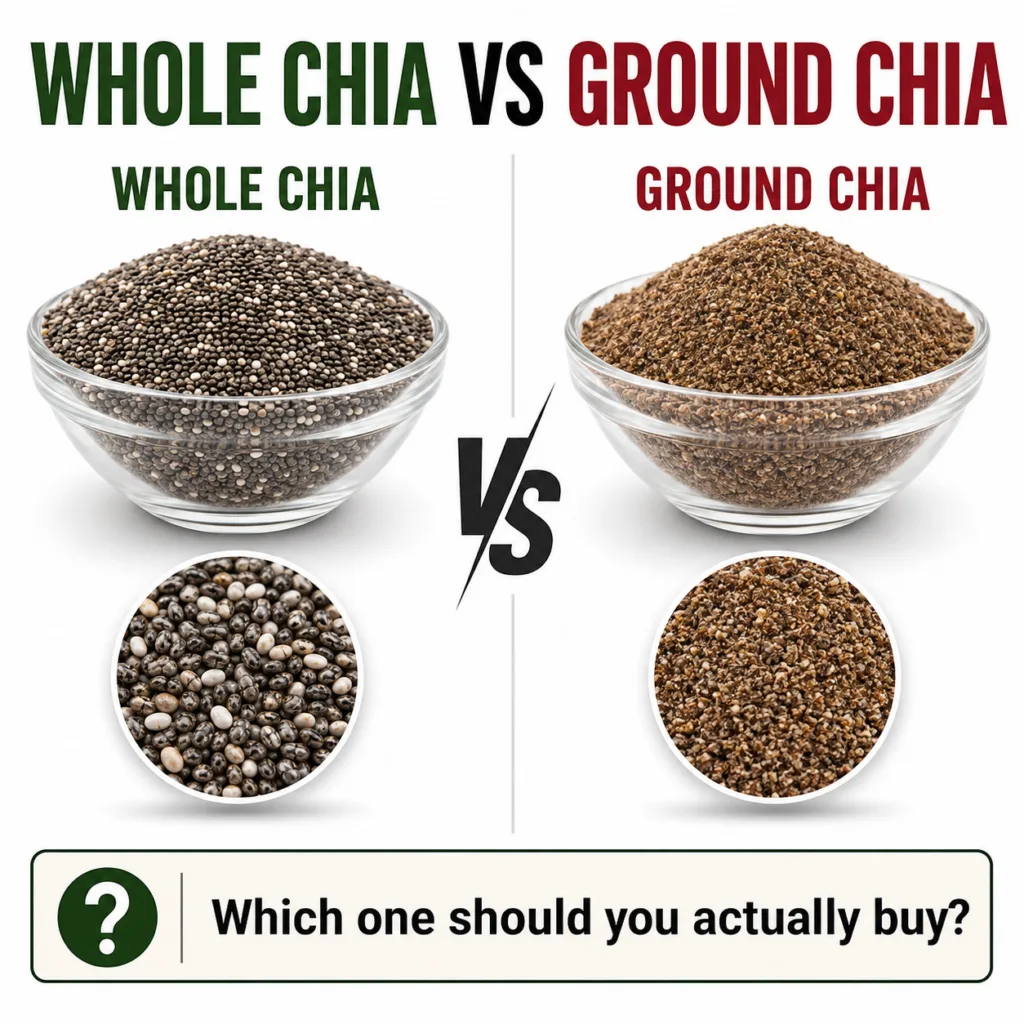 Understanding the visual differences between whole and ground chia seeds.
Whole Chia Seeds: The Versatile Powerhouses
Whole chia seeds are tiny, oval-shaped seeds that are typically black or white. When dry, they have a slightly crunchy texture. What makes them unique is their ability to absorb up to 10-12 times their weight in liquid, forming a gelatinous coating. This property makes them incredibly versatile for various culinary applications.
Characteristics & Benefits of Whole Chia
- Fiber Rich: Whole chia seeds are an excellent source of dietary fiber, both soluble and insoluble. This high fiber content supports digestive health, aids in satiety, and can help regulate blood sugar levels.
- Hydration Helper: Their gelling property makes them great for adding thickness to smoothies and puddings, and they can contribute to overall hydration by holding onto water.
- Slow Energy Release: The fiber and healthy fats in whole chia seeds contribute to a slower release of energy, which may help maintain stable blood sugar levels and provide sustained energy throughout the day.
- Textural Appeal: They add a satisfying pop and texture to dishes when used whole, particularly in recipes like overnight oats or yogurt parfaits.
- Longer Shelf Life: Due to their intact outer shell, whole chia seeds are generally more stable and have a longer shelf life compared to ground chia seeds, as the healthy fats are protected from oxidation.
Common Uses for Whole Chia Seeds
- Chia Pudding: A classic use, where seeds gel in liquid (milk, plant-based milk) to create a creamy, nutritious pudding.
- Smoothies: Add a tablespoon or two to thicken your smoothie and boost its nutritional content.
- Yogurt & Cereal Topping: Sprinkle over yogurt, oatmeal, or breakfast cereal for an added crunch and fiber boost.
- Egg Replacer: A “chia egg” (1 tablespoon chia seeds + 3 tablespoons water, let sit for 5 minutes) can replace one egg in many baking recipes.
- Thickening Agent: Use in soups, stews, or sauces as a natural thickener.
Ground Chia Seeds: Maximizing Nutrient Absorption
Ground chia seeds, also known as chia meal or chia flour, are created by finely milling whole chia seeds. This process breaks down the tough outer shell, transforming them into a soft, flour-like consistency. While they retain the same nutritional profile as whole seeds, their altered texture can influence how your body processes them.
Characteristics & Benefits of Ground Chia
- Enhanced Nutrient Absorption: Some experts suggest that grinding chia seeds can improve the bioavailability of their nutrients, particularly the omega-3 fatty acids. The broken cell walls may allow the body to access these beneficial compounds more readily.
- Smoother Texture: Ground chia seeds blend seamlessly into liquids and batters without altering the texture significantly, making them ideal for those who prefer not to feel the tiny seeds.
- Digestibility: For individuals with sensitive digestive systems, ground chia seeds might be easier to digest as their fibrous outer shell has already been broken down.
- Versatility in Baking: They can be easily incorporated into baked goods, adding a nutritional boost without the distinct texture of whole seeds.
Common Uses for Ground Chia Seeds
- Smoothies & Shakes: Blend into smoothies for a nutrient boost without any grittiness.
- Baking: Incorporate into muffins, breads, cookies, or pancakes to increase fiber and omega-3 content. They can also partially replace flour in gluten-free recipes.
- Hot Cereals: Stir into hot oatmeal or porridges for added nutrition and a slight thickening effect.
- “Invisible” Nutrients: A great way to add fiber and omega-3s to dishes for picky eaters who might object to the texture of whole seeds.
Whole Chia vs. Ground Chia: The Key Differences
When deciding between whole and ground chia seeds, consider these key distinctions:
- Digestibility & Absorption: While both forms offer excellent nutrition, ground chia seeds may offer slightly better absorption of omega-3s due to their broken cell walls. However, whole seeds are still digested and their nutrients absorbed, just perhaps at a slower rate. For some, whole seeds can pass through the digestive system more intact, aiding in regularity.
- Texture: Whole seeds provide a distinct “pop” or “crunch” and create a gel. Ground seeds disappear into recipes, offering a smoother consistency.
- Storage & Shelf Life: Whole chia seeds have a longer shelf life due to the protection of their outer shell. Ground chia seeds, with their exposed fats, are more susceptible to oxidation and should be stored in an airtight container in the refrigerator or freezer to preserve freshness.
- Culinary Application: Whole seeds are preferred when you want the gelling effect (puddings, egg replacers) or textural crunch. Ground seeds are ideal for seamlessly integrating into baked goods, dressings, or smoothies where a smooth consistency is desired.
Which One Should You Actually Buy?
The answer to “which one should you actually buy?” largely depends on your specific needs, preferences, and how you plan to use them.
- Choose Whole Chia Seeds If:
- You enjoy the unique texture and gelling properties.
- You plan to use them for chia puddings, as an egg replacer, or for thickening.
- You prioritize a longer shelf life and ease of storage at room temperature.
- You’re looking for sustained energy release and maximum fiber benefits for digestive health.
- Choose Ground Chia Seeds If:
- You prefer a smoother consistency in your foods and beverages.
- You want to maximize the absorption of omega-3 fatty acids (though whole seeds are still very beneficial).
- You have a sensitive digestive system and find whole seeds less comfortable.
- You’re primarily using them in baking or blending into smoothies where you don’t want visible seeds.
Ultimately, both whole and ground chia seeds are incredibly healthy additions to your diet. Many people find value in having both on hand to suit different recipes and needs. If you’re new to chia seeds, starting with whole seeds is often a great way to experience their versatility.
Final Thoughts
Whether you opt for whole chia seeds or ground, you’re making a fantastic choice for your health. Both forms deliver a powerful nutritional punch, supporting everything from digestion to heart health. Experiment with both to discover which you prefer and how they best fit into your daily routine. The most important thing is to incorporate these tiny superfoods regularly to reap their impressive benefits.
Medical Disclaimer
The information provided in this article is for general informational purposes only and does not constitute medical advice. Always consult with a qualified healthcare professional before making any decisions about your health or starting any new diet or supplement regimen.