Imagine a garden bursting with vibrant color, year after year, without the chore of replanting every season. This dream is entirely achievable with the magic of perennial flowers! These botanical workhorses establish deep roots, allowing them to return faithfully each spring, often growing larger and more robust with time. Embracing perennials simplifies your gardening life, reduces costs, and builds a sustainable landscape that evolves beautifully through the seasons.
Choosing the right perennials means selecting plants that thrive in your local climate and soil conditions, minimizing the need for constant intervention. This approach not only saves you time and effort but also fosters a deeper connection to your garden’s natural rhythm. Let’s explore seven truly resilient and beautiful perennial flowers that promise to bring continuous joy and color to your outdoor spaces with minimal fuss, transforming your garden into a low-maintenance, long-lasting haven.
The Enduring Appeal of Perennials
Unlike annuals, which complete their life cycle in one growing season, perennials live for more than two years. They typically die back to the ground in colder climates during winter, only to re-emerge from their rootstock in spring. This resilience makes them an excellent investment for any gardener looking to create a mature, established landscape. They conserve resources by reducing the need for new plant purchases and often become more drought-tolerant once established, requiring less supplemental watering.
Our Top 7 Easy Perennial Flowers for Lasting Beauty
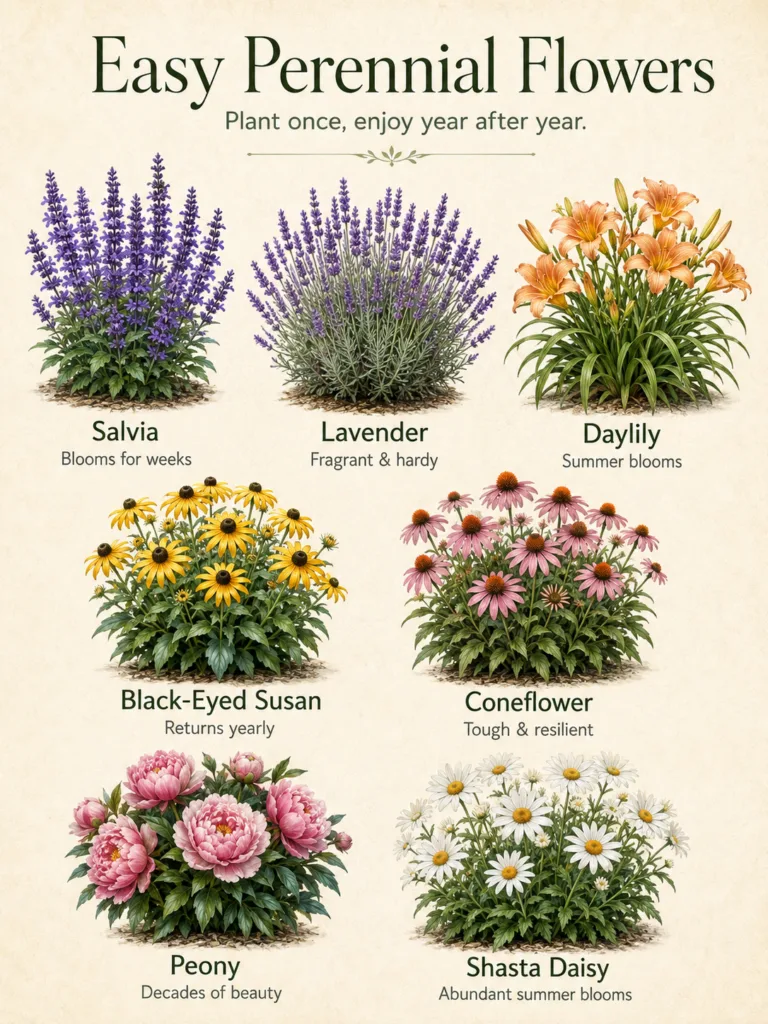
1. Salvia (Salvia spp.)
Salvia, also known as ornamental sage, offers weeks of brilliant color and a magnet for pollinators like bees and hummingbirds. Many varieties are incredibly hardy and drought-tolerant once established, making them a superb choice for sunny borders and low-water landscapes.
- Hardiness: USDA Zones 4–9 (varies by species and cultivar)
- Plant type: Herbaceous perennial
- Exposure: Full sun (at least 6 hours direct sunlight)
- Height: 18–36 inches
- Spread: 12–24 inches
Practical Care Tip: To encourage continuous blooming, deadhead spent flower spikes regularly. After the main flush of blooms, a more substantial cutback (by about one-third) can often stimulate a second, smaller bloom period.
Common Mistake: Overwatering. Salvia prefers well-drained soil and can suffer from root rot in consistently wet conditions. Allow the top few inches of soil to dry out between waterings.
2. Daylily (Hemerocallis spp.)
Daylilies are quintessential garden plants, celebrated for their vibrant colors and exceptional hardiness. While each individual flower lasts only a day (hence the name), a single plant produces an abundance of buds, ensuring a continuous display over several weeks or even months with reblooming varieties. They adapt to a wide range of soil conditions and climates.
- Hardiness: USDA Zones 3–9
- Plant type: Herbaceous perennial
- Exposure: Full sun to partial shade
- Height: 1–3 feet (dwarf to tall varieties)
- Spread: 1–3 feet
Practical Care Tip: Divide overcrowded clumps every 3-5 years to maintain vigor and increase bloom production. The best time to divide is in early spring or late summer after flowering.
Common Mistake: Planting in too much shade. While daylilies tolerate some shade, they will produce fewer blooms. Aim for at least 6 hours of direct sun for best flowering.
3. Lavender (Lavandula spp.)
Renowned for its soothing fragrance and beautiful purple blooms, lavender is a Mediterranean native that thrives in sunny, dry conditions. It’s a fantastic choice for herb gardens, borders, or even container planting, attracting beneficial insects while deterring some pests.
- Hardiness: USDA Zones 5–9 (varies by species; English lavender is hardier)
- Plant type: Evergreen sub-shrub/perennial
- Exposure: Full sun
- Height: 1–3 feet
- Spread: 1–3 feet
Practical Care Tip: Prune lavender annually after its main bloom to maintain a compact, bushy shape and promote better flowering next season. Avoid cutting into old, woody stems too severely.
Common Mistake: Heavy, wet soil. Lavender requires excellent drainage. Amend heavy clay soils with grit or sand, or consider growing in raised beds or containers.
4. Coneflower (Echinacea purpurea)
Coneflowers are iconic prairie plants known for their distinctive daisy-like flowers with a prominent central cone. They are pollinator magnets, attracting bees, butterflies, and even birds (who enjoy the seeds in fall and winter). Highly drought-tolerant once established, they bring a touch of wild beauty to any garden.
- Hardiness: USDA Zones 3–9
- Plant type: Herbaceous perennial
- Exposure: Full sun to partial shade
- Height: 2–4 feet
- Spread: 1–2 feet
Practical Care Tip: While deadheading can encourage more blooms, leaving some spent flower heads on the plant in fall provides food for birds and adds winter interest to the garden.
Common Mistake: Removing spent foliage too early. In regions with cold winters, allowing the spent foliage to remain helps insulate the crown and protects the plant through dormancy.
5. Black-Eyed Susan (Rudbeckia spp.)
The cheerful yellow petals and dark centers of Black-Eyed Susans evoke classic cottage garden charm. These sun-loving perennials are incredibly easy to grow, tolerant of various soils, and bring a long season of color, often blooming from summer into fall. Many varieties, such as *Rudbeckia fulgida ‘Goldsturm’*, are long-lived and reliable.
- Hardiness: USDA Zones 3–9
- Plant type: Herbaceous perennial (some are short-lived perennials often grown as annuals, like *R. hirta*)
- Exposure: Full sun
- Height: 2–3 feet
- Spread: 1–2 feet
Practical Care Tip: Black-Eyed Susans can self-seed readily. If you want to control their spread, deadhead flowers before they go to seed. Otherwise, enjoy the naturalizing effect!
Common Mistake: Neglecting good air circulation. In humid climates, crowded plants can be prone to powdery mildew. Ensure adequate spacing between plants.
6. Peony (Paeonia lactiflora and suffruticosa)
Peonies are legendary for their magnificent, often fragrant blooms and incredible longevity, truly offering ‘decades of beauty.’ These classic garden plants require minimal care once established and can thrive in the same spot for 50 years or more. They need a cold winter chill to set their buds, making them ideal for temperate climates.
- Hardiness: USDA Zones 3–8 (herbaceous); Zones 4-9 (tree peonies)
- Plant type: Herbaceous perennial or woody shrub (tree peony)
- Exposure: Full sun to partial shade (more sun for best blooms)
- Height: 2–3 feet (herbaceous); 3–5 feet (tree peonies)
- Spread: 2–3 feet
Practical Care Tip: Plant peony tubers with their “eyes” (buds) no more than 1-2 inches below the soil surface. Planting too deeply is the most common reason for a lack of blooms.
Common Mistake: Moving an established peony. Peonies dislike being disturbed and can take several years to recover and re-establish blooming after transplanting.
7. Shasta Daisy (Leucanthemum x superbum)
With their crisp white petals and sunny yellow centers, Shasta daisies are the quintessential cheerful bloom, reminiscent of classic field daisies but with larger, more robust flowers. They are excellent for cutting gardens, borders, and provide a long season of bloom, often from early summer through fall with regular deadheading.
- Hardiness: USDA Zones 5–9
- Plant type: Herbaceous perennial
- Exposure: Full sun
- Height: 1–3 feet
- Spread: 1–2 feet
Practical Care Tip: Deadhead spent flowers regularly to encourage continuous blooming and prevent the plant from putting energy into seed production. This will keep your plant blooming longer.
Common Mistake: Poor drainage. Shasta daisies prefer consistently moist but well-drained soil. They can rot in soggy conditions, especially over winter.
Nurturing Your Perennial Garden: Key Principles
Successfully growing perennials hinges on a few core principles that apply broadly across different species and climates:
- Right Plant, Right Place: Always match a plant’s sun, soil, and moisture needs to your garden’s specific conditions. Trying to force a sun-lover into shade or a drought-tolerant plant into boggy soil leads to disappointment.
- Soil Preparation: Most perennials thrive in well-drained soil enriched with organic matter. Incorporate compost before planting to improve structure, fertility, and drainage.
- Watering Wisely: While establishing, new perennials need consistent moisture. Once mature, many are quite drought-tolerant, but keep an eye on prolonged dry spells. Water deeply and less frequently to encourage deep root growth.
- Seasonal Care:
- Spring: Remove winter debris, apply a thin layer of compost, and divide overcrowded plants.
- Summer: Deadhead spent blooms, provide supplemental water during dry periods, and watch for pests.
- Fall: Cut back withered foliage (unless leaving for winter interest/wildlife), and apply a protective layer of mulch in colder zones.
Regional Considerations for USDA Zones
The USDA Plant Hardiness Zone map is a crucial tool, indicating a plant’s ability to withstand winter cold. However, it doesn’t account for summer heat, humidity, or rainfall. Always consider your specific microclimate:
- Zones 3-5 (Cold Climates): Prioritize highly cold-hardy varieties. Winter mulching can provide extra protection for borderline plants. Ensure good snow cover, if possible, as it insulates.
- Zones 6-8 (Temperate Climates): Enjoy a wide range of perennials. Pay attention to plants that might struggle with summer humidity or require excellent drainage.
- Zones 9-11 (Warm Climates): Many “perennials” in colder zones might be evergreen here. Focus on heat tolerance and ensure plants receive adequate water during hot, dry spells. Some plants (like Peonies) may not bloom well without sufficient winter chill.
Always check local extension office resources for specific planting calendars and recommended varieties for your area.
Conclusion: Cultivate a Garden That Keeps Giving
Choosing perennial flowers is a step towards a more sustainable, less labor-intensive, and deeply rewarding gardening experience. These seven resilient beauties are just the beginning, offering a foundation of reliable color and texture that will enhance your garden year after year. By understanding their simple needs and providing thoughtful care, you’ll create a vibrant landscape that not only thrives but also becomes a source of enduring beauty and connection to the natural world. So, dig in, plant once, and prepare to enjoy the endless returns of your perennial paradise!