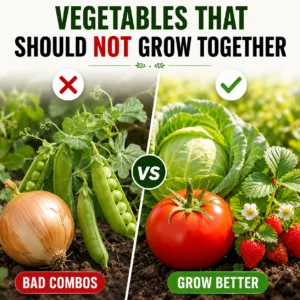
Companion planting is a powerful gardening method to boost yields, repel pests, and optimize garden space. However, pairing incompatible plants can stunt growth, attract shared pests, deplete vital soil nutrients, and ruin your harvest.
Understanding which garden crops interfere with one another is essential for maintaining a healthy, high-yielding garden.
Why Some Vegetables Should Never Be Planted Together
Incompatible plant pairings generally fail due to four biological factors:
-
Allelopathy: Certain plants release biochemical compounds through their roots or foliage that inhibit the germination and development of nearby crops.
-
Shared Pests and Pathogens: Closely related plant families often share identical diseases and insect pests, allowing infestations to multiply rapidly.
-
Nutrient & Sunlight Competition: Vigorous growers or tall crops can overshadow low-growing vegetables and exhaust shared nutrient reserves.
-
Cross-Pollination Risks: Related varieties grown adjacent to each other can cross-pollinate, leading to distorted fruit texture and poor seed viability for subsequent seasons.
9 Vegetable Pairings to Keep Apart
1. Onions + Peas
-
Why It Fails: Allium family members (onions, shallots, garlic, leeks) release natural sulfur compounds that inhibit the nitrogen-fixing bacteria (Rhizobium) on the root nodules of legumes like peas.
-
The Result: Severely stunted pea growth, pale foliage, and minimal pod production.
-
Better Alternatives: Plant peas near carrots, radishes, or cucumbers. Place onions near brassicas or tomatoes.
2. Tomatoes + Corn
-
Why It Fails: Tomatoes and sweet corn share a destructive common pest: the tomato fruitworm (Helicoverpa zea), also known as the corn earworm.
-
The Result: Planting them adjacent creates an ideal breeding ground for earworms, leading to infested corn ears and ruined tomato fruits. Corn also casts heavy shade over sun-loving tomatoes.
-
Better Alternatives: Pair tomatoes with basil, marigolds, or asparagus. Plant corn with squash and climbing beans (the traditional Three Sisters technique).
3. Cabbage + Strawberries
-
Why It Fails: Brassicas (cabbage, broccoli, kale, cauliflower) are heavy feeders that aggressively compete for the nitrogen and potassium required by shallow-rooted strawberry plants.
-
The Result: Strawberries produce fewer flowers and small, sour berries, while cabbage foliage attracts cabbage loopers that can damage young strawberry crowns.
-
Better Alternatives: Grow strawberries alongside borage, bush beans, or spinach. Pair cabbage with aromatic herbs like thyme and dill to deter pests.
4. Squash + Pumpkins
-
Why It Fails: Squash (Cucurbita pepo) and pumpkins belong to the same genus and require substantial space, moisture, and identical macro-nutrients.
-
The Result: Close planting leads to extreme vine tangling, poor airflow, and increased vulnerability to powdery mildew and squash vine borers. Furthermore, open cross-pollination will distort the flavor and shape of fruits if saving seeds for next year.
-
Better Alternatives: Separate heavy vining cucurbits into distinct beds, pairing each with radishes, nasturtiums, or sweet corn.
5. Peppers + Beans
-
Why It Fails: While bush beans are often versatile, vigorous pole bean varieties can quickly sprawl over compact pepper plants, blocking sunlight and reducing pepper yields. Additionally, both plants are susceptible to anthracnose and fungal blights.
-
The Result: Excessive shading delays pepper ripening, and shared fungal pathogens spread across dense canopy growth.
-
Better Alternatives: Pair peppers with basil, onions, carrots, or marigolds. Grow beans near sweet corn or root crops like beets.
6. Potatoes + Cucumbers
-
Why It Fails: Cucumbers are heavy consumers of surface moisture and nitrogen, while potatoes require consistent deep moisture and loose soil. Cucumbers also promote the spread of Phytophthora infestans (late blight) to potato tubers.
-
The Result: Increased risk of root and tuber rot, water stress, and diminished potato sizes.
-
Better Alternatives: Plant cucumbers near sunflowers, dill, or beans. Plant potatoes near horseradish, marigolds, or bush beans.
7. Carrots + Fennel
-
Why It Fails: Fennel is highly allelopathic and releases compounds that inhibit root elongation in the Umbelliferae (Apiaceae) family, to which carrots also belong.
-
The Result: Carrots produce stunted, twisted taproots with poor sweetness and delayed maturity.
-
Better Alternatives: Plant carrots near lettuce, rosemary, or radishes. Always isolate fennel in an individual pot or dedicated garden corner.
8. Fennel + Leaf Lettuce
-
Why It Fails: Fennel secretes chemical substances from its roots that actively retard the vegetative cell growth of leafy greens like lettuce, spinach, and Swiss chard.
-
The Result: Lettuce leaves turn bitter, yellow, or fail to form dense foliage heads.
-
Better Alternatives: Grow leaf lettuce next to chives, radishes, cucumbers, or strawberries.
9. Garlic + Beans
-
Why It Fails: Similar to onions, garlic produces natural antibacterial and antifungal root exudates that suppress the beneficial mycorrhizal fungi and nitrogen-fixing bacteria essential for bean health.
-
The Result: Stunted legume vine growth, poor flowering, and reduced nitrogen replenishment in the bed.
-
Better Alternatives: Plant beans next to rosemary, corn, or celery. Grow garlic around tomatoes, peppers, and roses to deter aphids naturally.
Best Practices for Garden Layout Planning
-
Rotate Crop Families: Implement a 3- to 4-year crop rotation cycle to prevent the accumulation of family-specific soil pathogens and nematodes.
-
Buffer with Herbs and Flowers: Use companion flowers like French marigolds, sweet alyssum, and nasturtiums as physical barrier rows between sensitive crop groups.
-
Potted Isolation for Aggressive Herbs: Grow aggressive or allelopathic plants—specifically fennel, mint, and