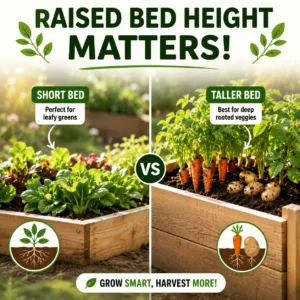
Raised bed gardening provides superior drainage, better soil temperature regulation, and effortless weed control. However, the depth of your garden bed determines whether your plants reach their full yield potential.
Root systems vary widely across vegetable families. Shallow-rooted greens require only a few inches of quality soil, whereas heavy feeders and deep taproot vegetables demand substantial vertical space to thrive without obstruction.
Why Raised Bed Height Matters
-
Root Expansion: Adequate soil depth prevents root binding, stunted taproots, and fork deformation in root crops.
-
Moisture Management: Taller beds drain faster during heavy rains and stay aerated, preventing root rot.
-
Ergonomics & Accessibility: Beds of 18 to 24+ inches reduce back strain and make gardening comfortable for all mobility levels.
-
Soil Cost Efficiency: Matching crop requirements to bed height avoids wasting expensive organic compost and potting mix in deeper beds where only shallow-rooted plants are grown.
4 Raised Bed Heights & Their Best Matching Vegetables
Section 1: Short Beds (6 Inches)
Short beds are economical, fast to build, and require minimal soil fill. They are ideal for quick-growing crops with compact, shallow fibrous root systems.
-
Lettuce & Salad Greens: Leaf lettuce, romaine, and spinach roots spread horizontally across the top 4 to 6 inches of soil.
-
Onions & Scallions: Green onions and bunching varieties require minimal vertical depth to produce crisp stalks and flavorful bulbs.
-
Radishes: Fast-maturing globe radishes develop entirely within the top few inches of loose, fertile soil in 25 to 30 days.
Section 2: Medium Beds (12 Inches)
The standard 12-inch depth is the versatile workhorse of raised bed gardens, accommodating moderate-rooting plants and heavy-fruiting warm-season crops.
-
Tomatoes: Bush and determinate tomato varieties establish strong lateral root anchors at this depth to support heavy fruit loads.
-
Bell Peppers: Sweet and hot peppers thrive with 12 inches of well-drained, warm soil to develop sturdy stems and thick-walled peppers.
-
Green Beans: Both bush and pole green beans develop extensive root networks and fix atmospheric nitrogen efficiently within 10 to 12 inches of loose soil.
Section 3: Tall Beds (18 Inches)
An 18-inch soil profile is essential for straight taproots and deep-feeding root vegetables that need loose, stone-free earth to prevent bending or splitting.
-
Carrots: Standard and long carrot cultivars require deep, loose soil to grow straight, sweet, and uniform without hitting hard subsoil.
-
Parsnips: Slow-maturing parsnips produce long, robust taproots that extend 12 to 16 inches downward over the growing season.
-
Beets: While the beet bulb sits near the surface, its primary taproot and nutrient-absorbing feeder roots penetrate deep into the 18-inch soil reservoir.
Section 4: Extra Tall Beds (24+ Inches)
Standing planters and extra-deep raised beds provide maximum room for extensive tuber systems, massive root expansion, and peak ergonomic comfort.
-
Potatoes: Ideal for layering or “hilling” soil over potato stems as they grow, maximizing tuber development along the entire buried stem.
-
Sweet Potatoes: Vining sweet potatoes require substantial vertical depth and warm soil to produce large, unblemished storage tubers.
-
Daikon Radish: Giant Japanese daikon radishes can grow up to 18 to 24 inches in length, requiring ultra-deep, loose soil to prevent stunted, crooked roots.
Tips for Filling Tall & Extra Tall Beds
-
Use the Hügelkultur Method: Save money on soil by filling the bottom 30% to 50% of 18+ inch beds with untreated logs, branches, leaves, and cardboard before topping with high-quality potting mix and compost.
-
Ensure Free Drainage: For elevated beds on legs, ensure adequate drainage holes or permeable landscape fabric liners to prevent waterlogging.
-
Top-Dress Annually: Deep soil settles over time as organic matter decomposes; refresh your beds with a 2-inch layer of finished compost each spring.