In the vast world of nutrition, few topics spark as much debate and confusion as seed oils. From social media to dinner table conversations, seed oils get a lot of attention online—but nutrition is rarely as simple as a clear-cut ‘good’ or ‘bad’ label. Many conflicting messages circulate, often leading to unnecessary fear or confusion about what to put on our plates.
At Glowra Health, we believe in clear, evidence-based insights to help you navigate the often-complex world of healthy eating. This article aims to cut through the noise, separating common myths from scientific facts about seed oils. What have you heard about seed oils? Let’s unpack the truth to help you make informed choices for a healthier you.
The Seed Oil Debate: Separating Fact from Fiction
The conversation around seed oils often lacks nuance, leading to broad generalizations that don’t tell the whole story. Understanding the specifics is crucial for making dietary choices that genuinely support your well-being. Here, we tackle five common myths and provide the facts you need.
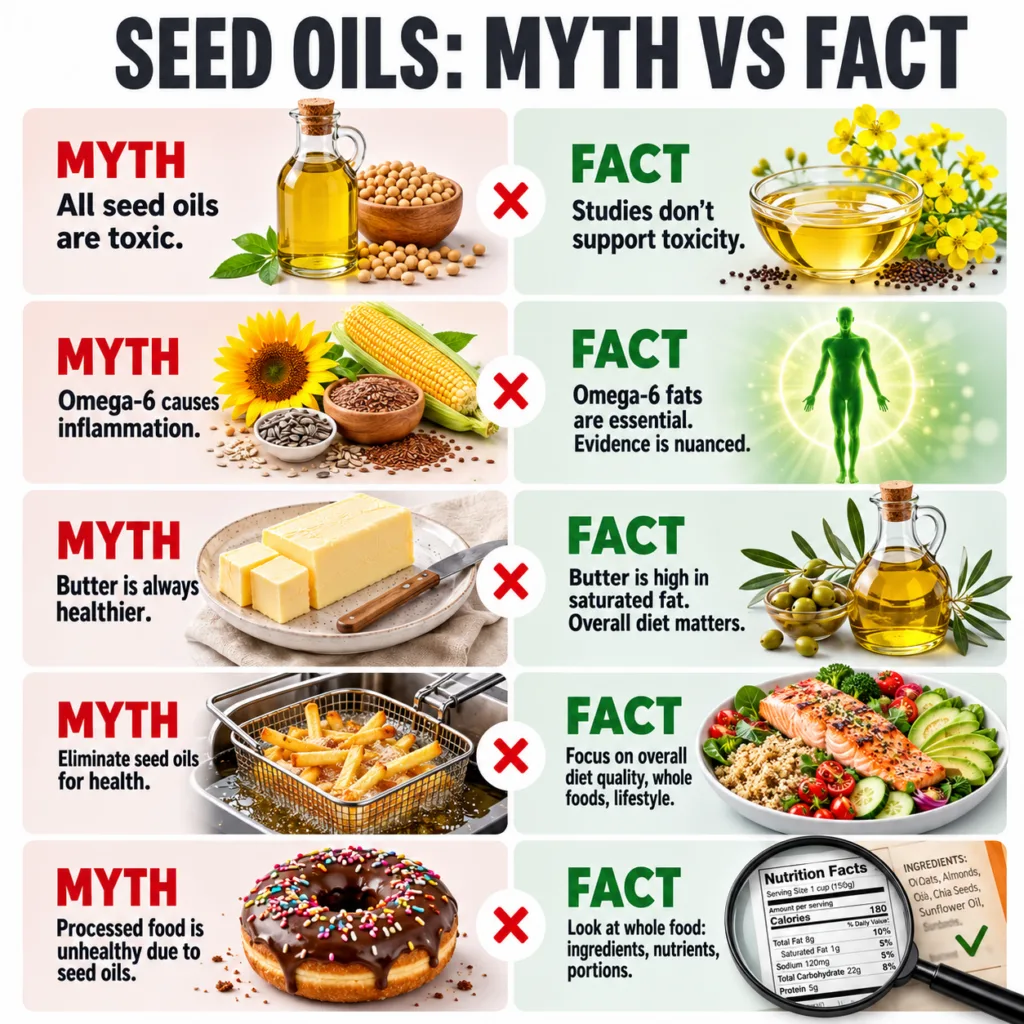
Myth 1: All Seed Oils Are Unnatural and Unhealthy
One prevalent misconception is that seed oils are entirely modern inventions, highly processed, and therefore inherently detrimental to health. This often leads to the blanket recommendation to avoid all of them, regardless of their type or how they are produced.
Fact: Many seed oils have been consumed for centuries, and their health impact depends on type and processing.
The truth is, humans have extracted oils from plants for millennia. While modern industrial processing has certainly evolved, many seed oils are far from ‘unnatural.’ The key lies in understanding the difference between various types and their processing methods.
- Beneficial Unsaturated Fats: Many seed oils, like flaxseed oil, are rich in polyunsaturated fatty acids (PUFAs), including essential omega-3s. Other plant-derived oils, such as olive oil (from a fruit) and avocado oil (also from a fruit), are excellent sources of monounsaturated fatty acids (MUFAs), known for their heart-healthy properties. These healthy fats are crucial for cellular function, hormone production, and nutrient absorption.
- Processing Matters: ‘Cold-pressed’ or ‘unrefined’ oils retain more of their natural nutrients, antioxidants, and flavor. ‘Refined’ oils, while stripped of some nutrients during processing, can have higher smoke points and longer shelf lives, making them suitable for certain cooking applications. The concern often isn’t the refining itself, but the industrial processes that can introduce unwanted compounds or degrade the oil’s quality.
Myth 2: Seed Oils Lead to Chronic Inflammation
The claim that seed oils, particularly those high in omega-6 fatty acids, are a primary driver of chronic inflammation is a common one. This narrative often suggests that reducing seed oil consumption is the single most effective way to combat inflammatory conditions.
Fact: Omega-6 fatty acids are essential; the issue is the balance with omega-3s and overall dietary context.
Omega-6 fatty acids are essential for health and play vital roles in immunity and blood clotting. The problem arises not from omega-6 itself, but from an imbalanced ratio of omega-6 to omega-3 fatty acids in the modern Western diet, coupled with excessive intake of highly processed foods.
- The Omega-6 to Omega-3 Ratio: Historically, human diets had a roughly 1:1 to 4:1 ratio of omega-6 to omega-3. Today, this ratio can be as high as 10:1 or even 20:1 due to increased consumption of processed foods and certain seed oils. This imbalance, rather than omega-6 in isolation, may contribute to pro-inflammatory states.
- Context of the Diet: When seed oils are consumed within a diet rich in whole foods, fruits, vegetables, and lean proteins, and with adequate omega-3s (from sources like fatty fish, flaxseeds, and walnuts), their potential for harm is significantly reduced. The inflammatory impact is more closely tied to diets heavy in ultra-processed foods, refined sugars, and an overall lack of nutrient density.
Myth 3: All Highly Processed Seed Oils Are Toxic When Heated
Concerns about seed oils forming toxic compounds when cooked, especially at high temperatures, often lead people to believe that all commercially available seed oils are dangerous for cooking.
Fact: Smoke points vary significantly between oils; some are stable for high-heat cooking, while others are not.
Every oil has a ‘smoke point’ – the temperature at which it starts to smoke and break down, producing potentially harmful compounds and undesirable flavors. This varies greatly depending on the oil’s composition and how it was processed.
- High Smoke Point Oils: Refined avocado oil (around 520°F/270°C), high-oleic sunflower oil (around 450°F/232°C), and refined canola oil (around 400°F/204°C) are examples of oils that are relatively stable for high-heat cooking like searing, frying, and roasting.
- Lower Smoke Point Oils: Unrefined oils like extra virgin olive oil (around 375°F/190°C) are better suited for sautéing or baking, while very delicate oils like flaxseed oil (around 225°F/107°C) are best for dressings or drizzling after cooking.
- Choosing Wisely: The key is to select an oil appropriate for your cooking method. Using an oil with a low smoke point for deep-frying is problematic, but using a high-oleic seed oil for a stir-fry is generally safe and can be part of a healthy meal prep strategy.
Myth 4: Butter and Animal Fats Are Always Healthier Choices
In response to the demonization of seed oils, some argue that traditional animal fats like butter, lard, or tallow are unequivocally healthier options and should always be preferred.
Fact: Both animal fats and many seed oils have a place in a balanced diet; seed oils often offer more unsaturated fats, while animal fats are higher in saturated fats.
Healthy eating is about balance and variety, not an ‘either/or’ approach. Both categories of fats offer different nutritional profiles and can contribute to a healthy diet when consumed in moderation.
- Saturated Fats in Animal Products: Butter, lard, and other animal fats are higher in saturated fat. While saturated fat is not the ‘villain’ it was once thought to be, moderation is still advised, especially for individuals monitoring cholesterol levels.
- Unsaturated Fats in Seed Oils: Many seed oils, particularly olive, avocado, and high-oleic sunflower oils, are rich in monounsaturated and polyunsaturated fats. These are known for their benefits to heart health and for helping to lower bad cholesterol when replacing saturated and trans fats.
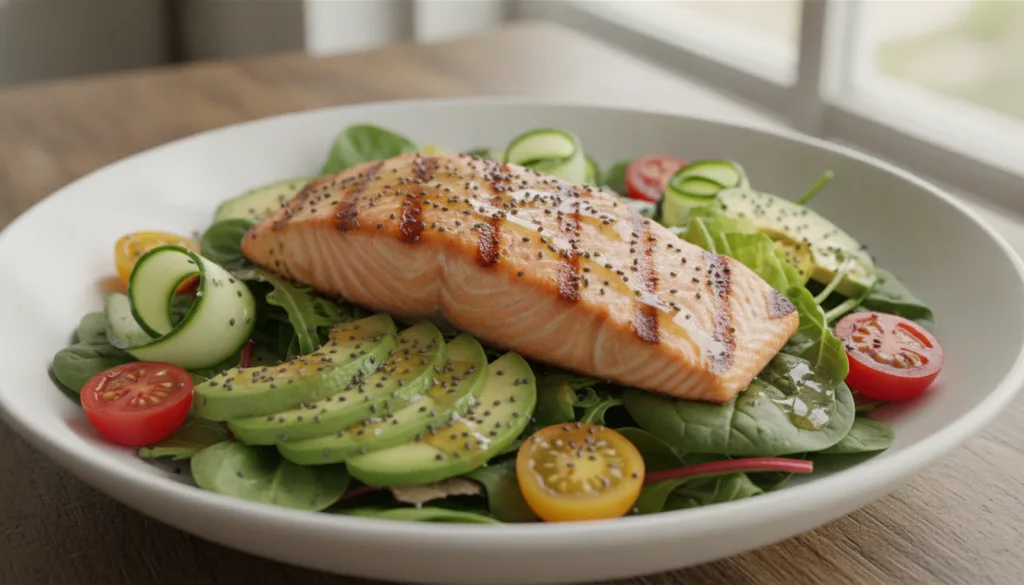
- Variety is Key: Incorporating a variety of healthy fats from different sources—including fish, nuts, seeds, avocados, and a mix of oils—provides a broader spectrum of nutrients and essential fatty acids. For example, a salmon salad bowl, rich in omega-3s, can be dressed with an olive oil vinaigrette, combining beneficial fats from multiple sources.
Myth 5: Completely Avoiding Seed Oils Is Key to Optimal Health
The intense focus on avoiding seed oils has led some to believe that their complete elimination from the diet is the ultimate strategy for achieving optimal health and preventing disease.
Fact: A balanced diet focused on whole, unprocessed foods and a variety of healthy fats is more impactful than strict exclusion.
Health and nutrition are complex, and no single food group is solely responsible for health outcomes. A holistic approach focusing on overall dietary patterns is far more effective than demonizing an entire category of fats.
- Focus on Whole Foods: The biggest impact on health comes from prioritizing whole, unprocessed foods like fruits, vegetables, whole grains, lean proteins, nuts, and legumes. When seed oils are part of a diet dominated by ultra-processed items like french fries, donuts, and packaged snacks, the issue is often the overall dietary pattern, not just the oil itself.
- Context Matters: Consuming a small amount of a high-quality seed oil as part of a homemade dressing for a nutrient-dense salad is vastly different from regularly eating foods deep-fried in highly refined, potentially rancid oils.
- Sustainable Habits: Instead of strict elimination, which can be difficult to maintain and may lead to nutritional deficiencies, focus on making informed choices. Choose healthier cooking oils, prioritize unrefined options for cold uses, and ensure your diet is rich in diverse, nutrient-dense foods.
Final Thoughts
The conversation around seed oils often gets oversimplified, but the truth is, few things in nutrition are black and white. By understanding the nuances—the different types of oils, their processing, smoke points, and how they fit into your overall dietary pattern—you can make choices that truly support your health goals. At Glowra Health, we encourage a balanced approach, prioritizing whole foods and a variety of healthy fats, rather than succumbing to fear-mongering or restrictive dietary trends. Consult a qualified healthcare professional or registered dietitian for personalized dietary advice.
Medical Disclaimer
The information provided in this article is for general informational purposes only and does not constitute medical advice. Always consult with a qualified healthcare professional or registered dietitian before making any decisions related to your health or diet, especially if you have existing health conditions or are on medication.