Are you looking to boost your energy, improve sleep, or support your overall well-being? The answer might lie in a crucial mineral often overlooked: magnesium. This powerhouse nutrient plays a vital role in over 300 bodily functions, impacting everything from muscle and nerve function to blood sugar control and blood pressure regulation.
Many people don’t get enough magnesium through their diet, leading to potential health issues. But the good news is, incorporating more magnesium-rich foods into your daily meals is surprisingly easy and delicious!
In this article, we’ll dive into the amazing benefits of magnesium, reveal the top food sources to help you meet your daily needs, and offer practical tips on how to enjoy them. Get ready to discover how simple dietary changes can make a big difference in your health!
Why Magnesium Matters: Incredible Health Benefits
Magnesium is a true unsung hero of the mineral world. Its presence is critical for countless processes that keep your body running smoothly. Here are some of its most important contributions:
- Energy Production: Magnesium is essential for converting food into energy, helping to keep you feeling vibrant throughout the day.
- Muscle and Nerve Function: It plays a key role in muscle contraction and relaxation, as well as nerve signal transmission, which is crucial for everything from breathing to thinking.
- Bone Health: Alongside calcium and Vitamin D, magnesium is vital for maintaining strong, healthy bones and preventing osteoporosis.
- Blood Sugar Control: Research suggests magnesium helps regulate insulin sensitivity, which is important for managing blood sugar levels and reducing the risk of type 2 diabetes.
- Heart Health: It contributes to maintaining a healthy heart rhythm and blood pressure, supporting overall cardiovascular well-being.
- Stress Reduction and Sleep: Magnesium is known for its calming properties. It can help regulate neurotransmitters that promote relaxation and improve sleep quality.
- Migraine Relief: Studies indicate that magnesium supplementation may help reduce the frequency and intensity of migraines in some individuals.
Top Magnesium-Rich Foods: Your Daily Boost
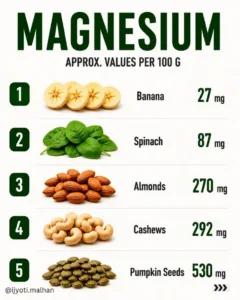
Getting your daily dose of magnesium doesn’t require supplements for most healthy individuals. Nature has provided us with an abundance of delicious foods packed with this essential mineral. Here’s a look at some of the best sources:
Magnesium-Rich Food Chart
| Food (100g serving) | Magnesium (mg) | Calories | Protein (g) | Carbs (g) | Fat (g) | Fiber (g) | Main Nutrients | Best Benefit |
|---|---|---|---|---|---|---|---|---|
| Pumpkin Seeds | 592 | 559 | 30 | 11 | 49 | 6 | Zinc, Iron, Omega-3s | Bone health, immunity |
| Almonds | 270 | 579 | 21 | 22 | 49 | 12 | Vitamin E, Fiber, Calcium | Heart health, antioxidants |
| Spinach (cooked) | 157 | 23 | 3 | 4 | 0.4 | 3 | Vitamin K, Iron, Folate | Bone strength, blood health |
| Cashews | 292 | 553 | 18 | 30 | 44 | 3 | Copper, Zinc, Iron | Energy, immune support |
| Black Beans (cooked) | 160 | 132 | 9 | 24 | 0.5 | 8 | Fiber, Folate, Iron | Digestive health, stable energy |
| Avocado | 29 | 160 | 2 | 9 | 15 | 7 | Potassium, Vitamin K, Folate | Heart health, healthy fats |
| Dark Chocolate (70-85%) | 228 | 598 | 8 | 46 | 43 | 11 | Antioxidants, Iron, Copper | Mood, antioxidant boost |
| Banana | 27 | 89 | 1.1 | 23 | 0.3 | 2.6 | Potassium, Vitamin B6, C | Muscle function, quick energy |

Understanding Magnesium’s Role in Your Body
At a cellular level, magnesium acts as a co-factor, meaning it helps enzymes perform their jobs. These enzymes are responsible for a wide range of biochemical reactions. For instance, magnesium is vital for adenosine triphosphate (ATP) synthesis, which is the primary energy currency of your cells.
It also influences calcium transport and absorption, which is critical not only for bone health but also for nerve impulses and muscle contractions. Without adequate magnesium, calcium can accumulate in soft tissues, leading to various issues. It’s a delicate balance!
Best Ways to Incorporate Magnesium-Rich Foods
Adding more magnesium to your diet doesn’t have to be complicated. Here are some simple and delicious ideas:
- Snack Smart: Grab a handful of almonds, cashews, or pumpkin seeds for a quick and nutritious boost.
- Green Power: Add spinach or other dark leafy greens to your smoothies, scrambled eggs, pasta dishes, or as a side with dinner.
- Breakfast Boost: Sprinkle seeds and nuts over your oatmeal, yogurt, or overnight oats.
- Legume Love: Incorporate black beans into tacos, burritos, salads, or make a hearty black bean soup.
- Chocolate Treat: Indulge in a square or two of dark chocolate (70% cocoa or higher) for a magnesium-rich dessert.
- Avocado All Day: Enjoy avocado in your toast, salads, sandwiches, or as a creamy dip.

Potential Risks and Considerations
While magnesium is vital, it’s important to be aware of potential issues:
- Magnesium Deficiency: Mild deficiency often shows no symptoms, but severe deficiency can lead to muscle cramps, fatigue, weakness, nausea, and loss of appetite. Chronic deficiency may contribute to high blood pressure, heart disease, type 2 diabetes, and osteoporosis.
- Magnesium Toxicity: This is rare from food sources alone, as healthy kidneys typically excrete any excess. However, extremely high doses from supplements or medications can cause adverse effects like diarrhea, nausea, abdominal cramping, and, in severe cases, irregular heartbeat or cardiac arrest. Always consult a healthcare professional before taking magnesium supplements.
Practical Tips for Optimizing Magnesium Intake
Here are some practical tips to help you get the most out of magnesium-rich foods:
- Diversify Your Diet: Don’t rely on just one source. A variety of nuts, seeds, legumes, whole grains, and leafy greens will provide a broader spectrum of nutrients.
- Soak and Sprout: For legumes, nuts, and seeds, soaking and sprouting can improve nutrient absorption by reducing phytic acid, which can bind to minerals.
- Cook Smart: Overcooking vegetables can reduce their magnesium content. Opt for steaming, light sautéing, or eating them raw when possible.
- Limit Processed Foods: Highly processed foods often lack essential minerals, including magnesium. Prioritize whole, unprocessed options.
- Stay Hydrated: Water intake can affect mineral balance in the body.
Making these small, consistent changes can significantly improve your magnesium intake and contribute to a healthier you!
Frequently Asked Questions About Magnesium
Q1: How much magnesium do I need daily?
A: The recommended daily allowance (RDA) for magnesium varies by age and gender. For adult men, it’s typically around 400-420 mg, and for adult women, it’s about 310-320 mg (higher during pregnancy and lactation).
Q2: Can I get too much magnesium from food?
A: It’s very difficult to consume too much magnesium from food alone because your kidneys effectively excrete any excess. Toxicity is almost exclusively associated with magnesium supplements.
Q3: What are common signs of magnesium deficiency?
A: Early signs can be subtle, but may include fatigue, muscle cramps or weakness, loss of appetite, nausea, and irritability. Severe deficiency can lead to more serious symptoms like abnormal heart rhythms or seizures.
Q4: Do cooking methods affect magnesium content in foods?
A: Yes, magnesium can leach into cooking water, especially with boiling. Steaming, roasting, or eating raw can help retain more of the mineral.
Q5: Is dark chocolate a good source of magnesium?
A: Absolutely! Dark chocolate with a high cocoa content (70-85% or more) is a delicious source of magnesium, as well as antioxidants.
Q6: Are there any foods that hinder magnesium absorption?
A: Foods high in phytic acid (found in raw nuts, seeds, and legumes) and oxalates (in some leafy greens) can slightly reduce absorption, but usually not to a significant degree in a balanced diet. High calcium intake from supplements might also affect magnesium balance.
Q7: Can magnesium help with sleep?
A: Yes, magnesium plays a role in regulating neurotransmitters that promote relaxation and can help improve sleep quality, especially for those who are deficient.
Conclusion
Magnesium is an indispensable mineral vital for nearly every aspect of your health, from energy levels and muscle function to bone density and mood regulation. By focusing on whole, unprocessed foods like leafy greens, nuts, seeds, legumes, and dark chocolate, you can easily meet your daily magnesium needs and unlock a wealth of health benefits.
Embrace these delicious foods and feel the difference a magnesium-rich diet can make in your life. Start incorporating them into your meals today and embark on a path to a more energized and balanced you!
This content is for educational purposes only and should not be considered medical advice. Consult a qualified healthcare professional for personalized dietary recommendations.