Did you know that each type of nut packs its own unique health benefits? It’s true! From walnuts, which are fantastic for brain health, to almonds that can benefit your skin, these tiny powerhouses are bursting with nutrition. Discover how these tasty snacks can significantly support your overall well-being and help you feel your best.
In this guide, we’ll explore the incredible world of nuts, highlighting their nutritional value and specific benefits. You’ll learn which nuts are best for your brain, how they contribute to a healthy lifestyle, and easy ways to incorporate them into your daily diet. Get ready to munch your way to better health!
Why Nuts Are Superfoods for Your Brain (and Body!)
Nuts are more than just a satisfying snack; they are nutritional powerhouses packed with essential vitamins, minerals, healthy fats, and antioxidants. Regular consumption of nuts has been associated with a lower risk of various chronic diseases, making them a crucial component of a balanced diet.
Specifically for your brain, nuts provide a steady supply of nutrients that can support cognitive function, memory, and mood. The omega-3 fatty acids, vitamin E, and antioxidants found in many nuts may help protect brain cells from oxidative stress and inflammation, potentially slowing age-related decline.
- Heart Health: Monounsaturated and polyunsaturated fats can help lower bad cholesterol levels.
- Weight Management: High in fiber and protein, nuts can keep you feeling full and satisfied.
- Blood Sugar Control: Their low glycemic index may help manage blood sugar levels.
- Antioxidant Power: Fight free radicals and reduce cellular damage throughout the body.
Top Nuts for Brain Health and Beyond
Let’s dive into some of the most beneficial nuts and uncover what makes each one a unique nutritional star.
Walnuts: The Brain-Shaped Powerhouse
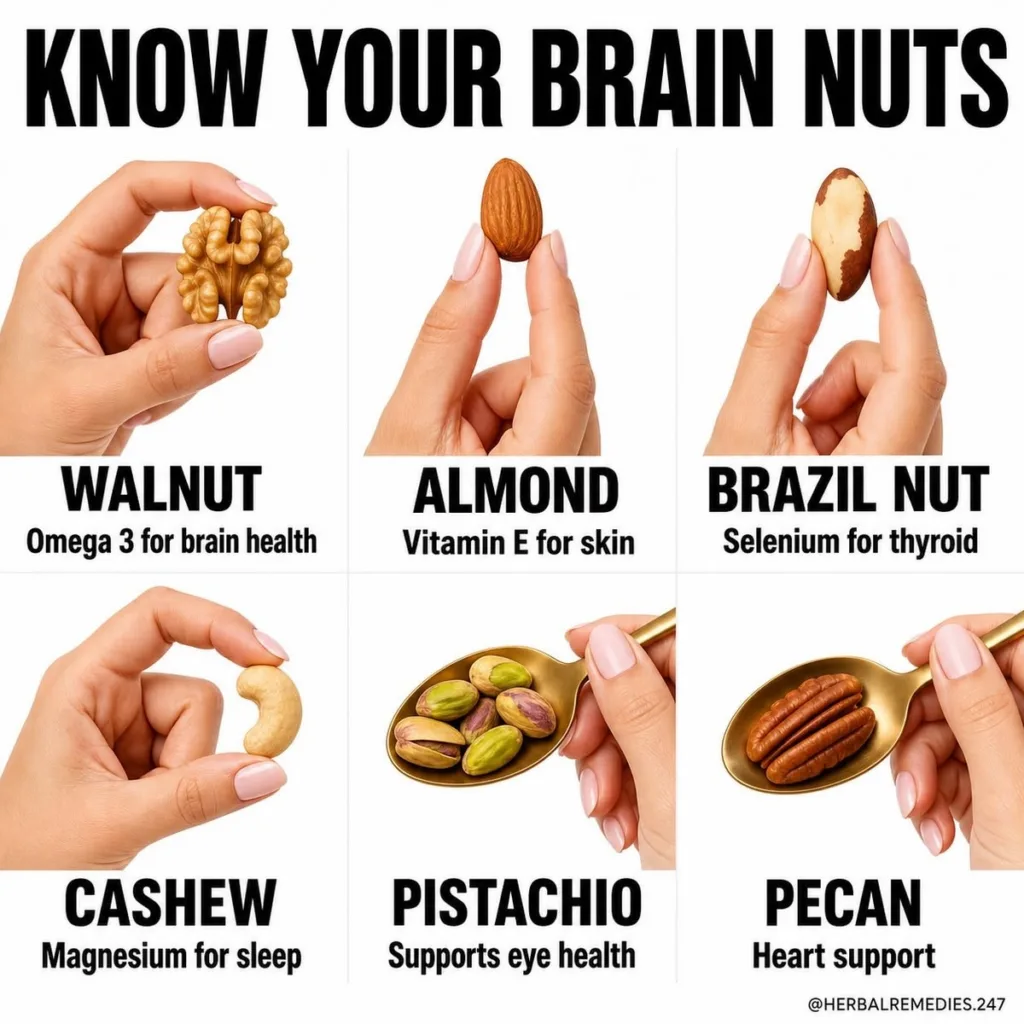
Often referred to as “brain food” due to their wrinkled, brain-like appearance, walnuts are indeed excellent for cognitive health. They are one of the richest plant-based sources of omega-3 fatty acids (alpha-linolenic acid or ALA), which are crucial for brain function and reducing inflammation.
- Main Nutrients: Omega-3s (ALA), vitamin E, antioxidants, copper, manganese.
- Best Benefit: May support brain health, memory, and reduce inflammation.
- Serving Suggestion: Add chopped walnuts to your morning oatmeal, sprinkle over salads, or enjoy as a standalone snack.
Almonds: Skin, Heart, and More
Almonds are incredibly versatile and packed with vitamin E, a powerful antioxidant that protects cells from damage. They are also great for bone health, skin vitality, and providing sustained energy.
- Main Nutrients: Vitamin E, magnesium, calcium, fiber, protein.
- Best Benefit: Supports skin health, heart health, and bone strength.
- Serving Suggestion: Enjoy a handful as a snack, use almond butter on toast, or add sliced almonds to yogurt.
Brazil Nuts: Selenium Stars
Just a couple of Brazil nuts a day can provide your entire recommended daily intake of selenium, an essential trace mineral with powerful antioxidant properties. Selenium is vital for thyroid function and immune health, and it may also play a role in brain protection.
- Main Nutrients: Selenium, magnesium, copper, zinc.
- Best Benefit: Excellent source of selenium, crucial for thyroid and immune function.
- Serving Suggestion: Eat 1-2 Brazil nuts per day as a snack; avoid overconsumption due to high selenium content.
Cashews: Creamy & Mineral-Rich
Cashews offer a creamy texture and a slightly sweet flavor. They are rich in healthy fats, essential minerals, and antioxidants. Cashews provide magnesium, which is important for nerve function, and zinc, vital for immune health.
- Main Nutrients: Magnesium, zinc, copper, iron, healthy fats.
- Best Benefit: Supports nerve function, immune system, and energy production.
- Serving Suggestion: Blend into smoothies for creaminess, add to stir-fries, or enjoy roasted and unsalted.
Pistachios: Antioxidant Gems
Pistachios are known for their vibrant green color and distinct flavor. They are among the lowest-calorie nuts and are particularly rich in antioxidants, including lutein and zeaxanthin, which are beneficial for eye health.
- Main Nutrients: Antioxidants (lutein, zeaxanthin), vitamin B6, fiber, protein.
- Best Benefit: Supports eye health and provides a good source of fiber.
- Serving Suggestion: Enjoy a handful of in-shell pistachios for a mindful snack, or sprinkle on salads and desserts.
Pecans: Heart-Healthy Goodness
Pecans are a southern favorite, prized for their rich, buttery flavor. They are high in monounsaturated fats, which are known to be heart-healthy, and provide a good amount of fiber and antioxidants.
- Main Nutrients: Monounsaturated fats, fiber, zinc, vitamin E.
- Best Benefit: Promotes heart health and provides powerful antioxidants.
- Serving Suggestion: Add to baked goods, sprinkle over sweet potatoes, or enjoy roasted.
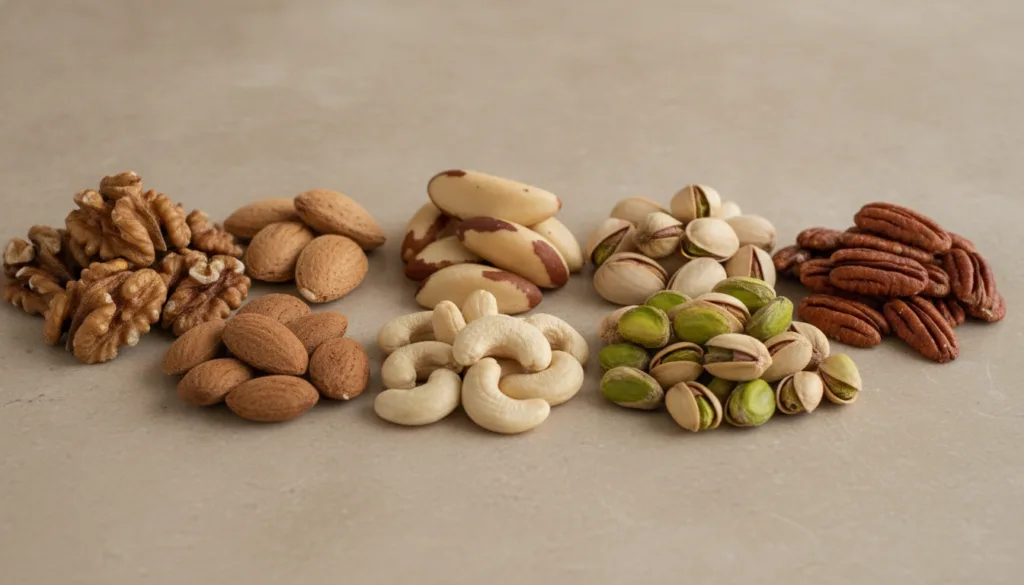
Nutrition Overview of Brain-Boosting Nuts (Per 1 oz / 28g Serving)
| Food | Calories | Protein (g) | Carbs (g) | Fat (g) | Fiber (g) | Main Nutrients | Best Benefit |
|---|---|---|---|---|---|---|---|
| Walnuts | 185 | 4 | 4 | 18 | 2 | Omega-3s, Vitamin E, Antioxidants | Brain health & anti-inflammation |
| Almonds | 164 | 6 | 6 | 14 | 3.5 | Vitamin E, Magnesium, Calcium | Skin health & strong bones |
| Brazil Nuts | 186 | 4 | 3 | 19 | 2 | Selenium, Magnesium | Thyroid & immune function |
| Cashews | 160 | 4 | 9 | 13 | 1 | Magnesium, Zinc, Copper | Nerve function & immune support |
| Pistachios | 160 | 6 | 8 | 13 | 3 | Antioxidants (Lutein, Zeaxanthin), B6 | Eye health & fiber |
| Pecans | 196 | 3 | 4 | 20 | 2.7 | Monounsaturated Fats, Zinc, Vitamin E | Heart health & antioxidants |
Practical Tips for Incorporating More Nuts
Adding more nuts to your diet is easier than you think! Here are some simple, delicious ways to enjoy their benefits:
- Morning Boost: Sprinkle chopped nuts on your oatmeal, yogurt, or whole-grain cereal.
- Salad Enhancer: Add a crunch to your salads with roasted almonds, pecans, or walnuts.
- Smart Snacking: Keep a small portion of mixed nuts on hand for a quick, satisfying snack between meals.
- Baking & Cooking: Incorporate nuts into healthy muffins, bread, or use them as a crust for fish or chicken.
- Nut Butters: Opt for natural nut butters without added sugar or oils as a spread on fruit or whole-wheat toast.
- Homemade Trail Mix: Combine your favorite nuts with dried fruit and a few dark chocolate chips for a custom snack.
FAQs About Nuts and Health
Are all nuts equally healthy?
While all nuts offer health benefits, their nutritional profiles vary. Some, like walnuts, are high in omega-3s, while others, like Brazil nuts, are packed with selenium. Eating a variety of nuts ensures you get a broad spectrum of nutrients.
How many nuts should I eat daily?
A typical serving is about one ounce (28 grams), which is roughly a small handful. This provides a good balance of nutrients without excess calories.
Can nuts help with weight loss?
Yes, in moderation. Nuts are high in healthy fats, fiber, and protein, which can increase satiety and reduce overall calorie intake by keeping you feeling full longer.
Are nuts suitable for a low-carb diet?
Many nuts, particularly almonds, pecans, and walnuts, are relatively low in carbohydrates and can be a great addition to a low-carb eating plan.
How should I store nuts to keep them fresh?
Due to their high fat content, nuts can go rancid. Store them in an airtight container in a cool, dark place. For longer shelf life, keep them in the refrigerator or freezer.
Can nuts cause allergies?
Yes, nut allergies are common and can be severe. If you have a nut allergy, it’s crucial to avoid all nuts and nut products.
Are roasted nuts as healthy as raw nuts?
Lightly roasted nuts are generally still very healthy. However, avoid nuts that are heavily salted or roasted in unhealthy oils, as these can add unnecessary sodium and unhealthy fats.
Conclusion
Nuts are truly tiny powerhouses, offering a wealth of benefits for your brain, heart, and overall well-being. By incorporating a variety of nuts into your daily diet, you can easily boost your intake of essential nutrients, healthy fats, and antioxidants. Whether you sprinkle them on your breakfast, snack on a handful, or add them to your cooking, nuts are a simple and delicious way to nourish your body and mind.
Start experimenting with different types of nuts today and feel the difference! Explore more healthy food content on our website for more delicious and nutritious ideas.
This content is for educational purposes only and should not be considered medical advice. Consult a qualified healthcare professional for personalized dietary recommendations.