Hey fellow garden enthusiasts! Have you ever stumbled upon a gardening ‘hack’ online that made you scratch your head and wonder, “Does that really work?” We certainly have! The world of plant care is full of fascinating theories, and today, we’re diving into one that’s been making the rounds: watering your beloved ZZ plant with a concoction of water, milk, and a touch of vanilla.
We recently spotted this intriguing method being used on a vibrant ZZ plant, and it sparked a buzzing conversation among our team. The idea of a “sweet treat” for our leafy friends sounds lovely, but what’s the real science behind it? Is this a secret to lush foliage, or could it potentially do more harm than good? Let’s explore together!
The “Recipe”: Water, Milk, and Vanilla for Plants
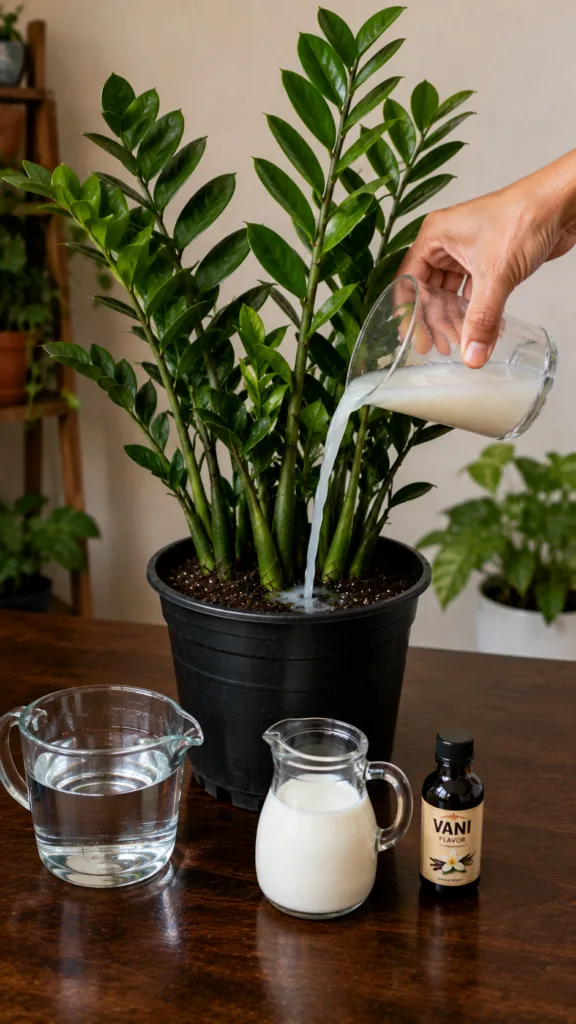
The method we observed involves a simple mixture:
- Water: The universal plant elixir, always essential.
- Milk: Typically whole or skim milk, often diluted.
- Vanilla Extract: A common kitchen flavoring.
The idea is to combine these ingredients and apply them as a regular or occasional “feed” to the plant’s soil. But what are the supposed benefits, and do they hold up?
The Theory Behind It: Why Milk and Vanilla?
Milk: A Source of Nutrients?
Some gardeners believe that milk can provide beneficial nutrients to plants. Milk contains calcium, which is important for cell wall development, and some proteins. It’s thought that these elements could promote stronger growth and healthier leaves.
Vanilla: Fragrance or Pest Repellent?
Vanilla extract, known for its pleasant aroma, might be thought to make your home smell nicer while watering. Less commonly, some might theorize it could deter certain pests, though this is largely unproven in gardening.
What the Science Says: Proceed with Caution!
While the intentions behind these “hacks” are usually good, it’s important to look at what’s genuinely helpful for our plants.
The Truth About Milk in Your Garden
While milk does contain nutrients, using it directly in potted plants, especially undiluted, can lead to several problems:
- Bacterial Growth: The sugars and fats in milk can encourage the growth of harmful bacteria and fungi in the soil. This can lead to unpleasant odors, soil imbalances, and even root rot.
- Pest Attraction: The decomposition of milk can attract unwanted pests like fungus gnats or even larger critters if used outdoors.
- Soil Compaction: As milk breaks down, it can leave behind a residue that may affect soil structure and aeration, making it harder for roots to breathe and absorb water.
- Nutrient Imbalance: Plants need a balanced diet. Relying on milk for nutrients can neglect other essential elements your plant needs.
If you’re considering using milk, extreme dilution (e.g., 1 part milk to 9 parts water) and very infrequent use might mitigate some risks, but it’s generally not recommended for regular feeding of houseplants like ZZ plants.
Vanilla Extract: More for Your Baking Than Your Blooms
Vanilla extract is primarily an aromatic compound. There’s no scientific evidence to suggest it offers any nutritional benefits to plants or acts as an effective pest deterrent when used in this manner. It’s more likely to simply add a scent to your soil without contributing to plant health. Some extracts also contain alcohol, which can be detrimental to delicate plant roots.
Is it a Genius Hack or Just a Fun Experiment?
Based on current gardening science, the “water, milk, and vanilla” mix for ZZ plants leans more towards a fun experiment than a proven genius hack. While the idea is interesting, the potential risks associated with milk (bacterial growth, pests, soil issues) often outweigh any theoretical benefits.
Simple, Proven Care Tips for Your Thriving ZZ Plant
Instead of unconventional concoctions, let’s focus on the tried-and-true methods that keep ZZ plants happy and healthy. They are wonderfully resilient and low-maintenance!
1. Light: Bright, Indirect is Best
ZZ plants tolerate low light, but they truly thrive in bright, indirect light. Avoid direct, harsh sunlight, which can scorch their leaves.
2. Watering: Less is More!
This is crucial! ZZ plants are drought-tolerant and prefer to dry out completely between waterings. Overwatering is the most common killer of ZZ plants. Stick your finger an inch or two into the soil; if it’s dry, it’s time to water. In winter, they need even less.
3. Soil: Well-Draining is Key
Use a well-draining potting mix, ideally one formulated for cacti and succulents, or a regular potting mix amended with perlite or coarse sand to improve drainage.
4. Humidity: They’re Not Picky
ZZ plants are not particular about humidity, making them perfect for most indoor environments.
5. Fertilization: Sparingly
Feed your ZZ plant with a balanced liquid houseplant fertilizer at half strength only a few times during the growing season (spring and summer). They don’t need much!
Your Turn!
We love exploring new ideas and learning together in the Garden – Thảo community! While we recommend sticking to scientifically-backed methods for plant care, it’s always fun to hear about the interesting things people try.
Have you ever tried an unconventional gardening hack? What were your results? Share your experiences and any tried-and-true ZZ plant care tips in the comments below!