There’s nothing quite like the joy of seeing your garden flourish – vibrant flowers, lush foliage, and healthy vegetables ripening in the sun. But sometimes, tiny invaders threaten to spoil this beautiful scene. Pests, particularly caterpillars and larvae, can quickly turn your green dreams into a chewed-up nightmare if not identified and managed promptly.
Understanding who your garden’s unwanted guests are is the first and most crucial step in protecting your plants. This guide will help you recognize common caterpillars and larvae, understand the damage they cause, and equip you with effective, eco-friendly strategies to keep your garden thriving.
Why Early Pest Identification Matters
You might be tempted to reach for the nearest solution when you see a damaged leaf, but a ‘spray and pray’ approach can do more harm than good. Proper identification is key for several reasons:
- Targeted Treatment: Different pests require different control methods. What works for a hornworm might not be effective against grubs. Identifying the specific culprit ensures you use the most efficient and least harmful solution.
- Prevent Widespread Damage: Many pests reproduce rapidly. Catching them early, before they multiply, can prevent minor damage from escalating into a full-blown infestation that devastates your plants.
- Protect Beneficial Insects: Your garden is home to many beneficial insects (like ladybugs and parasitic wasps) that actually help control pests. Broad-spectrum pesticides can harm these allies, disrupting your garden’s natural balance. Knowing your enemy allows you to choose methods that spare your friends.
- Healthier Plants: Early intervention means less stress on your plants, allowing them to recover faster and continue to grow strong and healthy.
Common Signs of Caterpillar and Larvae Damage
Before you even spot the pest, their feeding habits often leave distinct clues:
- Chewed Leaves: This is the most obvious sign. Look for holes, ragged edges, or skeletonized leaves where only the veins remain. Caterpillars are notorious for this.
- Frass (Pest Excrement): Small, dark pellets found on leaves or near the base of the plant are a tell-tale sign of actively feeding pests above.
- Tunnels or Borings: Some larvae, like squash vine borers or corn earworms, tunnel into stems, fruits, or roots, causing plants to wilt, rot, or die.
- Webbing: While not all caterpillars spin webs, some, like webworms, create silken tents around branches, protecting large colonies as they feed.
- Wilting or Stunted Growth: Root-feeding larvae (like grubs) can damage the root system, leading to overall plant decline, wilting, and poor growth even with adequate water.
Getting to Know Your Common Garden Pests
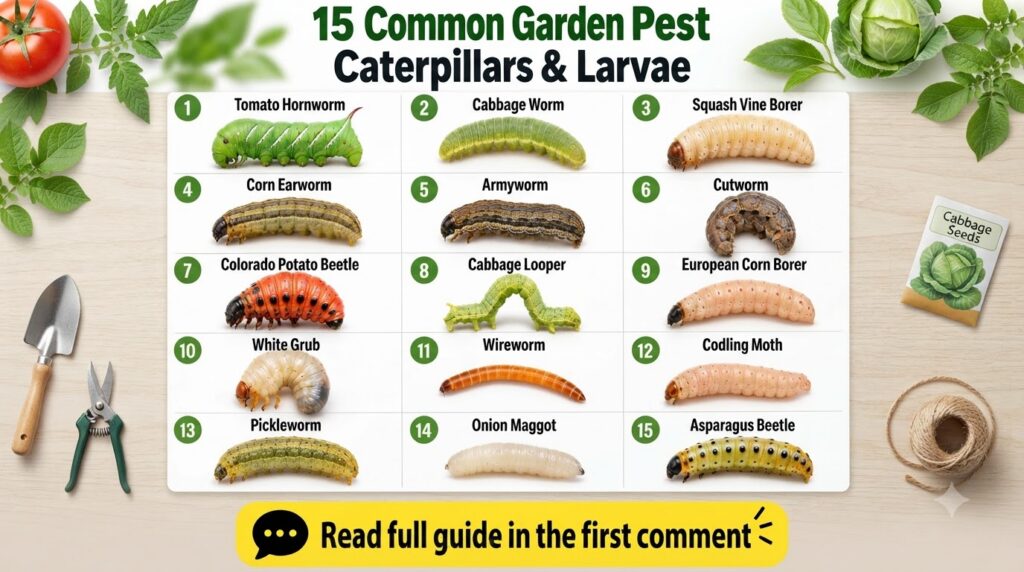
Let’s dive into some of the most frequent offenders you might encounter in your garden:
Tomato Hornworm (Manduca quinquemaculata)
These large, vibrant green caterpillars, often with V-shaped markings and a distinctive ‘horn’ at their rear, are masters of camouflage. They primarily target plants in the Solanaceae family, especially tomatoes, peppers, eggplants, and potatoes. Hornworms can defoliate a plant almost overnight. Look for large, dark frass pellets and stripped branches.
Cabbage Worm (Pieris rapae)
The larvae of the small white butterfly, cabbage worms are velvety green caterpillars that blend seamlessly with the leaves of brassica plants (cabbage, broccoli, kale, cauliflower). They chew irregular holes in leaves, often concentrating near the center of the plant. Their damage can lead to stunted growth and reduced harvests.
Cutworm
Cutworms are plump, grayish-brown larvae that typically curl into a C-shape when disturbed. They are nocturnal feeders, often hiding in the soil during the day. Their most damaging habit is severing young seedlings at the soil line, often leaving an entire row of plants toppled overnight. They can also feed on roots and foliage.
Grubs (White Grubs)
These C-shaped, creamy-white larvae with brown heads live underground, feeding on plant roots. They are the larval stage of various beetles, including Japanese beetles and June bugs. Grubs can cause significant damage to lawns, garden plants, and vegetable crops, leading to wilting, yellowing, and stunted growth as the root system is destroyed.
Eco-Friendly Strategies for Pest Management
Once you’ve identified your unwanted guests, it’s time for action! Here are some sustainable approaches:
- Regular Inspection: The best defense is a good offense. Regularly check the tops and undersides of leaves, stems, and soil for signs of pests or damage. Early detection makes control much easier.
- Hand-Picking: For larger pests like hornworms, hand-picking them off plants and dropping them into a bucket of soapy water is highly effective.
- Companion Planting: Some plants can deter pests. For example, marigolds are known to repel nematodes and other soil pests, while nasturtiums can act as a trap crop for aphids.
- Attract Beneficial Insects: Plant flowers like dill, fennel, cilantro, and cosmos that attract predatory insects (ladybugs, lacewings) and parasitic wasps, which feed on or lay eggs in pest larvae.
- Organic Pesticides: If an infestation is severe, consider organic options like Neem oil (disrupts feeding and growth) or Bacillus thuringiensis (Bt), a naturally occurring soil bacterium that specifically targets and kills caterpillars without harming other insects, pets, or humans. Always follow label instructions.
- Physical Barriers: Use row covers to protect young plants from flying insects laying eggs. Install collars around seedling stems to deter cutworms.
- Crop Rotation: Rotating your crops each season can break pest life cycles by depriving them of their preferred host plants.
Cultivate a Resilient Garden
Dealing with garden pests is an inevitable part of gardening, but it doesn’t have to be a losing battle. By taking the time to identify the specific caterpillars and larvae making a meal of your plants, you can apply targeted, eco-friendly solutions that protect your harvest and foster a healthier, more resilient garden ecosystem.
Remember, a thriving garden is a balanced one. Happy gardening!