There’s nothing quite as satisfying as harvesting your own homegrown vegetables. The taste, the freshness, and the pride of growing something from seed to plate are unparalleled. But a common question many gardeners, new and experienced alike, ask is: “When exactly are my vegetables ready to harvest?” Knowing the optimal harvest time is key to enjoying the best flavor and yield from your garden.
This guide will help you understand the typical growth cycles and tell-tale signs for some of your favorite garden staples, ensuring you never miss that perfect harvest moment!
Why Knowing Harvest Times is Crucial
- Optimal Flavor: Vegetables harvested at their peak ripeness offer the best taste and nutritional value.
- Maximum Yield: Harvesting at the right time encourages plants to produce more, especially for “cut-and-come-again” varieties.
- Garden Planning: Understanding growth durations helps you plan successive plantings and make the most of your garden space throughout the season.
- Reduced Waste: Avoiding premature or overly late harvests minimizes spoilage and ensures you enjoy every bit of your hard work.
Common Vegetables and Their Harvest Windows
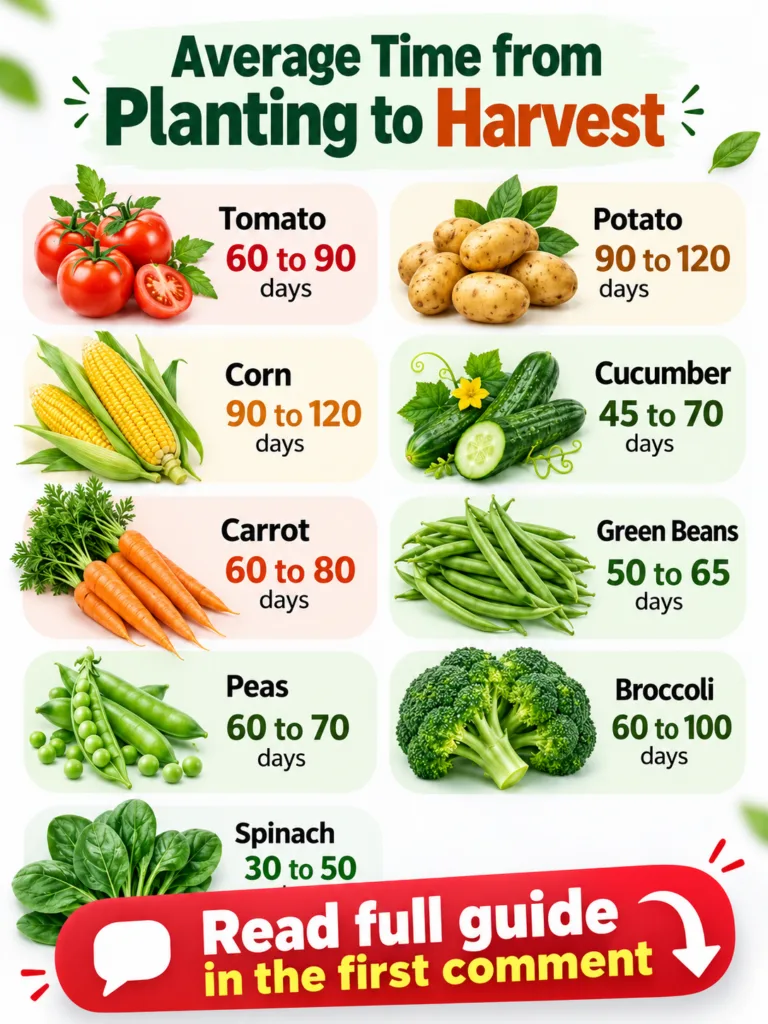
While specific times can vary based on climate, variety, and growing conditions, here’s a general guide:
Tomatoes (Typically 60-85 days from transplanting)
Ah, the beloved tomato! The sign of a perfectly ripe tomato is usually a vibrant, uniform color (red, yellow, or orange, depending on the variety) and a slight give when gently squeezed. They should also detach easily from the vine. Don’t wait until they’re overly soft, as they can quickly become mealy.
Potatoes (Typically 70-120 days from planting)
For “new potatoes” (smaller, tender), you can gently dig around the plant when it starts flowering, about 7-8 weeks after planting. For larger, mature potatoes suitable for storage, wait until the plant’s foliage begins to yellow and die back, usually 2-3 weeks after the plant has completely withered. This allows the skins to thicken, improving storage life.
Sweet Corn (Typically 60-100 days from planting)
Harvesting corn is an art! Look for silks that have turned brown and dry, and ears that feel plump and full when squeezed. A common trick is to peel back a small portion of the husk and puncture a kernel with your fingernail. If a milky liquid squirts out, it’s ready! If it’s watery, it’s too early; if pasty, it’s too late.
Spinach (Typically 30-45 days from planting)
Spinach is a fantastic “cut-and-come-again” crop. You can start harvesting outer leaves when they are about 3-4 inches long, leaving the central leaves to continue growing. Avoid letting the plant bolt (send up a flower stalk) as this makes the leaves bitter.
Carrots (Typically 60-80 days from planting)
Carrots are ready when their shoulders (the part just below the green foliage) start to emerge from the soil and are about 1/2 to 3/4 inch in diameter. Gently loosen the soil around a carrot or two and pull them up to check their size. Don’t leave them in the ground too long, or they might split or become woody.
Tips for a Bountiful Harvest
- Read Seed Packets: Always check your seed packets or plant tags for specific “days to maturity” information, as this can vary widely by variety.
- Observe Your Plants: Get to know the specific signs of ripeness for each vegetable you grow. Your plants will often tell you when they’re ready!
- Keep a Garden Journal: Documenting planting dates and harvest times can provide invaluable insights for future growing seasons.
- Succession Planting: For crops like lettuce, radishes, and spinach, plant small batches every 2-3 weeks to ensure a continuous harvest throughout the season.
- Morning Harvests: Many vegetables, especially leafy greens and root vegetables, taste best when harvested in the cool morning hours.
Happy Harvesting!
Gardening is a journey of continuous learning and joyful discovery. By paying attention to these harvest cues, you’ll be able to enjoy the freshest, most delicious produce your garden can offer. So, get out there, observe your plants, and reap the rewards of your hard work!
What are your favorite vegetables to harvest, and what’s your secret for knowing they’re perfectly ripe? Share your tips and experiences in the comments below!