Imagine the delightful fragrance and vibrant colors of fresh hyacinths filling your home, even in the depths of winter. The good news? You don’t need a garden or even soil to make this dream a reality! Growing hyacinth bulbs in water, a process known as ‘forcing,’ is an incredibly simple and rewarding way to bring the beauty of spring indoors.
This method is perfect for anyone looking to add a touch of nature to their living space, from seasoned gardeners missing their outdoor blooms to complete beginners seeking an easy, beautiful project. Plus, it’s a fantastic way to observe the magic of plant growth firsthand, watching roots emerge and flowers unfurl right before your eyes.
Why Choose Water Forcing for Your Hyacinths?
Forcing hyacinths in water offers several unique advantages:
- No Soil, No Mess: Forget about dirty hands and spilled potting mix. This method is incredibly clean.
- Visual Appeal: Special hyacinth forcing vases allow you to admire not just the flowers but also the elegant root system as it develops.
- Bring Nature Indoors: Enjoy fresh blooms and their intoxicating scent during colder months when outdoor gardening isn’t possible.
- Simple & Rewarding: It requires minimal effort but delivers maximum visual and aromatic pleasure.
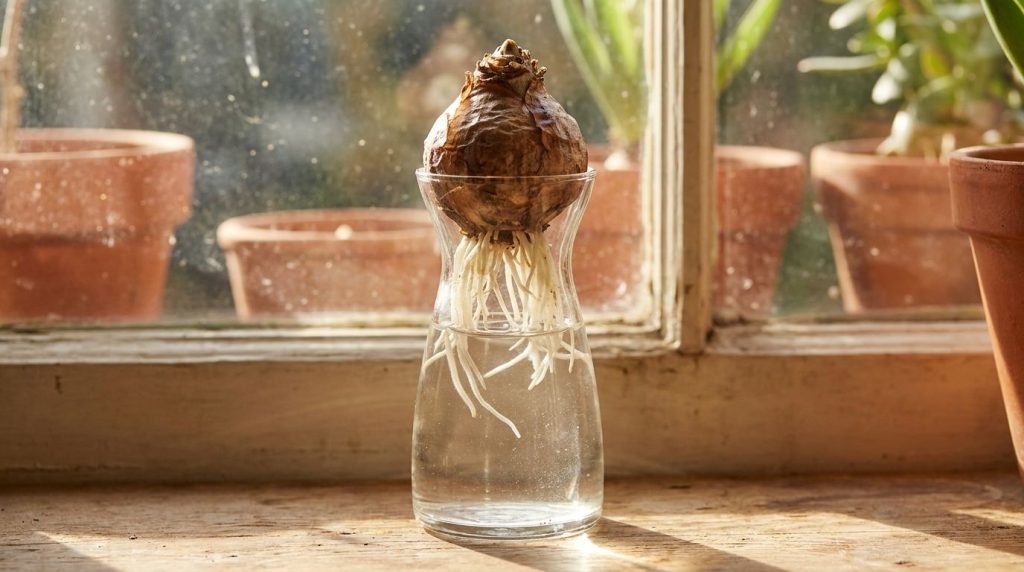 Witness the magic as hyacinth roots develop in clear water.
What You’ll Need for Water Forcing
Gathering your supplies is the first step towards enjoying beautiful indoor blooms:
- Hyacinth Bulbs: Look for large, firm, healthy bulbs. Many garden centers sell ‘prepared’ or ‘pre-chilled’ bulbs, which have already undergone the necessary cold treatment. If you buy unprepared bulbs, you’ll need to chill them yourself (more on that below).
- Hyacinth Forcing Vase (or suitable container): These specialized vases have a narrow neck to hold the bulb above the water, allowing only the base to touch. If you don’t have one, any glass jar or vase with a similar structure will work, perhaps with some support (like pebbles) to keep the bulb in place.
- Water: Tap water is usually fine.
- A Cool, Dark Place: Essential for the initial rooting phase (a basement, garage, or even the bottom shelf of your refrigerator).
Step-by-Step Guide to Forcing Hyacinths in Water
Step 1: Choose Your Bulbs Wisely
Opt for large, healthy, and blemish-free hyacinth bulbs. If your bulbs haven’t been ‘prepared’ for forcing, they’ll need a cold treatment. Place them in a paper bag or an open container in your refrigerator for 10-13 weeks. Keep them away from ripening fruit, as the ethylene gas can inhibit flowering.
Step 2: Set Up Your Forcing Vase
Fill your hyacinth forcing vase with water. The key is to fill it just to the point where the base of the bulb barely touches the water, or hovers slightly above it. The bulb itself should not be submerged, as this can lead to rot.
Step 3: Place the Bulb
Carefully set the hyacinth bulb in the neck of the vase. Ensure the pointed end is facing upwards. If you’re using a regular jar, you might need to use a few clean pebbles or marbles to create a stable platform for the bulb.
Step 4: The Chilling Period
This is crucial! Place your assembled vase in a cool, dark environment. An unheated basement, garage, or a dark cupboard that stays between 40-50°F (4-10°C) is ideal. The refrigerator can also work, but ensure the space is dark and consistently cool. This chilling period, which typically lasts 8-12 weeks, mimics winter and signals to the bulb that it’s time to grow roots.
Step 5: Monitor Root Growth
During the chilling period, check the water level every few days and top it up as needed, always ensuring the bulb’s base just touches the water. You’ll start to see roots emerging and growing downwards into the water. After a few weeks, a small green shoot should also begin to appear from the top of the bulb.
Step 6: Move to a Brighter Spot
Once the roots are well-developed (filling a good portion of the vase) and the shoot is about 2-4 inches tall, it’s time to move your hyacinth. Gradually introduce it to a brighter, slightly warmer location. Start with a dim area, then move it to a spot with indirect light, and finally to a bright window.
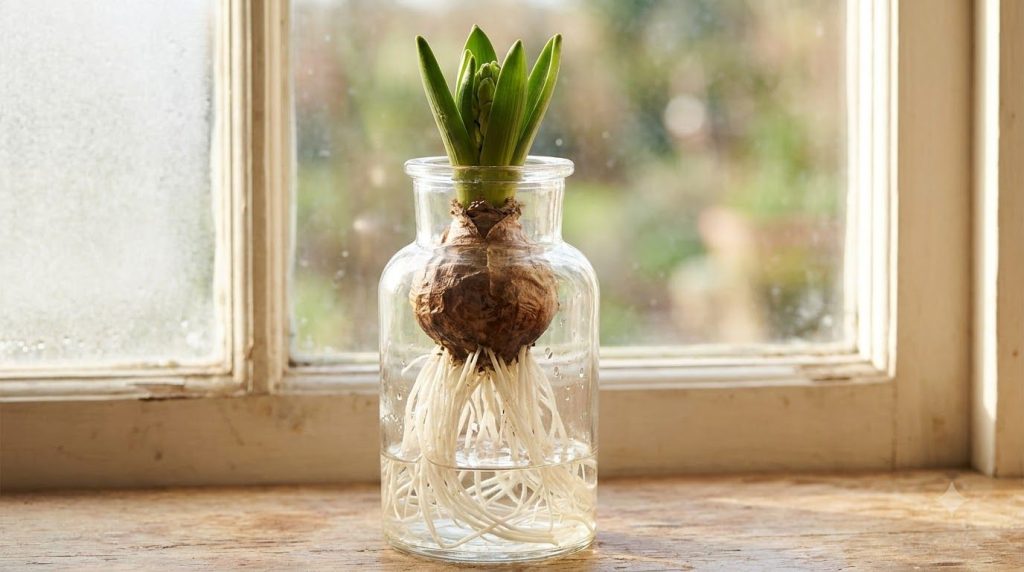 After the chilling period, move your hyacinth to a bright spot to encourage flowering.
Step 7: Enjoy the Bloom!
As the plant receives more light and warmth, the flower stalk will rapidly grow and bloom. This usually takes a few weeks. The blooms typically last for about 1-2 weeks, filling your home with their sweet, strong perfume.
Step 8: Ongoing Care
Keep the water level consistent, ensuring the roots are always submerged. Change the water weekly to keep it fresh and prevent algae growth. You might notice the roots absorbing nutrients from the water, which can sometimes make the water look a little cloudy – a fresh change will clear this up.
Troubleshooting Common Issues
- No Growth After Chilling: Ensure your bulbs were properly chilled and that they were healthy to begin with. Some bulbs may simply be duds.
- Rotten Bulb: If your bulb feels soft or slimy, it’s likely rotting. This usually happens if the bulb was submerged too deeply in water or if the water wasn’t changed regularly. Discard and start over.
- Leggy or Weak Growth: If your hyacinth grows very tall and floppy without strong flowers, it might not have received enough light after the chilling period.
After Flowering
Once your hyacinth has finished blooming, the bulb has used most of its energy and is unlikely to perform well if forced in water again. You can try planting it outdoors in your garden after the last frost, but it may take a year or two to recover and bloom again, if at all. For best results next season, it’s generally recommended to start with fresh, prepared bulbs.
Embrace the Indoor Garden!
Forcing hyacinths in water is a delightful and accessible way to enjoy fresh flowers and their enchanting fragrance, regardless of the season. It’s a testament to the simple joys of gardening and a perfect project for anyone wanting to cultivate a little bit of natural beauty indoors. So why wait? Grab some bulbs and vases, and get ready to welcome spring into your home!