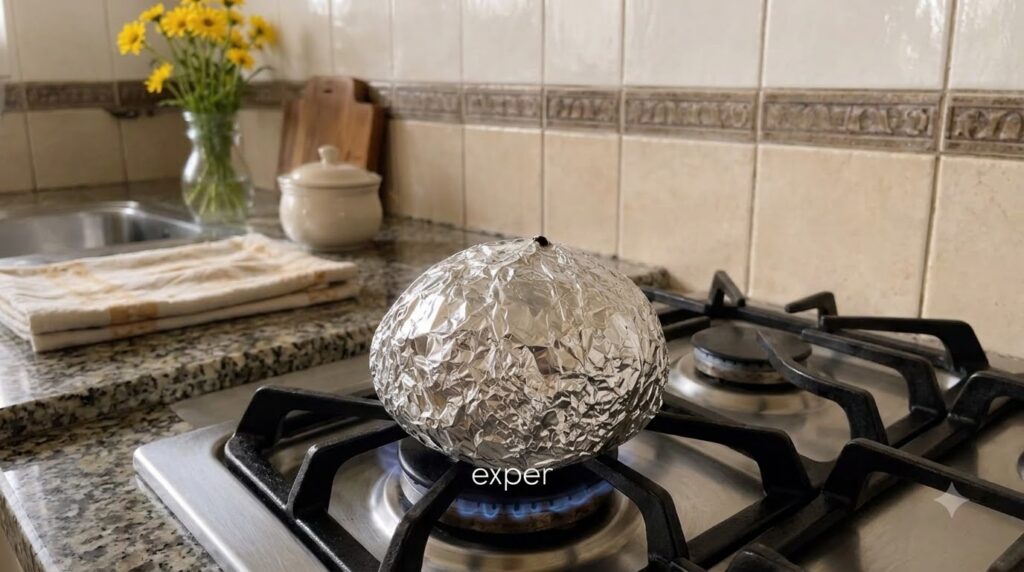
Craving a warm, fluffy baked potato but don’t want to fire up the whole oven? Or maybe you’re looking for a simple, hands-on cooking method that delivers delicious results? This clever stovetop technique allows you to cook a whole potato directly on your gas burner, turning a simple ingredient into a tender, satisfying meal. It’s surprisingly efficient, creates a beautifully soft interior, and offers a fun alternative to traditional baking methods.
What You’ll Need
- 1 medium to large potato (such as Russet or Yukon Gold)
- Heavy-duty aluminum foil
- 1 tablespoon olive oil (optional, for flavor and a slightly crisper skin)
- Pinch of salt and black pepper (optional)
Tools
- Gas stove burner
- Kitchen tongs
- Fork (for testing doneness)
Why This DIY Can Be Useful
This method works by essentially creating a miniature oven for your potato. The direct heat from the gas burner transfers through the aluminum foil, slowly cooking the potato from the outside in. The foil itself traps moisture, helping to steam the potato from within, which results in a wonderfully tender and fluffy interior. It’s a quick and efficient way to cook a single potato without waiting for an oven to preheat, and it can even impart a unique, subtle char flavor depending on how long you cook it.
How to Make It
- Prepare the Potato: Wash and scrub your potato thoroughly under running water to remove any dirt. Pat it completely dry with a paper towel.
- Season (Optional): If desired, rub the potato with olive oil and sprinkle with salt and black pepper. This step adds flavor and can help achieve a slightly more textured skin.
- Wrap Tightly: Wrap the potato securely in a double layer of heavy-duty aluminum foil. Ensure there are no gaps or tears in the foil to prevent direct flame exposure to the potato. The tighter the wrap, the better it will retain heat and moisture.
- Prepare the Burner: Place the foil-wrapped potato directly onto a gas stove burner. Turn the burner on to a low-medium flame.
How to Use It
- Start Cooking: Place the wrapped potato on the lit burner.
- Rotate Regularly: Allow the potato to cook for about 15-20 minutes on one side. Using kitchen tongs, carefully turn the potato to expose a different side to the flame. Continue this process, turning the potato every 15-20 minutes, until all sides have been cooked.
- Check for Doneness: The total cooking time will depend on the size of your potato, typically ranging from 45 to 90 minutes. To check if it’s done, carefully use tongs to slightly unwrap a small section of the foil. Gently pierce the potato with a fork. It should feel very tender and the fork should slide in easily. If it’s still firm, re-wrap it tightly and continue cooking, rotating as before.
- Rest and Serve: Once cooked to your liking, remove the potato from the heat using tongs. Let it rest for a few minutes while still wrapped. Then, carefully unwrap it completely, slice it open, and add your favorite toppings like butter, sour cream, chives, or cheese.
What to Expect
You can expect a delightfully soft and fluffy interior, much like a traditional oven-baked potato. The skin, while not as crispy as one from an oven, will be tender and absorb some of the cooking flavors. You might notice some charring on the aluminum foil itself, which is normal and contributes to the unique, subtle smokiness of a stovetop-cooked potato.
Helpful Tips
- Heavy-Duty Foil is Key: Using strong, heavy-duty foil prevents it from tearing during cooking, ensuring the potato remains protected and steams effectively.
- Control the Flame: Keep the gas flame on low to medium. A flame that is too high can burn the potato’s exterior before the interior has a chance to cook through.
- Even Cooking: Consistent rotation is crucial for even cooking. Don’t let one side sit on the flame for too long without turning.
- Flavor Boost: For an extra layer of flavor, consider adding a small pat of butter, a crushed garlic clove, or a sprig of rosemary inside the foil with the potato before wrapping.
Important Notes / Safety
- Extreme Heat: The aluminum foil and the potato will become extremely hot. ALWAYS use kitchen tongs to handle them. Never touch with bare hands.
- Open Flame: Be mindful of the open gas flame. Ensure good ventilation in your kitchen and keep flammable items away from the stove.
- Full Cook: Ensure the potato is fully cooked before consumption to avoid an unappetizingly firm or raw center.