Most people view purslane as a weed and garlic as a kitchen staple. However, when these two powerhouse ingredients are combined, they offer a surprisingly effective and simple natural remedy for various skin irritations. Forget complex formulas; sometimes the best solutions are found right underfoot or in your pantry. This guide will show you how to harness their combined power into a soothing paste that’s easy to make and even easier to use.
We often rush to chemical creams for minor skin issues, overlooking the potent, natural alternatives that have been trusted for centuries. Purslane, rich in antioxidants and omega-3 fatty acids, and garlic, celebrated for its antimicrobial properties, create a formidable duo. Understanding how to prepare and apply them correctly can make all the difference in achieving relief from everyday skin discomforts.
What It Is: Your Natural Skin Soothing Duo
This remedy combines fresh purslane (Portulaca oleracea), a succulent plant known for its cooling and anti-inflammatory properties, with raw garlic (Allium sativum), famous for its antiseptic and immune-boosting benefits. Together, they form a simple paste designed to be applied topically to soothe irritated skin, reduce redness, and offer a natural defense against minor skin issues.
Purslane is a succulent herb found in many gardens, often mistaken for a common weed. Its fleshy leaves and stems are packed with beneficial compounds, including vitamins, minerals, and potent antioxidants. Garlic, on the other hand, is a well-known culinary ingredient with a long history in traditional medicine, particularly for its sulfur compounds like allicin, which give it its distinctive smell and therapeutic effects.
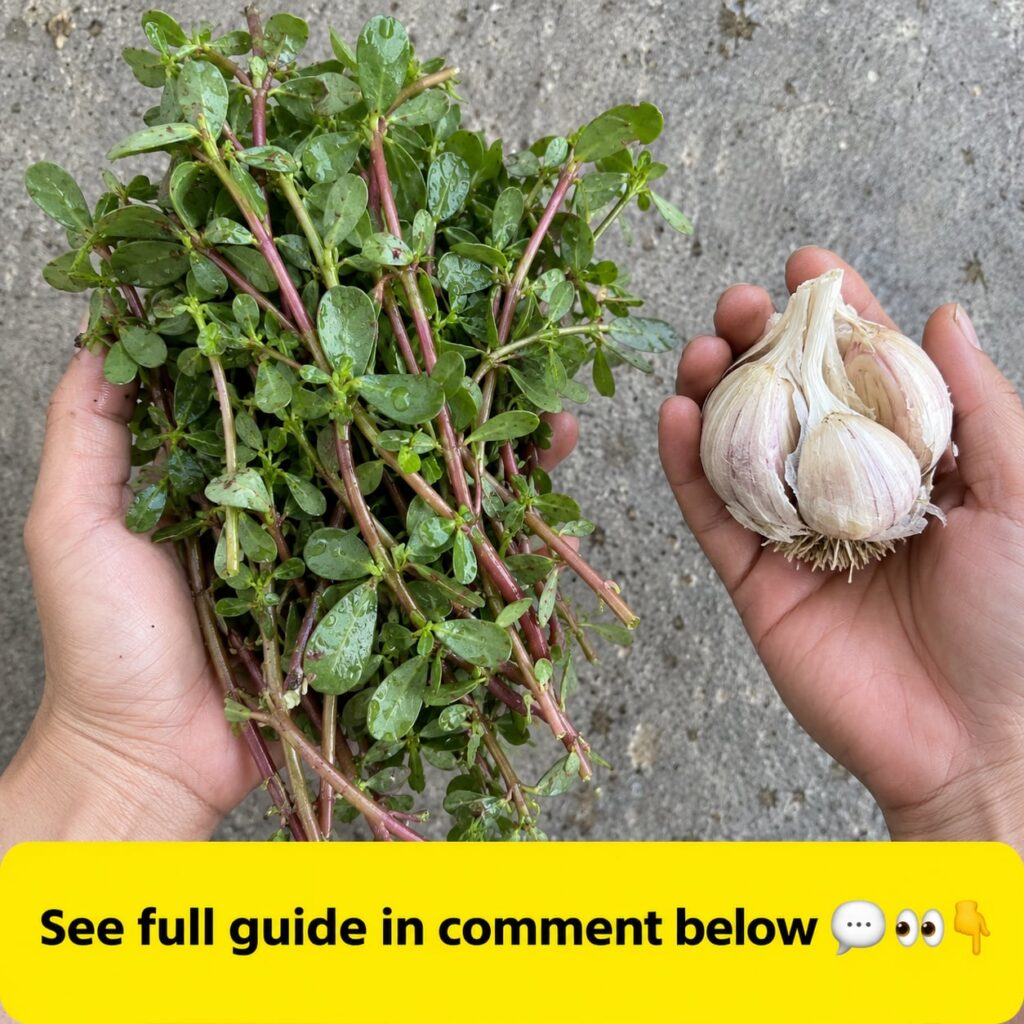 Fresh purslane and garlic, ready for preparation.
Why This Combination Works
Purslane’s high antioxidant content, including vitamins A, C, and E, as well as glutathione, helps combat oxidative stress on the skin. Its omega-3 fatty acids contribute to reducing inflammation, making it excellent for soothing redness and irritation. Garlic’s allicin, released when crushed, provides strong antimicrobial and antifungal properties, which can be beneficial in preventing secondary infections in minor skin breaks or irritations. The synergy between these two ingredients offers a comprehensive approach to natural skin care.
Ingredients for Your Purslane & Garlic Paste
- 1 cup fresh purslane (leaves and tender stems)
- 2-3 medium-sized cloves of fresh garlic
- 1-2 tablespoons distilled water (or filtered water)
Approximate Measurements
The key to this paste is consistency. You want it thick enough to stay on the skin but thin enough to spread. Adjust the water content gradually. A good starting point is approximately a 4:1 ratio of purslane to garlic by volume, with just enough water to create a smooth paste.
Formula / Recipe: The Soothing Skin Paste
This recipe focuses on creating a topical application. For internal use, always consult a healthcare professional. The goal here is a concentrated, easy-to-apply remedy for external skin relief.
Quick Tip: Fresh vs. Dried Purslane
For this specific remedy, fresh purslane is highly recommended. Its succulent nature provides natural moisture and ensures you get the full spectrum of beneficial compounds. Dried purslane can be used in teas, but for a topical paste, fresh is superior for its texture and potency.
FeatureFresh PurslaneDried PurslaneTextureSucculent, juicy, easy to blend into a pasteBrittle, requires rehydration, less suitable for pasteNutrient DensityHigher concentration of heat-sensitive vitamins (A, C) and omega-3sSome nutrient loss due to drying processBest Use For RemedyTopical pastes, poultices, fresh juicesTeas, infusions, internal remedies (after rehydration)AvailabilitySeasonal, can be found in gardens or farmers’ marketsYear-round, available in herbal stores
Step-by-Step Method
- Harvest and Clean Purslane: Gently wash the fresh purslane under cool running water. Pay attention to removing any soil or small insects. Pat dry with a clean cloth. Remove any tough, woody stems, keeping only the leaves and tender parts.
- Prepare Garlic: Peel the garlic cloves. You can lightly crush them with the side of a knife to make peeling easier.
- Mince or Chop: Finely mince the garlic cloves. For the purslane, roughly chop it into smaller pieces to facilitate blending.
- Combine and Blend: Place the chopped purslane and minced garlic into a mortar and pestle or a small food processor. Begin to grind or pulse them.
- Add Water Gradually: As you grind, add distilled or filtered water, one tablespoon at a time. The goal is to achieve a smooth, spreadable paste consistency. Avoid making it too watery, as it will be difficult to apply.
- Achieve Desired Consistency: Continue blending until no large pieces remain and the mixture is uniform. It should resemble a thick, bright green-to-pale green paste.
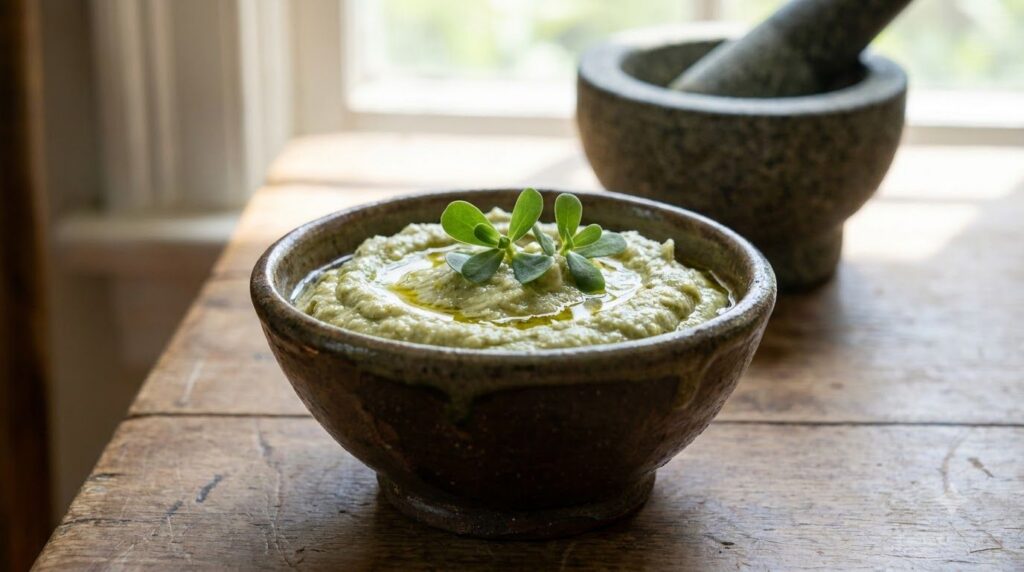 The freshly prepared purslane and garlic paste.
How to Use This Remedy
Once your paste is ready, apply a thin, even layer directly to the affected skin area. This remedy is ideal for minor skin irritations, insect bites, small rashes, or areas of redness and inflammation. Avoid applying it to open wounds or broken skin.
Gently spread the paste using clean fingertips or a soft, clean spatula. Allow the paste to sit on the skin for 15-20 minutes. You might feel a slight tingling sensation from the garlic; this is normal. If irritation becomes uncomfortable, remove it immediately.
How Often to Use It
For best results, apply the purslane and garlic paste 1-2 times daily, as needed, until the irritation subsides. Discontinue use if you notice any adverse reactions such as increased redness, itching, or swelling. Consistency is key, but listen to your skin’s response.
How to Buy / How to Choose Ingredients
Choosing Purslane
- Freshness: Look for vibrant green leaves and firm, reddish stems. Avoid any wilted, yellowed, or bruised purslane.
- Source: Ideally, choose organic purslane from a reliable farmer’s market or grow it yourself. If foraging, ensure the area is free from pesticides and pollutants.
Choosing Garlic
- Firmness: Select garlic bulbs that are firm to the touch, without any soft spots or green sprouts, which indicate older garlic.
- Skin: The papery skin should be intact and free from mold.
Storage
For Ingredients
- Purslane: Store fresh purslane in a plastic bag in the refrigerator for up to 3-5 days. It’s best used as fresh as possible.
- Garlic: Whole garlic bulbs can be stored in a cool, dry, dark place for several weeks or even months.
For the Paste
The fresh paste is best used immediately. If you have any leftover, store it in an airtight container in the refrigerator for no more than 24 hours. The potency of the garlic’s active compounds decreases rapidly once crushed, and the purslane can oxidize. Discard any paste that shows signs of discoloration or an off smell.
Practical Tips
- Patch Test: Always perform a patch test on a small, inconspicuous area of your skin before applying the paste widely, especially if you have sensitive skin.
- Freshness Matters: The effectiveness of this remedy heavily relies on the freshness of both purslane and garlic. Use them soon after harvesting or purchasing.
- Adjust Garlic: If you find the garlic too potent or experience significant tingling, reduce the amount of garlic cloves in your next batch.
- Cleanliness: Ensure all tools (mortar and pestle, food processor, hands) are thoroughly clean to prevent contamination.
Common Mistakes
- Using Old or Wilted Ingredients: This significantly reduces the potency and therapeutic value of the paste.
- Applying to Open Wounds: While garlic has antimicrobial properties, applying raw garlic to open wounds can cause severe irritation and burning.
- Ignoring a Patch Test: Skipping this step can lead to widespread skin irritation or an allergic reaction if your skin is sensitive to one of the ingredients.
- Making the Paste Too Watery: A runny paste won’t adhere to the skin effectively, reducing its contact time and efficacy.
- Storing for Too Long: The active compounds in both ingredients degrade quickly once prepared, making prolonged storage ineffective and potentially unsafe.
Cautions / Who Should Avoid It
- Sensitive Skin: Individuals with highly sensitive skin should exercise extreme caution and perform a patch test.
- Allergies: If you have a known allergy to purslane, garlic, or other plants in the lily family (for garlic), avoid this remedy.
- Open Wounds or Broken Skin: Do not apply to cuts, open sores, or severely broken skin.
- Pregnant or Breastfeeding Individuals: Consult a healthcare professional before using any new herbal remedies.
- Blood Thinners: While topical, garlic can have systemic effects in large quantities or with prolonged use. If you are on blood-thinning medication, consult your doctor before regular use.
- Children: Use with caution on children, always performing a patch test and observing for irritation.
Quick Summary
This purslane and garlic paste is a simple, natural remedy for minor skin irritations. Prepare it fresh using vibrant purslane and firm garlic. Blend with a little water to a spreadable consistency. Apply a thin layer to affected areas for 15-20 minutes, 1-2 times daily. Always patch test and avoid open wounds. Store unused paste for no more than 24 hours in the refrigerator. Listen to your skin and discontinue if irritation occurs.
FAQ
Can I use dried purslane for this paste?
It’s highly recommended to use fresh purslane for this paste. Its succulent texture and higher nutrient content are crucial for the effectiveness and consistency of the remedy. Dried purslane is better suited for teas or infusions.
How long does the fresh paste last?
The paste is most potent and effective when used immediately after preparation. You can store any leftover paste in an airtight container in the refrigerator for up to 24 hours, but its efficacy will diminish quickly.
Can I freeze the purslane and garlic paste?
Freezing is not recommended for this paste. The delicate compounds in both purslane and garlic, especially allicin in garlic, degrade upon freezing and thawing, significantly reducing the remedy’s effectiveness.
What part of the purslane plant is best to use?
Use the leaves and tender stems of the purslane plant. Avoid any thick, woody stems as they are difficult to blend and may not offer the same therapeutic benefits.
Can I use more garlic for a stronger effect?
While garlic is potent, using too much can cause skin irritation or even burns, especially for sensitive skin. It’s best to stick to the recommended 2-3 cloves and perform a patch test. You can always adjust in subsequent batches if your skin tolerates it well.
Is the tingling sensation from the garlic normal?
Yes, a mild tingling sensation is normal due to the active compounds in garlic. However, if the tingling becomes intense, painful, or turns into a burning sensation, remove the paste immediately and rinse your skin thoroughly with cool water.
Can this paste treat acne?
While garlic has antimicrobial properties that might help with some forms of acne, this paste is primarily designed for general skin irritation and inflammation. For persistent or severe acne, it’s best to consult a dermatologist.
Conclusion
In a world full of complex remedies, the simple combination of purslane and garlic stands out as a testament to nature’s healing power. This easy-to-prepare paste offers a practical, effective way to soothe various skin irritations using ingredients often found right in your garden or kitchen. By understanding the proper preparation, application, and necessary precautions, you can harness these natural wonders for your skin’s well-being. Embrace the simplicity and potency of this traditional duo and give your skin the gentle, natural care it deserves.