There’s nothing quite as rewarding as plucking a ripe, juicy tomato from your own garden. But sometimes, these beloved plants need a little extra love to truly thrive. If you’ve ever dealt with sad, struggling tomato plants or the dreaded blossom end rot, you know the frustration. The good news? Nature offers a simple, sustainable, and incredibly effective solution right from your kitchen: eggshells!
At Garden – L. Quyên, we believe in nurturing our plants with natural methods, and this DIY eggshell fertilizer is a game-changer for tomato enthusiasts. It’s easy to make, eco-friendly, and packed with essential nutrients to help your tomatoes flourish.
Why Eggshells Are Your Tomato’s Best Friend
Eggshells are primarily composed of calcium carbonate, which is vital for strong cell walls and overall plant health. For tomatoes, calcium is particularly crucial in preventing a common issue called blossom end rot. This unsightly problem appears as a dark, sunken spot on the bottom of the fruit, often caused by a calcium deficiency or inconsistent watering that affects calcium uptake.
By providing a steady supply of calcium in an easily absorbable form, eggshell fertilizer helps your tomato plants develop robust fruits, resist stress, and grow vigorously. Plus, it’s a fantastic way to recycle kitchen waste and reduce your garden’s environmental footprint!
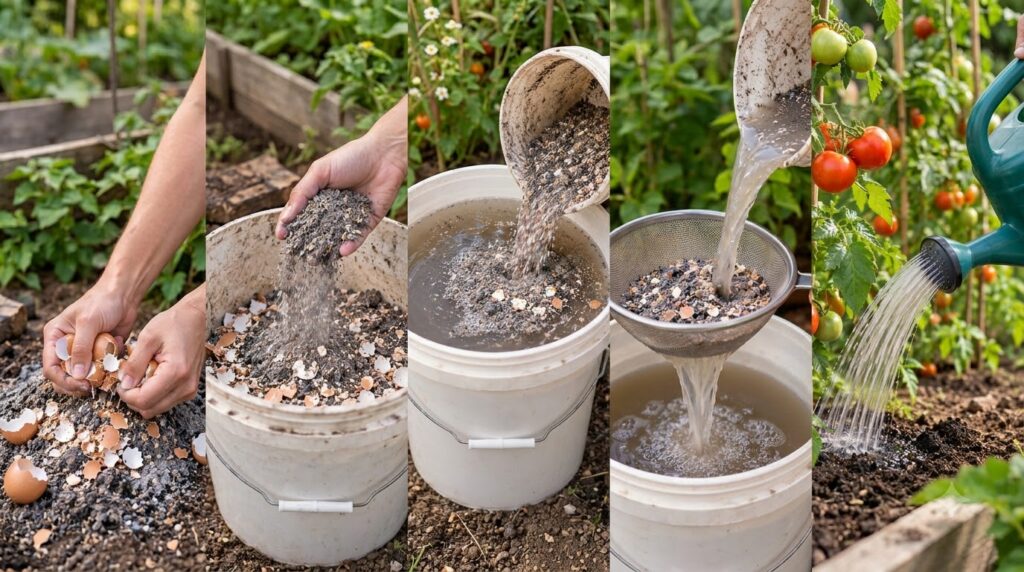
DIY Eggshell Fertilizer: Nature’s Recipe for Healthy Tomatoes
Ready to give your tomato plants the calcium boost they deserve? Here’s a step-by-step guide to making your own liquid eggshell fertilizer:
What You’ll Need:
- 10-12 clean, dried eggshells (collect them over time!)
- 1 gallon (approx. 3.8 liters) of water
- A large bucket or container
- A stirring stick
- A fine-mesh sieve or cheesecloth
- An old plastic bottle or watering can for application
- Optional: A handful of compost or other organic materials (as seen in the image context) for an extra nutrient kick.
The Process:
Step 1: Prepare Your Eggshells
After using eggs, rinse the shells thoroughly to remove any egg residue. It’s crucial to dry them completely to prevent mold. You can air dry them, or for faster results, bake them in an oven at 200°F (93°C) for about 10-15 minutes.
Step 2: Crush Them Up!
Place the dried eggshells in a strong bag or wrap them in a towel and crush them into small pieces using a rolling pin or even your hands. The smaller the pieces, the more surface area there is for calcium to leach out into the water.
Step 3: Steep and Brew Your Solution
Add the crushed eggshells to your large bucket. Pour in 1 gallon of water. If you’re adding optional organic materials, now is the time to mix them in. Stir well. Cover the bucket loosely to allow for air circulation but keep debris out, and let it sit for at least 24 hours, or up to a week, stirring daily. This allows the calcium to dissolve into the water.
Step 4: Strain and Collect
After steeping, use a fine-mesh sieve or cheesecloth to strain the liquid into another container, removing all the solid eggshell pieces and any other organic matter. You’ll be left with a cloudy, nutrient-rich liquid!
Step 5: Dilute and Apply
While the eggshell tea is gentle, it’s always good practice to dilute it. Mix your eggshell solution with an equal part of plain water (e.g., 1 part eggshell solution to 1 part water). Use this diluted solution to water your tomato plants directly at the base.
Tips for Application:
- Frequency: Apply this fertilizer every 2-4 weeks during the growing season, especially when fruits are starting to form.
- Time of Day: Water your plants in the early morning or late afternoon to prevent rapid evaporation and ensure maximum absorption.
- Soil Health: For best results, ensure your soil is well-draining and rich in organic matter. Healthy soil microbiology aids in nutrient uptake.
- Prevention is Key: Start applying eggshell fertilizer before blossom end rot becomes an issue, typically when flowers appear.
Beyond Tomatoes: Other Plants That Love Calcium
While tomatoes greatly benefit, many other plants can also appreciate a calcium boost from eggshell fertilizer. Think peppers, squash, cucumbers, and even roses! It’s a versatile solution for many plants in your garden.
Embrace Sustainable Gardening
Using DIY eggshell fertilizer is more than just feeding your plants; it’s about embracing a sustainable gardening philosophy. You’re reducing waste, avoiding synthetic chemicals, and fostering a healthier ecosystem in your garden. It’s a win-win for your plants and the planet!
Give this nature’s recipe a try and watch your tomato plants thrive, producing an abundance of delicious, healthy fruit. Happy gardening!