Do you dream of a garden overflowing with vibrant, healthy roses, but find yourself battling common rose ailments or struggling with lackluster growth? What if we told you there’s an innovative gardening technique that could unlock a secret to more vigorous, resilient rose bushes? Welcome to the fascinating world of grafting, where a little ingenuity can lead to extraordinary results!
At Garden – L. Quyên, we’re always exploring new ways to help your plants thrive. Today, we’re diving into an intriguing method that’s gaining popularity among keen gardeners: grafting roses onto tomato roots. Yes, you read that right – tomatoes! This seemingly unusual pairing can offer your roses a significant advantage, leading to stronger plants and more abundant blooms.
Why Graft Roses onto Tomato Roots?
Grafting is an ancient horticultural technique where tissues of plants are joined so as to continue their growth together. In this case, we’re taking the desirable top part of a rose (the scion) and attaching it to the root system of a tomato plant (the rootstock). But why a tomato?
- Disease Resistance: Tomato rootstocks are often more resistant to certain soil-borne diseases and nematodes that can plague traditional rose roots. This can give your rose a healthier foundation from the start.
- Vigor and Growth: Tomato root systems are known for their robust growth and efficient nutrient uptake. When a rose scion is grafted onto them, it can benefit from this vigor, leading to faster growth and stronger stems.
- Adaptability: Tomato roots can sometimes adapt better to various soil conditions, including poorer soils, providing a more stable base for your roses.
It’s a clever way to combine the beauty of your favorite rose variety with the resilience of a common garden plant!
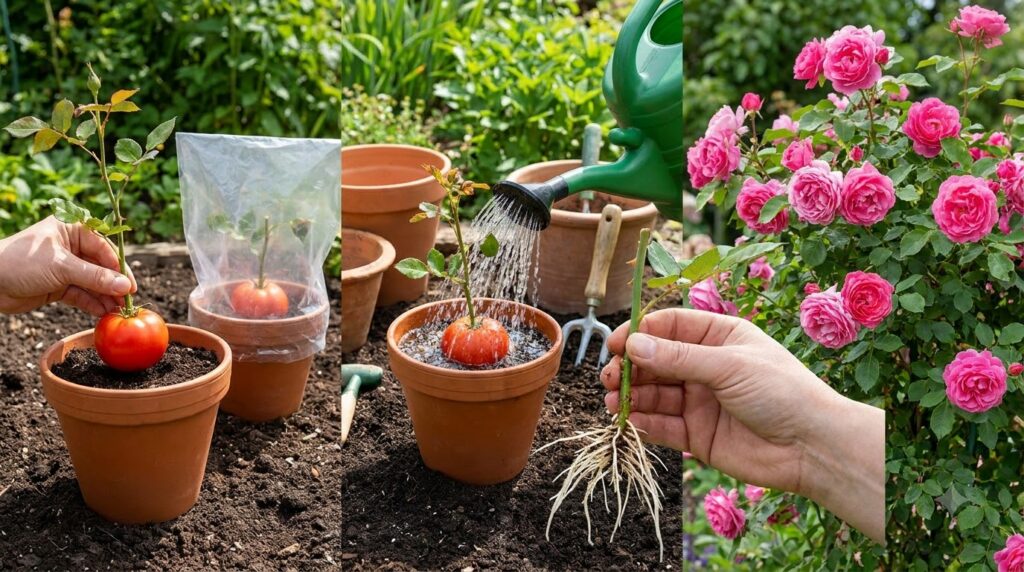
How to Graft Roses onto Tomato Roots: A General Guide
While this technique requires precision and practice, the basic steps are straightforward. Here’s a general overview of the process:
1. Gather Your Materials
- Healthy Rose Scion: Choose a disease-free, current season’s growth stem from your desired rose variety, about 4-6 inches long with 2-3 buds.
- Tomato Rootstock: Select a vigorous tomato seedling, preferably a common, disease-resistant variety, with a strong stem.
- Sharp Grafting Knife or Razor Blade: Sterilize your tool before use.
- Grafting Tape or Clips: To secure the union.
- Potting Mix and Small Pots: For planting the grafted plant.
- Plastic Bag or Dome: To create a humid environment.
2. Prepare Your Plants
Make clean, precise cuts on both the rose scion and the tomato rootstock. The goal is for the cambium layers (the green layer just under the bark) of both plants to align perfectly when joined. Common methods include ‘cleft grafting’ or ‘whip and tongue grafting,’ depending on stem thickness.
3. Join and Secure
Carefully align the cut surfaces of the rose scion and the tomato rootstock, ensuring the cambium layers meet. Secure the union tightly with grafting tape or a specialized grafting clip. This pressure helps the tissues knit together.
4. Pot and Create a Humid Environment
Plant the newly grafted rose-tomato combo in a small pot with sterile potting mix. Water gently. To prevent the scion from drying out before it can draw water from the new rootstock, cover the entire plant with a clear plastic bag or a humidity dome. This creates a miniature greenhouse effect.
5. Provide Care and Patience
Place the potted plant in a warm spot with indirect light. Monitor for signs of growth on the rose scion. It can take several weeks for the graft to heal and new growth to appear. Gradually reduce the humidity once new growth is stable.
6. Transplant When Ready
Once the graft has fully taken and the rose scion is showing vigorous growth, it can be transplanted to its permanent location in your garden. Continue to care for it as you would any rose, enjoying its newfound vitality!
Tips for Success
- Cleanliness is Key: Always sterilize your grafting tools to prevent disease transmission.
- Practice Makes Perfect: Don’t be discouraged if your first attempts aren’t perfect. Grafting requires a steady hand and a bit of practice.
- Timing: The best time for grafting often coincides with the plants’ active growing seasons when sap is flowing.
- Proper Alignment: Ensuring the cambium layers connect is the most critical step for a successful union.
Embracing innovative techniques like grafting roses onto tomato roots can transform your gardening experience. It’s a testament to the endless possibilities in the plant world and a wonderful way to grow stronger, more beautiful roses with a unique story.
Have you tried grafting before? What are your favorite unconventional gardening hacks? Share your thoughts and experiences in the comments below!