There’s nothing quite like the taste of fresh, homegrown asparagus. This perennial vegetable is a true garden gem, offering tender, flavorful spears year after year with the right care. While it might require a bit of patience initially, the reward of harvesting your own asparagus is absolutely worth it. If you’ve ever dreamt of stepping into your backyard and picking these delicious spears, you’re in the right place! We’re here to guide you through everything you need to know to cultivate a thriving asparagus patch.
Why Grow Asparagus at Home?
Beyond the undeniable fresh taste, growing your own asparagus offers several benefits:
- Perennial Harvest: Once established, an asparagus patch can produce for 15-20 years, or even longer!
- Nutrient-Rich: Asparagus is packed with vitamins K, A, C, and folate, making it a healthy addition to your diet.
- Garden Beauty: The feathery foliage of mature asparagus plants can add an attractive backdrop to your garden after the harvesting season.
- Economic: While the initial investment might seem a bit much, you’ll save money on expensive store-bought asparagus over time.
Getting Started: Site Selection and Soil Prep
Asparagus thrives in specific conditions, so choosing the right spot is crucial for a successful harvest.
1. Choose the Perfect Location
- Sunlight: Asparagus needs full sun, meaning at least 6-8 hours of direct sunlight per day.
- Drainage: Good drainage is essential to prevent crown rot. Avoid low spots where water tends to collect.
- Space: Asparagus plants can grow quite large. Ensure you have enough room for an dedicated bed.
2. Prepare Your Soil
Asparagus prefers well-drained, rich, loose soil with a pH between 6.5 and 7.0. It’s a long-term commitment, so invest time in soil preparation.
- Soil Testing: Start with a soil test to understand your soil’s current pH and nutrient levels.
- Amendments: Incorporate plenty of organic matter like compost, well-rotted manure, or peat moss to improve soil structure and fertility. Dig it in deeply, at least 12-18 inches.
- Weed Control: Asparagus hates competition from weeds. Prepare your bed in advance to eliminate perennial weeds.
Planting Your Asparagus Crowns
While you can grow asparagus from seed, most home gardeners start with one-year-old bare-root crowns. These establish faster and allow for earlier harvests.
When to Plant
Plant crowns in early spring as soon as the soil can be worked, typically after the last hard frost.
How to Plant Asparagus Crowns
- Dig a trench about 12 inches wide and 6-8 inches deep. For multiple rows, space trenches 3-5 feet apart.
- Create a small mound of soil or compost in the bottom of the trench, about 2-3 inches high.
- Place the asparagus crowns on top of the mounds, spreading their root tentacles out evenly. Space crowns 12-18 inches apart.
- Cover the crowns with about 2-3 inches of soil.
- As the spears grow throughout the spring and summer, gradually fill the trench with more soil until it’s level with the surrounding ground. This gradual covering encourages strong root development.
- Water thoroughly after planting.
Care and Maintenance for a Thriving Patch
Once planted, consistent care is key to a long-lasting and productive asparagus bed.
Watering
Keep the soil consistently moist, especially during the first year and dry spells. Aim for about 1 inch of water per week, either from rain or irrigation.
Weeding
Weed regularly and carefully. Asparagus roots are shallow, so avoid deep cultivation that could damage them. Mulching with straw or shredded leaves can help suppress weeds and retain moisture.
Fertilizing
Feed your asparagus patch annually in the spring before growth begins, and again after the last harvest. Use a balanced fertilizer or a rich layer of compost.
Pest and Disease Management
Common issues include asparagus beetles and fusarium wilt. Monitor your plants regularly. Hand-picking beetles or using organic pest control methods can be effective. Ensure good air circulation and proper drainage to prevent fungal diseases.
Understanding Asparagus Growth and Harvesting
Patience is paramount with asparagus. It takes a few years for plants to become established enough for a full harvest.
The Growth Journey
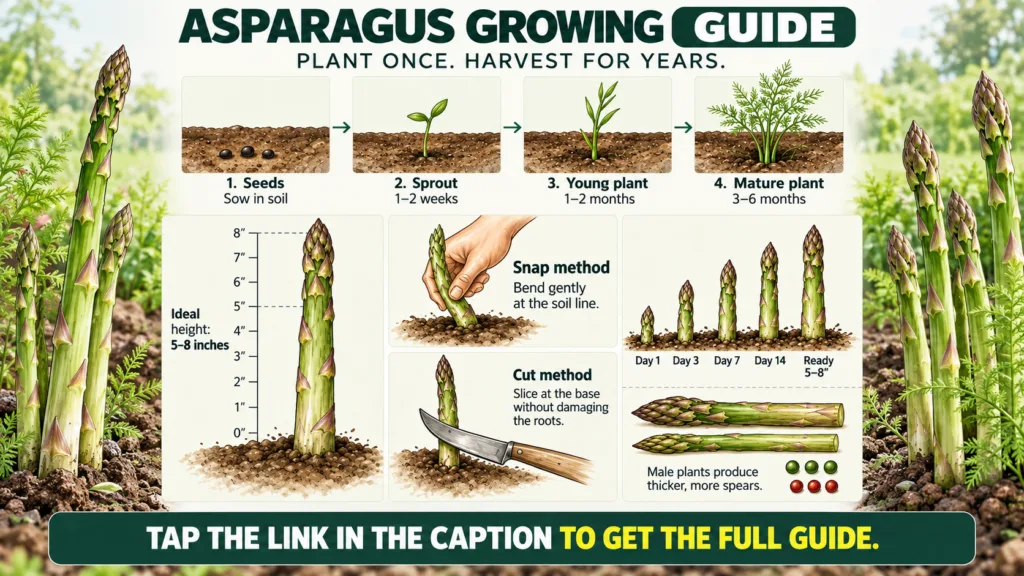
From tiny seeds, asparagus develops into crowns that send up edible spears. If left unharvested, these spears will fern out, developing feathery foliage that helps the plant gather energy for the next year’s harvest. You can observe the rapid growth of spears, sometimes showing significant change over just 14 days!
Male vs. Female Plants
Asparagus plants are either male or female. Male plants generally produce more and larger spears because they don’t expend energy on producing berries (which female plants do). Many modern varieties are all-male hybrids for this reason.
When to Harvest
- First Year: No harvesting! Let all spears fern out to establish a strong root system.
- Second Year: You might be able to harvest for a very short period (1-2 weeks), but it’s often best to wait.
- Third Year and Beyond: Harvest for 6-8 weeks. Begin harvesting when spears are 6-10 inches tall and about as thick as your little finger.
How to Harvest Asparagus
There are two main methods:
- Snap Method: Bend the spear near the soil line until it naturally breaks. This ensures you get the tenderest part of the stalk.
- Cut Method: Use a sharp knife to cut the spear about 1-2 inches below the soil surface. Be careful not to damage nearby emerging spears.
Harvest regularly during the season, typically every 2-3 days, to encourage more spears to emerge.
Enjoying Your Homegrown Harvest!
Growing asparagus is a wonderful journey that rewards you with fresh, delicious produce for years to come. While it requires a little patience and preparation, the satisfaction of harvesting your own spears makes every step worthwhile. So, roll up your sleeves, prepare your garden bed, and get ready to enjoy the ultimate homegrown delicacy!
Do you have any favorite asparagus recipes or growing tips? Share them in the comments below!