Welcome back, fellow garden enthusiasts! Here at Garden – L. Quyên, we’re always looking for ways to help you unlock your garden’s true potential. Today, we’re diving deep into one of the most essential yet often misunderstood gardening practices: mulching. It’s not just about covering your soil; it’s about choosing the right cover for the right plant. Think of it as finding the perfect partner for your precious plants!
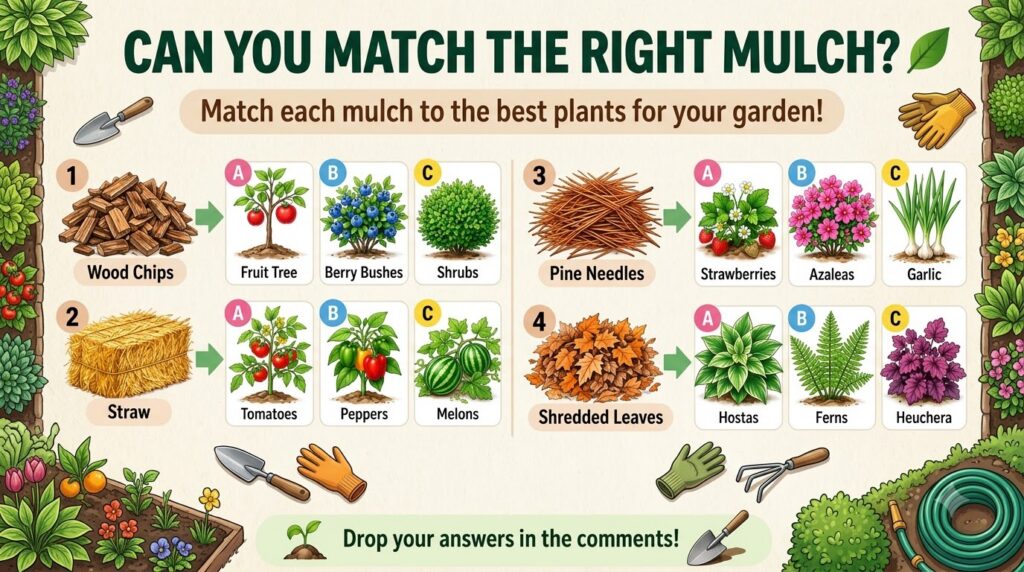
Mulch acts as a protective blanket for your garden, offering numerous benefits from suppressing weeds and retaining moisture to regulating soil temperature and enriching the earth. But with so many types available, how do you know which one is best for your specific needs? Let’s test your gardening smarts with a little mulch matching game, then explore each type in detail!
Why Mulch Matters: More Than Just Decoration
Before we delve into specific types, let’s quickly recap why mulching is a game-changer for any gardener, from beginner to expert:
- Weed Suppression: Mulch blocks sunlight, preventing pesky weeds from sprouting and competing with your plants for nutrients.
- Moisture Retention: It acts as a barrier, reducing water evaporation from the soil, meaning you water less often.
- Temperature Regulation: Mulch keeps soil cooler in summer and warmer in winter, protecting roots from extreme temperature fluctuations.
- Soil Improvement: Organic mulches break down over time, adding valuable nutrients and improving soil structure.
- Pest Deterrent: Some mulches can even help deter certain pests.
Matching the Right Mulch to Your Plants
Now, let’s explore the common types of mulch and their ideal garden applications. Choosing correctly can make all the difference in the health and vitality of your plants!
1. Wood Chips
What it is: Chipped pieces of wood from trees and branches.
Best for:
- Trees and Shrubs: Excellent for creating a long-lasting, low-maintenance bed around established trees and shrubs.
- Pathways and Play Areas: Durable and provides a soft surface.
- Perennial Beds: Offers consistent protection and weed control.
Benefits: Decomposes slowly, provides excellent weed suppression, retains moisture well, and creates a neat, uniform look. Avoid placing directly against tree trunks as it can hold too much moisture and encourage rot.
2. Straw
What it is: Dried stalks of grains like wheat or oats (not hay, which contains weed seeds).
Best for:
- Vegetable Gardens: Perfect for annual crops like tomatoes, peppers, strawberries, and melons, keeping fruits clean and off the soil.
- New Seed Beds: Light and provides gentle protection without smothering young sprouts.
- Winter Protection: Can be used to insulate tender plants in colder months.
Benefits: Improves soil structure as it breaks down, adds organic matter, prevents soil compaction, and is generally inexpensive. It’s lighter than wood chips, making it easier to apply and remove.
3. Pine Needles
What it is: Fallen needles from pine trees.
Best for:
- Acid-Loving Plants: Ideal for rhododendrons, azaleas, blueberries, and other plants that thrive in acidic soil, as pine needles gradually lower soil pH as they decompose.
- Evergreen Beds: Provides a natural, rustic look that complements evergreen foliage.
Benefits: Breaks down slowly, provides good aeration, and offers a unique texture. Their interlocking nature makes them less prone to blowing away in windy conditions.
4. Shredded Leaves
What it is: Leaves collected and shredded, typically in the fall.
Best for:
- Almost Any Garden Bed: A universal champion! Excellent for vegetable gardens, perennial beds, and around shrubs.
- Compost Booster: Can also be added to compost piles to enrich them.
Benefits: Free and abundant, incredibly rich in nutrients, improves soil structure, attracts beneficial earthworms, and decomposes relatively quickly, enriching the soil with organic matter. They are fantastic for building healthy soil long-term.
General Mulching Tips for Success
No matter which mulch you choose, a few general rules apply:
- Apply a 2-4 inch layer: Too thin, and weeds will breakthrough; too thick, and it can suffocate plants or encourage pests.
- Keep it away from stems and trunks: Leave a small gap (an inch or two) around the base of plants and tree trunks to prevent moisture buildup and rot.
- Replenish as needed: Organic mulches break down over time, so plan to top them up annually or every couple of years.
- Prepare the area first: Weed thoroughly before applying mulch to maximize its effectiveness.
Choosing the right mulch is a simple step that can profoundly impact the health and beauty of your garden. By understanding the unique properties of each type, you can make informed decisions that will help your plants thrive and reduce your gardening workload. We hope this guide helps you make the perfect mulch match for every corner of your green space!
What’s your go-to mulch, and which plant benefits most from it in your garden? Share your favorite mulching tips and success stories in the comments below!