Are you curious about what a full day of healthy eating looks like when targeting a 1,200-calorie goal? Many people exploring weight management or mindful eating plans often wonder about the practical application of specific calorie targets. Visualizing your meals can be incredibly helpful for understanding portion control and making informed food choices. This article will break down a typical day’s meals, offering a clear picture of what 1,200 calories can encompass, complete with balanced options for breakfast, lunch, a snack, and dinner.
Understanding calorie distribution throughout your day is key to feeling satisfied and adequately nourished, even on a specific calorie target. Let’s dive in and see how you can structure your plate to meet a 1,200-calorie daily intake.
Understanding the 1,200-Calorie Approach
A 1,200-calorie diet is often recommended for individuals looking to create a calorie deficit for weight loss. It’s a relatively low-calorie intake, and while it can be effective for some, it’s crucial to ensure the meals are nutrient-dense to avoid deficiencies. The goal is to provide your body with essential vitamins, minerals, fiber, and protein, even when limiting total calories. This approach emphasizes whole, unprocessed foods that offer high nutritional value per calorie.
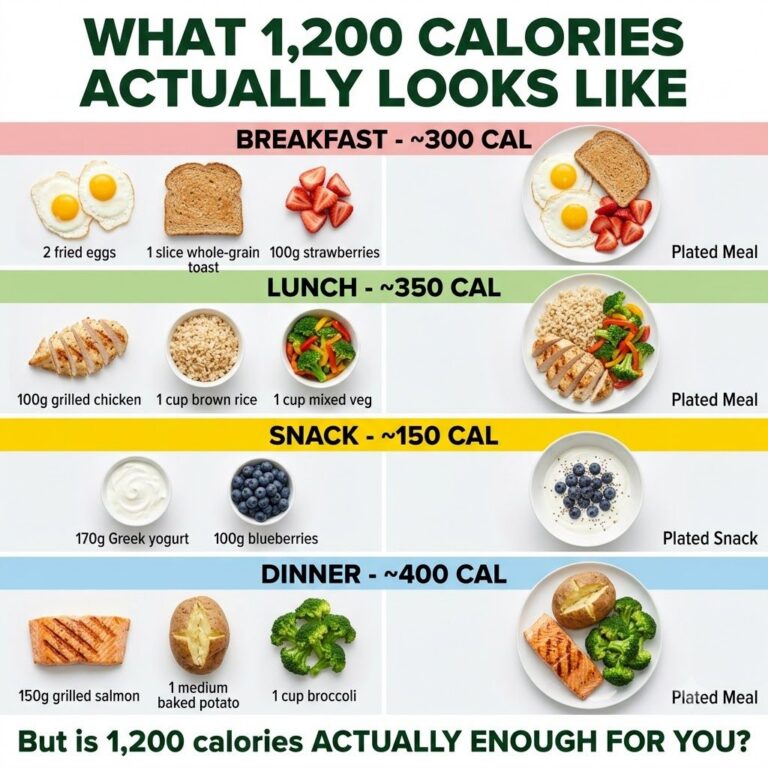
A Day of Eating: Visualizing 1,200 Calories
To give you a clearer idea, here’s an example of how 1,200 calories might be distributed across a day, focusing on nutrient-rich foods:
Breakfast (Approx. 300-350 Calories)
- Oatmeal with Berries and Nuts: 1/2 cup cooked oatmeal (150 cal) with 1/2 cup mixed berries (40 cal) and 1 tablespoon chopped walnuts (50 cal), served with a splash of unsweetened almond milk (10 cal) and a dash of cinnamon.
- Greek Yogurt with Fruit: 1 cup plain non-fat Greek yogurt (100 cal) with 1/2 cup sliced strawberries (25 cal) and 1 teaspoon chia seeds (20 cal).
- Scrambled Eggs with Spinach: 2 scrambled eggs (140 cal) with 1 cup sautéed spinach (20 cal).
The key here is a balance of complex carbohydrates for sustained energy, protein for satiety, and healthy fats.
Lunch (Approx. 350-400 Calories)
- Large Salad with Lean Protein: 2-3 cups mixed greens (30 cal), 3-4 oz grilled chicken breast (150 cal) or chickpeas (100 cal), 1/2 cup chopped cucumbers, tomatoes, and bell peppers (30 cal), 1/4 avocado (80 cal), and 2 tablespoons light vinaigrette dressing (60 cal).
- Whole Wheat Tuna Sandwich: 2 slices whole wheat bread (160 cal), 3 oz light tuna (100 cal) mixed with 1 tablespoon light mayonnaise (50 cal) and chopped celery, served with a side of baby carrots (30 cal).
- Lentil Soup: 1.5 cups hearty lentil soup (250 cal) with a small whole-grain roll (100 cal) and a side of mixed greens with lemon juice (20 cal).
Focus on a generous serving of vegetables, lean protein, and a small portion of healthy fats or complex carbs.
Snack (Approx. 100-150 Calories)
- Apple Slices with Peanut Butter: 1 medium apple (95 cal) with 1 tablespoon natural peanut butter (95 cal).
- Rice Cakes with Avocado: 2 plain rice cakes (70 cal) topped with 1/4 mashed avocado (80 cal) and a sprinkle of ‘everything bagel’ seasoning.
- Small Handful of Almonds: Approximately 15-20 almonds (100-120 cal).
Snacks should be chosen to curb hunger between meals and provide a small nutritional boost without undoing your calorie target.
Dinner (Approx. 400-450 Calories)
- Baked Salmon with Roasted Vegetables: 4 oz baked salmon (200 cal) with 1 cup roasted broccoli and bell peppers (50 cal), and 1/2 cup cooked quinoa (110 cal).
- Chicken Stir-fry: 3 oz chicken breast (150 cal) stir-fried with 2 cups mixed vegetables (peas, carrots, snow peas, bell peppers) (80 cal) and 1/2 cup brown rice (110 cal), using 1 tablespoon low-sodium soy sauce and a dash of sesame oil (40 cal).
- Turkey Chili: 1.5 cups homemade turkey chili (300 cal) with a dollop of Greek yogurt (20 cal) and a side of mixed green salad (30 cal).
Dinner aims to be satisfying and nutrient-rich, often including lean protein, a variety of vegetables, and a modest serving of complex carbohydrates.
Is 1,200 Calories Right for You?
While this visual guide offers a clear breakdown, it’s essential to understand that a 1,200-calorie diet is not suitable for everyone. Calorie needs vary significantly based on individual factors such as age, gender, activity level, current weight, and health goals. For some, 1,200 calories might be too restrictive, potentially leading to nutrient deficiencies, fatigue, or an unhealthy relationship with food. For others, particularly smaller, less active individuals seeking weight loss, it might be an appropriate short-term target under professional guidance.
Before embarking on any significant dietary changes, especially a restrictive calorie plan, we highly recommend consulting with a doctor or a registered dietitian. They can provide personalized advice tailored to your specific health needs and goals, ensuring that your diet is both safe and effective.
Simplify Healthy Eating!
Visualizing your daily food intake can demystify calorie counting and help you make more mindful choices. By focusing on whole, unprocessed foods, you can create delicious and satisfying meals that align with a 1,200-calorie target. Remember, the goal is not just to count calories, but to nourish your body with quality nutrients.
We hope this breakdown helps you better understand what a 1,200-calorie day might look like. Do you think 1,200 calories is enough for your personal needs? Share your thoughts in the comments below!