Dogs communicate constantly through posture, tail position, facial expression, movement, and how they hold their body. Learning to read these signals can make daily care safer and more comfortable for both the dog and the people around them.
One important note: body language should always be read as a whole, not from one pose alone. Breed, personality, environment, and context can change the meaning of a gesture. A wagging tail, for example, does not automatically mean a dog is happy.
 Dog
Dog
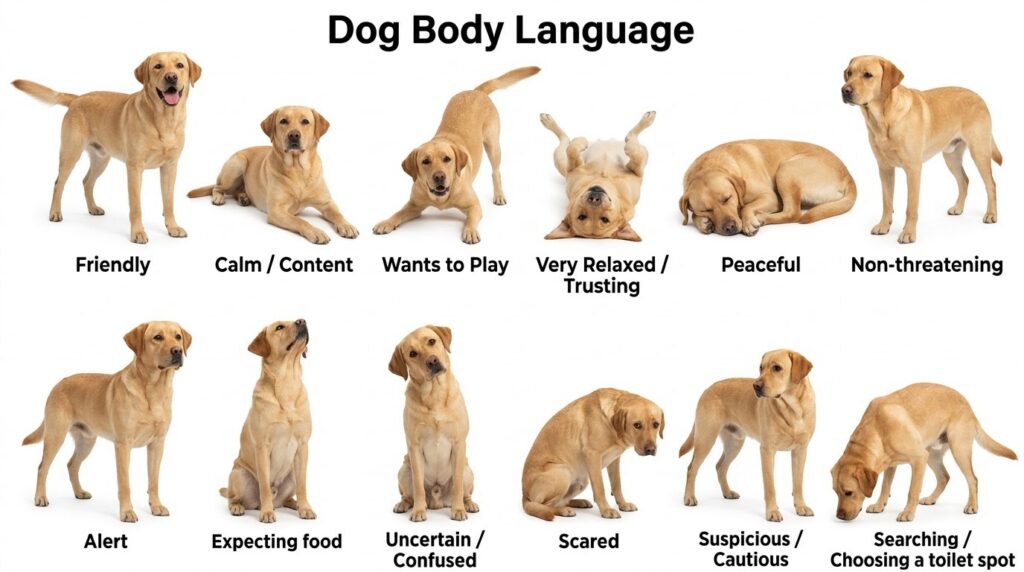
1. Friendly
A friendly dog often has a loose body, relaxed mouth, soft eyes, and an easy tail movement.
What it may mean:
The dog feels comfortable and is open to social interaction.
What to do:
Approach calmly, let the dog choose whether to come closer, and avoid suddenly reaching over the head.
2. Calm / Content
A calm dog may lie or sit with relaxed muscles, neutral ears, and no obvious tension.
What it may mean:
The dog feels safe in the environment and does not perceive an immediate threat.
What to do:
This is a good time for quiet affection, gentle grooming, or simply allowing the dog to rest.
3. Wants to Play
A classic play signal is the play bow: front legs and chest lowered while the rear remains raised. The body usually looks loose and energetic.
What it may mean:
The dog is inviting play and signaling friendly intentions.
What to do:
Use toys, short games of fetch, or gentle interactive play. Stop if the dog becomes overstimulated or begins avoiding interaction.
4. Very Relaxed / Trusting
A dog lying on its back with a soft, loose body may be extremely relaxed and comfortable.
What it may mean:
In a familiar environment, this can indicate trust and deep relaxation.
Important:
A dog exposing its belly can also be showing appeasement or uncertainty. Look at the whole body. A relaxed dog looks loose; a worried dog may be stiff, avoid eye contact, or tuck the tail.
5. Peaceful
A curled or comfortably sleeping dog is usually resting and feels secure enough to lower its guard.
What it may mean:
The dog is calm, tired, or simply enjoying quiet time.
What to do:
Let sleeping dogs rest. Children especially should be taught not to suddenly hug, climb on, or wake a sleeping dog.
6. Non-Threatening
A dog may lower its posture slightly, turn its body sideways, soften its gaze, or avoid direct confrontation.
What it may mean:
The dog may be trying to communicate that it does not want conflict.
What to do:
Give the dog space and avoid forcing interaction. Calm, indirect approaches are usually more comfortable than staring or moving straight toward the dog.
7. Alert
An alert dog may stand tall, raise the head, point the ears forward, and focus intensely on something.
What it may mean:
The dog has noticed a sound, smell, person, animal, or movement and is evaluating it.
What to do:
Watch what has caught the dog’s attention. If the body begins becoming rigid or the dog starts barking or lunging, create more distance from the trigger.
8. Expecting Food
Dogs commonly stare upward, sit near a person, follow kitchen activity, lick their lips, or become highly attentive around feeding routines.
What it may mean:
The dog has learned to associate certain actions, places, sounds, or times with food.
What to do:
Use consistent meal routines and avoid rewarding demanding behavior every time. Calm sitting before meals can reinforce good manners.
9. Uncertain / Confused
A dog may tilt the head, hesitate, pause, look between people or objects, or show mixed posture.
What it may mean:
The dog may not understand what is expected or may be processing unfamiliar information.
What to do:
Make instructions simpler. Use one clear cue at a time and reward the behavior you want rather than repeatedly correcting mistakes.
10. Scared
Fear may appear as crouching, a tucked tail, lowered head, ears back, trembling, lip licking, avoidance, or attempts to hide.
What it may mean:
The dog feels threatened or overwhelmed.
What to do:
Do not force the dog toward the frightening situation. Increase distance, reduce noise or pressure, and allow recovery. A frightened dog can bite if it feels trapped, even if it is normally gentle.
11. Suspicious / Cautious
A cautious dog may lean away, turn the head, watch from the side, keep weight shifted backward, or approach slowly.
What it may mean:
The dog is unsure whether a situation is safe.
What to do:
Avoid direct staring and quick movements. Let the dog investigate at its own pace. Tossing a treat nearby can sometimes build a positive association without forcing contact.
12. Searching / Choosing a Toilet Spot
Before eliminating, dogs often sniff intensely, circle, walk back and forth, or repeatedly inspect the ground.
What it may mean:
The dog is searching for a suitable place to urinate or defecate.
What to do:
Give the dog enough time to sniff. Rushing potty breaks can lead to accidents indoors because the dog never had enough time to settle and eliminate.
Practical Pet-Care Tips for a Healthier, Happier Dog
1. Keep a predictable daily routine
Dogs often feel more secure when feeding, walks, toilet breaks, and sleep happen at roughly consistent times.
A predictable routine can reduce stress and also makes behavioral changes easier to notice.
2. Exercise both the body and the brain
Physical exercise is important, but mental activity matters too.
Useful activities include:
- sniff walks
- food puzzles
- short training sessions
- hide-and-seek with treats
- simple scent games
Ten minutes of focused mental work can be surprisingly tiring for a dog.
3. Let dogs sniff during walks
A walk is not only physical exercise. Sniffing gives dogs important environmental information and provides mental enrichment.
Instead of constantly pulling the dog forward, include sections of the walk where the dog is allowed to explore smells at a relaxed pace.
4. Monitor food portions
Measure meals rather than filling the bowl by eye. Weight gain happens gradually and can be easy to overlook.
Treats should also be counted as part of the dog’s daily calorie intake.
If body condition changes noticeably, discuss feeding amounts with a veterinarian.
5. Keep fresh water available
Clean drinking water should be easily accessible every day.
Wash water bowls regularly because saliva and food debris can create a film inside the bowl even when the water looks clean.
6. Check ears, paws, skin, and teeth regularly
A quick weekly home check can help you spot small problems early.
Look for:
- unusual redness
- swelling
- bad odor from the ears
- broken nails
- cuts between paw pads
- excessive licking
- lumps or skin changes
- tartar or inflamed gums
Early changes are usually easier to address than problems that have been developing unnoticed for weeks.
7. Make grooming part of normal life
Brush according to coat type and introduce nail handling gradually.
Short, positive grooming sessions are usually better than waiting until the coat becomes badly tangled or the nails become very long.
8. Provide a quiet resting area
Dogs need uninterrupted sleep and downtime.
Give them a bed, crate, mat, or quiet corner where they can withdraw without being repeatedly touched or disturbed.
This is particularly important in busy homes with children or multiple pets.
9. Use reward-based training
Reward behaviors you want to see more often.
Food rewards, toys, praise, and access to enjoyable activities can help teach:
- recall
- sitting calmly
- leash manners
- waiting at doors
- settling on a mat
Clear reinforcement usually teaches more effectively than repeated punishment.
10. Learn your dog’s normal behavior
The most valuable reference point is not another dog—it is your dog’s normal pattern.
A usually social dog suddenly hiding, a food-motivated dog refusing meals, or a normally active dog becoming unusually quiet can be meaningful changes.
Seek veterinary advice when behavioral changes are sudden, persistent, or accompanied by physical symptoms.
Final Thought
Understanding dog body language is less about memorizing isolated poses and more about noticing patterns. Look at the ears, eyes, mouth, tail, body tension, movement, and situation together.
When you learn to recognize when a dog is relaxed, playful, cautious, frightened, or simply asking for space, everyday care becomes much easier. You communicate more clearly, reduce unnecessary stress, and create the kind of relationship where the dog feels understood rather than merely managed.