Are you looking for a simple yet powerful way to boost your gardening success right from the start? Seed soaking might be your secret weapon! This age-old technique can significantly improve germination rates, speed up the sprouting process, and lead to stronger, healthier seedlings. Whether you’re a seasoned gardener or just starting your green thumb journey, understanding how and why to soak seeds can transform your garden.
Many seeds, especially those with hard outer shells or natural dormancy mechanisms, benefit greatly from a good soak. It mimics nature’s way of telling a seed it’s time to wake up after a long winter or dry spell. Let’s dive into the world of seed soaking and discover how you can give your plants the best possible start!
Why Should You Soak Seeds Before Planting?
Seed soaking isn’t just an extra step; it’s a foundational practice for many plant varieties that addresses common germination challenges. Here’s why it’s so beneficial:
- Softens the Seed Coat: Many seeds have tough outer shells that prevent water from reaching the embryo inside. Soaking helps to soften these coats, making it easier for the seedling to emerge.
- Breaks Dormancy: Some seeds are naturally dormant and require specific conditions, like consistent moisture, to ‘wake up.’ Soaking provides that initial signal.
- Washes Away Inhibitors: Certain seeds contain natural germination inhibitors. Soaking can help leach these compounds away, allowing the embryo to grow.
- Speeds Up Germination: By giving seeds a head start in absorbing water, you can significantly reduce the time it takes for them to sprout once planted.
- Improves Germination Rates: More seeds are likely to successfully germinate, leading to a higher yield of healthy seedlings.
How to Properly Soak Seeds
The process of soaking seeds is straightforward, but a few key details can make all the difference:
1. Choose the Right Seeds
Not all seeds need soaking. Generally, larger seeds with hard coats (like beans, peas, corn, squash, and many flower seeds) benefit the most. Smaller, delicate seeds or those with thin coats (like lettuce, carrots, or most herbs) usually do not require soaking and can sometimes even be harmed by it. Always check your seed packet for specific instructions.
2. Use the Right Water
Use room temperature water. Tap water is usually fine, but if your tap water is heavily chlorinated, you might let it sit out for 24 hours to allow the chlorine to dissipate or use filtered water.
3. Select a Container
A small bowl, cup, or even a shallow dish will work. Make sure it’s clean.
4. Submerge the Seeds
Place your seeds in the container and cover them with water. Ensure all seeds are fully submerged. You can use a breathable material like a coffee filter or a paper towel over the top to keep dust out while allowing some air exchange.
5. Mind the Soaking Time
This is crucial! Soaking times vary widely depending on the seed type. Most seeds benefit from 8-24 hours of soaking. Over-soaking can actually drown the embryo, leading to rot. Always err on the side of caution or consult specific guides for your seeds.
6. Plant Immediately
Once the soaking period is complete, drain the water and plant your seeds right away. They are now primed for growth and should not be allowed to dry out. Keep the soil consistently moist (but not waterlogged) after planting.
Which Seeds Benefit Most from Soaking? (A Quick Guide)
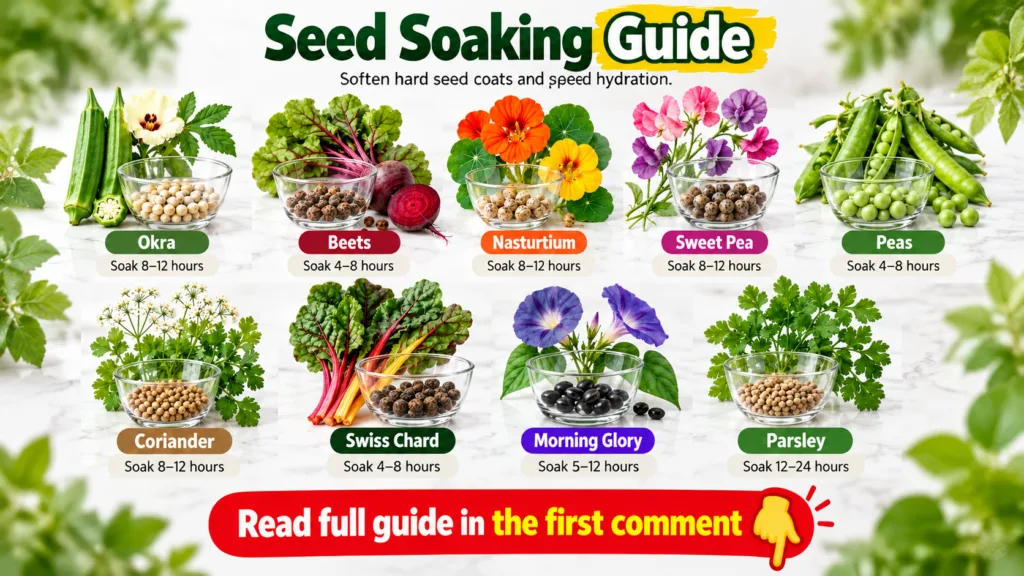
While specific soaking times can vary, here are some common garden favorites that generally respond well to a pre-planting soak:
- Peas: 12-24 hours. Helps ensure uniform germination.
- Beans (Pole, Bush, Snap): 8-12 hours. Speeds up germination for these larger seeds.
- Corn: 12-24 hours. Particularly useful for faster sprouting.
- Squash and Pumpkins: 8-12 hours. Softens their thick seed coats.
- Okra: 12-24 hours. Known for having a tough seed coat.
- Beets: 8-12 hours. The ‘seed’ is actually a cluster of seeds in a dry fruit, so soaking helps separate and activate them.
- Coriander (Cilantro): 12-24 hours (crush the seed pods lightly first).
- Nasturtium: 24-48 hours. Has a very hard outer shell.
- Sweet Pea: 24 hours (some gardeners also nick the seed coat, known as scarification, for even better results).
- Morning Glory: 24-48 hours. Also benefits greatly from scarification.
- Swiss Chard: 8-12 hours (similar to beets).
- Parsley: 24 hours (known for slow germination, soaking helps considerably).
Always remember that these are general guidelines. The best practice is to refer to your seed packet for precise instructions, as varieties and specific growing conditions can influence optimal soaking times.
Important Tips for Successful Seed Soaking
- Don’t Over-Soak: As mentioned, too much soaking can be detrimental. Set a timer!
- Change Water for Longer Soaks: If soaking for more than 12 hours, it’s a good idea to change the water at least once to prevent mold or fungal growth.
- Consider Scarification: For very hard-shelled seeds (like Sweet Peas, Morning Glories, and some fruit seeds), gently nicking the seed coat with a file or sandpaper (scarification) before soaking can dramatically improve results.
- Keep it Warm: Soaking in slightly warm (but not hot) water can sometimes be more effective for breaking dormancy.
- Plant Promptly: The moment seeds are done soaking, they are ready to grow. Don’t let them dry out before planting.
Seed soaking is a simple, organic technique that can give your garden a significant advantage. By understanding which seeds benefit and how to soak them correctly, you’re setting yourself up for a season of vibrant growth and abundant harvests. Give it a try with your next batch of seeds and watch the magic happen!