There’s a special kind of joy that comes from stepping into your garden and plucking fresh, ripe blueberries right from the bush. Imagine those plump, juicy berries, bursting with flavor, ready for your breakfast, smoothies, or a simple snack. Growing blueberries at home might seem like a grand project, but with a gentle touch and a few simple steps, you can cultivate a thriving blueberry patch that yields abundant goodness year after year. Let’s dig in!
Why Grow Your Own Blueberries?
Beyond the undeniable deliciousness, homegrown blueberries offer a host of benefits. You get to control what goes into your soil, ensuring organic, chemical-free fruit. They’re packed with antioxidants, making them a superfood for your family’s health. Plus, blueberry bushes are beautiful additions to any garden, offering lovely spring blossoms, vibrant summer fruit, and stunning fall foliage. It’s a true feast for the senses!
Choosing the Right Blueberry Bush for Your Climate
The first step to success is selecting the right variety. Blueberries come in different types, each suited for specific climates:
- Highbush Blueberries: Most common, producing large berries. They require a certain number of ‘chill hours’ (hours below 45°F/7°C) to produce fruit, making them ideal for cooler climates.
- Lowbush Blueberries: Wild blueberries, smaller in stature and berry size, hardy in very cold regions.
- Rabbiteye Blueberries: More tolerant of heat and less acidic soil, perfect for warmer southern climates. They often benefit from cross-pollination, so planting two different rabbiteye varieties can increase yields.
Research varieties that thrive in your specific USDA hardiness zone and consider if you want early, mid, or late-season berries to extend your harvest.
Site Selection: Sun, Soil, and Acid
Blueberries are not too demanding, but they do have one critical requirement: acidic soil. They thrive in a pH range of 4.5 to 5.5. Most garden soils are more neutral, so soil preparation is key.
- Sunlight: Choose a spot that receives at least 6-8 hours of direct sunlight daily. More sun usually means more berries!
- Drainage: Blueberries prefer consistently moist but well-draining soil. Avoid areas where water tends to collect. Raised beds or large containers are excellent options if your native soil is heavy clay.
- Soil Acidity: This is paramount. Test your soil’s pH before planting. If your soil is too alkaline, you’ll need to amend it significantly.
Preparing Your Soil for Blueberry Success
If your soil isn’t naturally acidic, don’t worry! You can create the perfect environment:
- Lowering pH: Incorporate plenty of organic matter like peat moss, aged pine bark, or compost. Elemental sulfur can also be added, but it takes time to work, so apply it a few months before planting if possible.
- Raised Beds or Containers: For challenging soil, a raised bed filled with an acidic soil mix (e.g., 50% peat moss, 50% pine bark fines) is an excellent solution. Large containers (at least 18-24 inches in diameter) filled with an acidic potting mix are also great for patios or small spaces.
Simple Steps for Planting Your Blueberry Bushes
Once your soil is ready, planting is straightforward. Here’s how to give your blueberry bushes the best start:
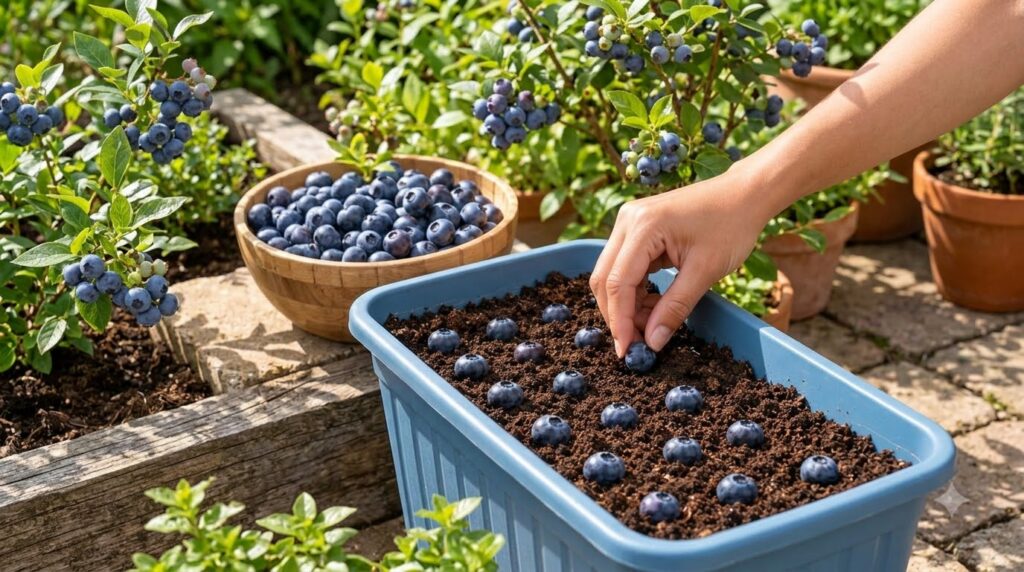
- Digging the Hole: Dig a hole twice as wide as the root ball and just as deep. If planting multiple bushes, space them 4-6 feet apart, depending on the variety’s mature size.
- Preparing the Plant: Gently remove the blueberry bush from its nursery container. Tease apart any circling roots at the bottom to encourage outward growth.
- Placing the Plant: Set the plant in the hole so that the top of the root ball is level with or slightly above the surrounding soil. Blueberries prefer to be planted a little high rather than too deep.
- Backfilling: Carefully backfill the hole with your prepared acidic soil mix, gently firming it around the roots to remove air pockets.
- Watering In: Water thoroughly immediately after planting. This helps settle the soil and ensures good root-to-soil contact.
- Mulching: Apply a 2-4 inch layer of acidic mulch (like pine bark, pine needles, or wood chips) around the base of the plant. Mulch helps retain moisture, suppress weeds, and slowly acidify the soil as it breaks down. Keep mulch a few inches away from the stem.
Ongoing Care for Bountiful Blueberries
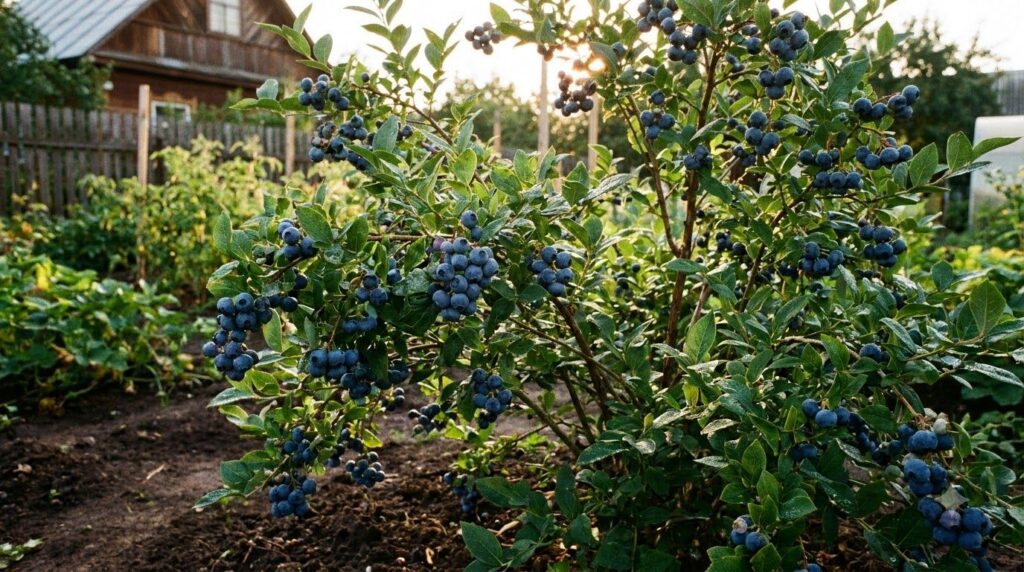
- Watering: Blueberries need consistent moisture, especially during dry spells and fruit development. Aim for about 1 inch of water per week, either from rain or irrigation.
- Fertilizing: Use fertilizers specifically formulated for acid-loving plants, typically starting in the second year. Avoid fertilizers containing nitrates, which can harm blueberries.
- Pruning: For the first year or two, focus on establishing the plant. After that, prune during late winter dormancy to remove dead, diseased, or crossing branches, and to encourage new, productive growth.
- Pest and Disease Control: Keep an eye out for common pests like birds (netting can help!) and diseases. Healthy plants are generally more resistant.
Harvesting Your Homegrown Treasures
Blueberries typically start producing a small crop in their second or third year, with full production around year five. Berries are ready to pick when they are fully blue and easily detach from the stem. Don’t rush it; the bluer they are, the sweeter and more flavorful they’ll be!
Enjoy the Fruits of Your Labor
Growing blueberries is a rewarding experience that connects you with nature and provides delicious, healthy food for your table. With a little care and attention to their specific needs, you’ll soon be enjoying your very own homegrown goodness. Happy gardening!