As the vibrant hues of summer begin to gently fade, a new gardening season emerges, full of promise and potential. September isn’t just a month for back-to-school; it’s a golden opportunity for gardeners to extend their harvest and prepare for a bountiful fall and even spring yield. At Garden – L. Quyên, we believe every gardener, from novice to expert, can harness the power of this transitional month to cultivate a thriving garden.
Many people think gardening winds down after August, but September offers a unique blend of cooling temperatures and still-warm soil, creating ideal conditions for a surprising array of vegetables, especially root crops and alliums. Planting wisely now can lead to delicious fresh produce on your table well into the cooler months!
Why September is a Gardener’s Best Friend
September gardening comes with several advantages:
- Milder Temperatures: The intense summer heat subsides, making it more comfortable for both gardeners and plants.
- Moisture: Often, fall brings more consistent rainfall, reducing the need for constant watering.
- Pest Reduction: Many common summer pests start to diminish as temperatures drop.
- Improved Flavor: Cooler weather can enhance the sweetness and tenderness of many cool-season crops.
9 Crops to Plant in September for a Thriving Fall Harvest
Let’s dive into some fantastic options to get into the ground this month:
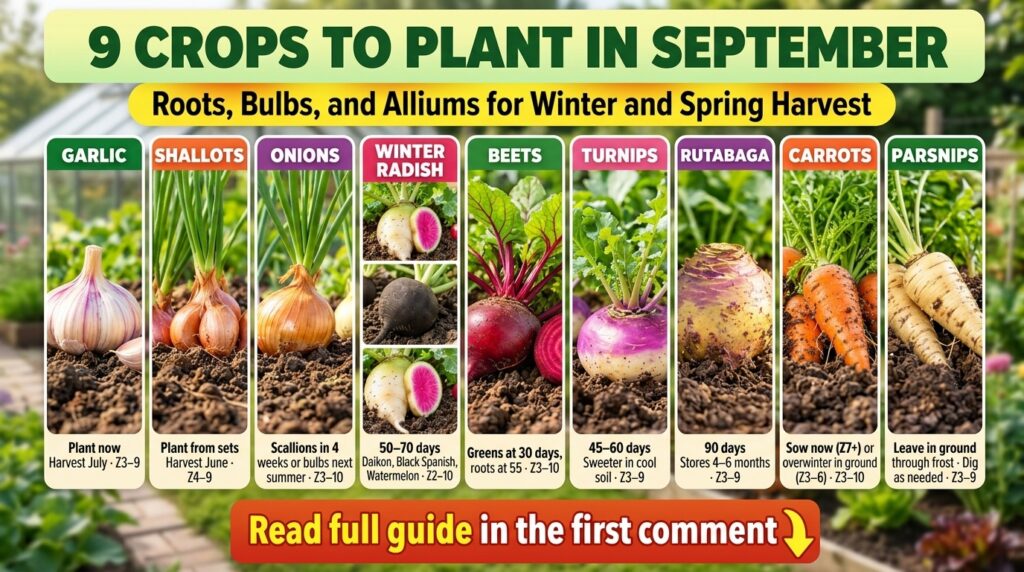
1. Garlic
Garlic is a superstar for fall planting! Planted in September or October, it establishes roots before winter and then shoots up vigorously in spring, producing large, flavorful bulbs by early summer. We’ll delve deeper into garlic growing tips shortly!
2. Spinach
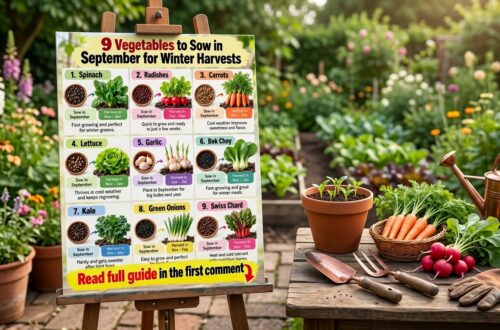
This leafy green loves cooler weather. Plant spinach seeds in September for a tender harvest throughout fall. You can even protect it with a cold frame for an extended harvest into winter.
3. Lettuce
Similar to spinach, various lettuce varieties thrive in the cooler, shorter days of fall. Choose loose-leaf varieties for a cut-and-come-again harvest. Plant successions every couple of weeks for a continuous supply.
4. Radishes
Fast-growing and satisfying, radishes can go from seed to harvest in as little as three weeks. September plantings yield crisp, less pungent roots compared to summer-grown ones.
5. Carrots
While often thought of as a spring crop, fall-planted carrots can be incredibly sweet. The cold soil enhances their flavor, and they can even be left in the ground with a layer of mulch for winter storage.
6. Beets
Both the roots and greens of beets are delicious. Plant seeds directly into well-drained soil in September for a harvest of tender, sweet beets and nutritious greens.
7. Kale
Kale is incredibly cold-hardy and its flavor actually improves after a few light frosts. Plant young kale plants or seeds for a consistent supply of healthy greens all fall and even winter in many regions.
8. Swiss Chard
With its vibrant stalks and nutritious leaves, Swiss chard is another excellent cool-season crop. It can tolerate light frosts and provides a steady harvest.
9. Scallions/Green Onions
Planting scallion sets or seeds in September allows them to establish before winter, providing fresh green onions early in the spring or even a late fall harvest.
Essential Tips for Growing Garlic in Your Fall Garden
Growing your own garlic is incredibly rewarding, and fall is the perfect time to start. Here’s a step-by-step guide to success:
Choosing the Right Garlic
- Hardneck vs. Softneck: Hardneck varieties are generally better for colder climates, produce a flower stalk (scape), and have fewer but larger cloves. Softneck varieties are preferred in warmer climates, produce many smaller cloves, and are ideal for braiding.
- Source Healthy Bulbs: Do not plant grocery store garlic, as it’s often treated to prevent sprouting. Purchase certified seed garlic from a reputable garden center or online supplier.
Soil Preparation is Key
Garlic thrives in well-drained, fertile soil with a pH between 6.0 and 7.0.:
- Sunlight: Choose a spot that receives at least 6-8 hours of direct sunlight per day.
- Amend the Soil: Incorporate plenty of organic matter like compost or well-rotted manure to improve soil structure and fertility.
- Drainage: Garlic hates wet feet, so ensure good drainage to prevent rot. Raised beds are an excellent option.
Planting Garlic Cloves
The best time to plant is typically 4-6 weeks before your first hard freeze, usually late September to early October in many regions.
- Separate Cloves: Gently break apart the garlic bulb into individual cloves, leaving the papery wrapper intact. Plant only the largest, healthiest cloves.
- Orientation: Plant each clove pointed-side up, with the flat, root-end facing down.
- Spacing: Plant cloves about 4-6 inches apart in rows 12-18 inches apart.
- Depth: Plant cloves 2-4 inches deep, covering them with soil.
Care and Maintenance
- Mulch: After planting, apply a 4-6 inch layer of straw or chopped leaves. This protects the cloves from freezing and thawing, conserves moisture, and suppresses weeds.
- Watering: Water thoroughly after planting. During active growth in spring, ensure the soil remains consistently moist but not waterlogged. Reduce watering as harvest approaches.
- Fertilizing: In early spring, when shoots emerge, side-dress with a balanced organic fertilizer or compost tea.
- Weeding: Keep the area around your garlic free of weeds, as they compete for nutrients and moisture.
- Scapes (Hardneck varieties): If growing hardneck garlic, remove the flower stalks (scapes) once they curl. This redirects energy to bulb development, resulting in larger bulbs. Plus, garlic scapes are delicious!
Harvesting Your Garlic
Garlic is typically ready for harvest in early to mid-summer, when the lower third to half of the leaves have turned yellow and started to brown, but there are still 4-5 green leaves remaining.
- Timing: Don’t wait until all the leaves are brown, as this can cause the bulbs to split apart in the soil.
- Method: Gently loosen the soil around the bulb with a fork or spade, then carefully pull up the entire plant. Avoid pulling on just the stem.
- Curing: After harvest, cure your garlic by hanging it in a warm, dry, well-ventilated area for 2-4 weeks. This toughens the skin and prepares it for long-term storage.
- Storage: Once cured, trim the roots and stem (leaving about an inch of stem) and store in a cool, dark, dry place with good air circulation.
September truly is a gardener’s secret weapon for extending the harvest and ensuring a supply of fresh, homegrown goodness. By planting these nine wonderful crops, especially garlic, you’re setting yourself up for gardening success. Happy planting!
What are your favorite crops to plant in September? Share your tips and experiences with us in the comments below!