There’s something truly magical about growing your own fruit, and grapevines, with their lush foliage and bountiful clusters of sweet grapes, are a fantastic addition to any garden. Imagine plucking sun-ripened grapes right from your backyard! But achieving that sweet success requires a bit of care, especially when it comes to nourishing your vines naturally. At Garden – L. Quyên, we believe in supporting healthy growth the organic way, fostering a cycle of sweetness that benefits both your plants and the environment.
The Secret to Sweetness: Organic Soil Boosts for Grapevines
Just like any living thing, grapevines thrive on good nutrition. While conventional fertilizers offer a quick fix, organic soil amendments work in harmony with nature, building up soil health over time and providing a steady supply of nutrients. This is where a ‘natural soil boost’ comes in, transforming your soil into a vibrant ecosystem that supports robust growth and abundant harvests.
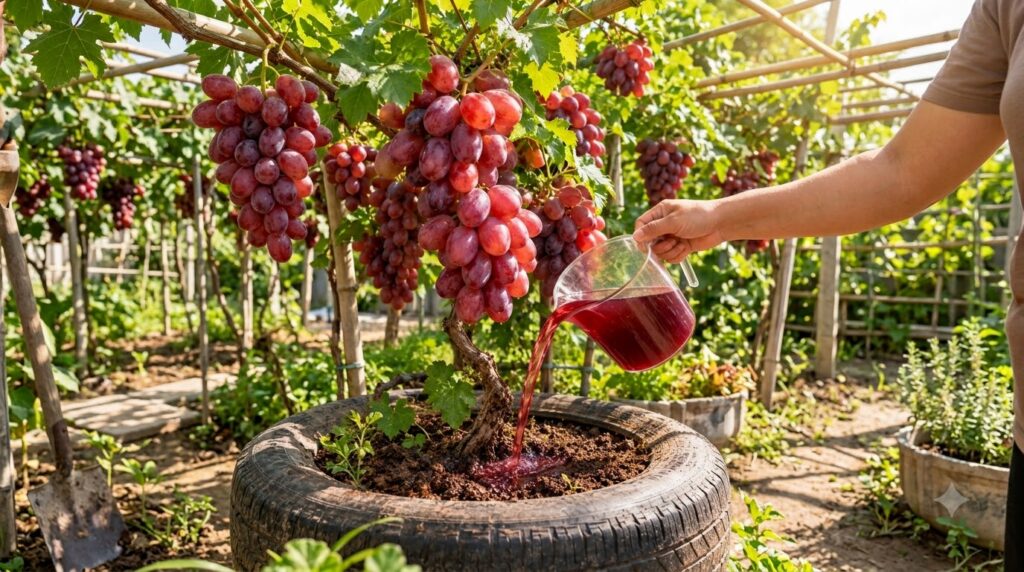
The image above beautifully illustrates this principle – a gentle pour of a rich, dark liquid suggests a powerful, yet natural, tonic for the vine. This could be anything from a well-aged compost tea to a diluted organic liquid fertilizer derived from seaweed or worm castings. These natural elixirs are packed with beneficial microbes, trace minerals, and essential nutrients that grapevines adore.
Why Choose Organic for Your Grapevines?
- Healthier Plants: Organic nutrients are released slowly, preventing nutrient burn and promoting steady, strong growth.
- Improved Soil Structure: Organic matter enhances soil aeration, water retention, and drainage, creating an ideal environment for roots.
- Beneficial Microbes: These living organisms help break down nutrients, making them more available to your plants and protecting against pathogens.
- Sweeter Grapes: Many gardeners report that organically grown grapes have a richer, more nuanced flavor.
- Eco-Friendly: Reduces chemical runoff and supports a biodiverse garden ecosystem.
Crafting Your Own Natural Soil Boost
While the specific ‘recipe’ for the liquid in the image is a delightful mystery, you can easily create your own effective natural soil boosts. Here are a few popular options:
1. Compost Tea
Compost tea is a fantastic way to deliver a liquid dose of nutrients and beneficial microbes to your grapevines. It’s essentially a brewed extract of finished compost.
- How to Make It: Fill a porous bag (like a pantyhose or burlap sack) with finished compost. Suspend it in a bucket of dechlorinated water (let tap water sit out for 24 hours to remove chlorine) and let it steep for 1-3 days, stirring occasionally. For best results, use an air pump (like for an aquarium) to keep the water aerated.
- How to Use It: Dilute the tea until it’s the color of weak tea (if not already) and apply it directly to the soil around the base of your grapevines every 2-4 weeks during the growing season.
2. Worm Casting Tea
Worm castings (vermicompost) are a gardener’s gold! They are rich in nutrients and microbes.
- How to Make It: Similar to compost tea, steep a cup or two of worm castings in a gallon of dechlorinated water for 24-48 hours.
- How to Use It: Dilute to a light brown color and use as a foliar spray or soil drench around your vines.
3. Seaweed Solution
Liquid seaweed extract is a powerful organic supplement, providing trace minerals, hormones, and enzymes that stimulate plant growth and improve resilience.
- How to Use It: Always follow the dilution instructions on the product label. Apply as a foliar spray or a soil drench.
Essential Grapevine Care Tips for a Sweet Harvest
Beyond soil nourishment, a few key practices will ensure your grapevines flourish:
Sunlight and Location
Grapevines are sun-lovers! They need at least 6-8 hours of direct sunlight per day to produce sweet, ripe fruit. Choose a location in your garden that receives ample sun throughout the day.
Proper Trellising and Support
Grapevines are climbing plants and require strong support. Trellises, arbors, or sturdy wires are essential for training your vines, improving air circulation, and making harvesting easier. Good support also keeps the fruit off the ground, reducing disease risk.
Watering Wisely
While established grapevines are relatively drought-tolerant, consistent watering is crucial, especially during dry spells and when the grapes are developing. Aim for deep watering sessions rather than frequent shallow ones, encouraging roots to grow deeper.
Pruning for Productivity
Pruning is perhaps the most critical aspect of grapevine care. It helps manage vine size, encourages fruit production, and maintains plant health. Learn about dormant pruning (in late winter/early spring) and summer pruning (to manage growth and expose fruit to sun). Don’t be afraid to cut back – grapevines produce fruit on new growth!
Pest and Disease Management (Organic Style)
Healthy, well-nourished vines are more resistant to pests and diseases. However, if issues arise, opt for organic solutions:
- Pests: Use neem oil, insecticidal soaps, or introduce beneficial insects like ladybugs. Hand-pick larger pests if manageable.
- Diseases: Ensure good air circulation through proper pruning, avoid overhead watering, and consider organic fungicides like copper or sulfur sprays if necessary, always following directions carefully.
Enjoying Your Sweet Rewards
The journey from vine to harvest is incredibly rewarding. With consistent organic care, your grapevines will not only thrive but also produce delicious fruit for years to come. Whether you enjoy them fresh off the vine, make homemade jelly, or even try your hand at winemaking, the sweetness will be all the more satisfying knowing you nurtured them naturally.
What are your favorite natural methods for boosting your garden’s health? Share your tips and experiences in the comments below!