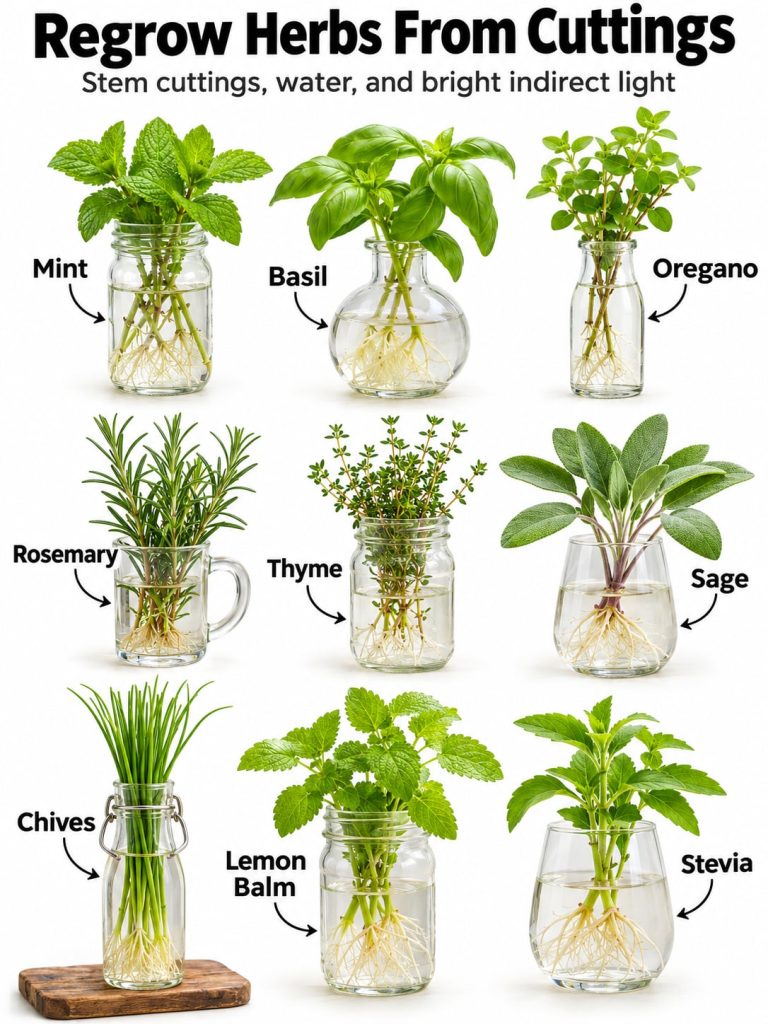
Tossing the woody ends of a grocery-store bunch of herbs into the compost bin feels like the normal thing to do, but those stems often hold enough life to become a whole new plant. With a glass of water, a sunny spot near a window, and a little patience, you can grow fresh basil, mint, rosemary, and more right on your kitchen counter. The process is simple, inexpensive, and surprisingly satisfying, especially when you watch the first white roots appear.
This guide walks you through how water propagation works, which herbs root quickly and which need more time, and how to move your new plants into soil or containers so they keep producing. You will also learn the most common mistakes that cause cuttings to rot, and how to avoid them.
Why Water Rooting Works for Many Herbs
Propagation means growing a new plant from a piece of an existing one. Water propagation is a type of stem cutting method in which a healthy section of stem is placed in water until it grows its own roots. Many culinary herbs root this way because their stems contain small groups of cells, called nodes, that can produce new roots when they stay moist and receive light.
Water rooting is easy to observe, which makes it a great learning method. You can see the roots forming, catch problems early, and adjust your care. The tradeoff is that roots grown in water are more delicate than roots grown in soil, so the transition step matters.
Choosing and Preparing Your Cuttings
Start with healthy, vigorous stems. Look for firm, green stems without black spots, slimy areas, or wilting. Using a clean, sharp pair of scissors or pruners, cut a piece about 4 to 6 inches long just below a leaf node, which is the small bump where a leaf joins the stem. Cutting right below a node gives the stem the best chance to root.
Remove the leaves from the bottom third to half of the cutting so that no leaves sit in the water. Submerged leaves rot quickly and can spoil the entire jar. Keep two to four leaves at the top so the cutting can keep photosynthesizing. Place cuttings in a clean glass jar with enough water to cover the bare nodes, usually 2 to 3 inches.
The Nine Herbs and How Quickly They Root
Rooting speed varies a lot between herbs, so set realistic expectations. The timeframes below are typical ranges under warm, bright conditions, not guarantees.
Basil
Basil is one of the fastest herbs to root in water, often showing roots within 7 to 14 days. Use tips from non-flowering stems, since flowering shoots tend to slow down. Basil is a tender annual in most of the United States and cannot survive frost, so it is grown outdoors after the last spring frost, usually in Zones 10 to 11 as a perennial. Pinch flower buds as they form to keep leaves coming.
Mint
Mint roots very quickly, sometimes in under two weeks. Spearmint and peppermint are the most common kitchen types. Mint is hardy in Zones 3 to 11 outdoors, but it spreads aggressively by runners. Keep mint in a pot or a contained bed, and avoid planting it directly in the ground next to other herbs, because it can take over the entire area.
Lemon Balm
Lemon balm is another fast rooter, usually forming roots in about one to two weeks. Its bright lemon scent makes it useful for teas and salads. It is hardy in roughly Zones 4 to 7 and can self-seed, so deadhead the flowers if you want to control its spread.
Oregano
Oregano roots at a moderate pace, often in two to three weeks. Choose cuttings that look sturdy and aromatic. Oregano is generally hardy in Zones 5 to 9, and it prefers sharp drainage. Once roots are established, transplant it into a gritty, well-drained soil.
Thyme
Thyme is slower, commonly taking three to four weeks to root. Its tiny leaves make it easy to overcrowd the jar, so limit it to a few stems. Thyme is hardy in Zones 5 to 9 and tolerates dry conditions well, so do not overwater it once planted.
Sage
Sage can root in water, but it is slower and more prone to rot than basil or mint. Use firm, non-woody stems and change the water every two days. Common garden sage is hardy in Zones 4 to 8, and it needs full sun and good air circulation once it is in soil.
Rosemary
Rosemary is one of the trickier herbs to root in water. Expect three to six weeks, and use stems that are semi-firm rather than fully woody. Rosemary grows best in Zones 8 to 10 outdoors, with some cold-hardy selections surviving into Zone 7 with winter protection. In colder areas, grow it in a container that can come indoors before frost.
Tarragon
Tarragon behaves differently depending on the cultivar. Russian tarragon roots readily in water, but it has weak flavor. French tarragon, the one prized in cooking, often roots poorly and is better propagated by division or by purchasing a start from a nursery. French tarragon is hardy in Zones 4 to 9 once established.
Parsley
Parsley usually roots in two to four weeks when you use stems with a healthy base. Parsley is a biennial, which means it grows leaves in its first year and flowers in its second, but most gardeners grow it as an annual. It tolerates partial shade and performs well in Zones 5 to 9 as a cool-season crop.
Light, Water, and Temperature Basics
Place your jars where they receive bright, indirect light for most of the day. A south- or east-facing window works well. Direct afternoon sun through glass can overheat the water and encourage algae, so filter harsh light with a sheer curtain if needed. If the cuttings stretch toward the window with long, pale stems, they need more light.
Change the water every two to three days, or whenever it looks cloudy. Rinse the jar and the stems gently. Keep the room at a comfortable temperature, around 65 to 75 degrees Fahrenheit, because cold drafts and very cold water slow root growth.
Moving Your Herbs Into Soil
Once roots are 1 to 2 inches long and look white and branched, the cutting is ready for soil. Healthy roots are firm, pale, and fibrous. Brown, mushy roots mean the cutting has rotted and should be discarded.
Fill a pot with a light, well-drained potting mix. Make a small hole, gently place the roots in it, and firm the soil around the stem. Water lightly, then keep the soil evenly moist for the first week while the plant adjusts. Some gardeners cover young herbs with a clear bag for a few days to hold humidity, but remove it at the first sign of mold. Basil and mint can also stay in water longer, while slower herbs such as rosemary and thyme benefit from being moved sooner.
Common Mistakes and How to Avoid Them
- Leaves submerged in water: Strip the lower leaves so no foliage sits below the waterline.
- Cloudy, smelly water: Change the water regularly and wash the jar. Bacteria grow quickly in warm, stagnant water.
- Cutting too far from a node: Make cuts right below a node so the root-forming tissue is present.
- Harvesting too heavily: Take no more than about one-third of a plant at a time to keep it productive.
- Planting mint with other herbs: Keep mint in its own container to prevent it from crowding and overtaking neighbors.
- Expecting every herb to behave the same: Rosemary and thyme are slower, so give them more time before judging success.
Growing Across Different U.S. Climates
USDA hardiness zones measure winter cold tolerance, not summer heat, humidity, or rainfall. In Zones 3 to 5, most of these herbs will be grown as container plants or annuals outdoors, and they will need to come indoors or be replaced before frost. In Zones 6 to 8, many perennial herbs such as thyme, oregano, sage, and mint survive winter with some mulch. In Zones 9 to 11, rosemary, sage, and oregano can grow as long-lived perennials outdoors. Check with your local extension office for frost dates in your area, since the best time to move cuttings outdoors depends on your local last frost, soil temperature, and daytime heat.
Start Your Kitchen Garden This Week
Water propagation is one of the most rewarding ways to build a productive herb collection without spending much money. Choose two or three herbs to start with, such as basil and mint, then add slower rooters like rosemary once you feel confident. Set up a jar on your windowsill tonight, check the water in two days, and watch for the first roots over the next week or two. Each new plant you grow from a kitchen scrap is a small step toward a more self-sufficient, sustainable kitchen, and it will reward you with fresh flavor all season long.